
Ingredients Categories
Finished Products
Finished Food Categories
- Bakery
- Beverages / Juices
- Cereal and grain products
- Confectionery
- Cooking Fats & Oils
- Dairy
- Egg products
- Fruits & Vegetables
- Infant & Baby food
- Meat, Poultry & Fish
- Nuts & Seeds products
- Other Finished Food Categories
- Pet Food
- Plant-based foods
- Prepared foods
- Sauces & Seasonings
- Sweet & Savoury Spreads
Specialised Finished Products
- Bee products
- Biotic products
- Dietary supplements
- Energy drinks
- Functional beverages
- Functional confectionery
- Functional food
- Functional powders
- Meal replacement products
- Nutricosmetics
- Other Specialised Finished Products
- Pet Dietary Supplements
- Pharma and OTC products
- Protein products
- Sugar replacers / Sweeteners
Health & Wellness Areas
Delivery Formats
Operations & Services
- 3D printing
- Analysis/ Testing
- Auditing & certifications
- Blending & mixing
- Bottling
- Certification
- Clinical trials
- Co-packing
- Coating
- Consulting
- Contract manufacturing
- Drying
- Electrospinning
- Encapsulating
- Enzymatic processing
- Extracting
- Extrusion
- Fat structuring
- Fermentation
- Filling
- Flavour development
- Freeze drying
- Granulating/ grinding/ milling / mixing
- High-pressure processing
- Labelling
- Other Operations & Services
- Packaging
- Packet filling
- Pasturising
- Quality assurance
- Saccharification
- Shear cell processing
- Spray drying
- Sterilisation
- Storage & Logistics
- Tabletting
- Toasting / roasting
- Ultra-high temperature processing
News
EU to ban 31 meat names for plant-based foods
Tessa Wiles, Content Editor - Food 19 Mar 2026The EU looks set to ban 31 animal-associated names for plant-based products – but common terms such as burger, sausage, and nuggets will remain permitted.
Plant-based food manufacturers and brands across Europe may have to rebrand their products after the European Parliament and Council of the European Union (EU) reached a provisional agreement on 5 March 2026 to restrict 31 meat-related terms from being used on plant-based and cultivated food products

Which terms will be banned and which will not?
The provisional agreement, reached on 5 March 2026 between the European Parliament and the Council of the European Union, restricts terms including chicken, veal, beef, pork, bacon, steak, liver, breast, thigh, brisket, drumstick, and tenderloin.
The 31 banned words cover animal species names, common cut descriptions, and offal terms.
Commonly used processed food names, such as burger, sausage, and nuggets, have been preserved, ending months of uncertainty over whether these widely used descriptors would also be included in the proposal. Seafood alternative terms are also unaffected.
If formally adopted and entered into force, producers would have three years to comply.
The agreement must still be formally adopted by the Agriculture and Fisheries Council and approved in a European Parliament plenary vote, with technical finalisation expected by mid-March.
Provisional ban said to ‘strengthen farmers' position in the food supply chain’
In a press release issued from the Council of the EU, Maria Panayiotou, minister of agriculture, rural development, and environment of the Republic of Cyprus, said: “This agreement represents a meaningful step towards fairer and more resilient agricultural markets. By improving support for farmers and enhancing the role of producer organisations, we are giving farmers additional tools to secure a more predictable and sustainable future.”
Another press release, issued by the European Commission (EC), stated that the changes would “strengthen farmers' position in the food supply chain and restore trust between actors in the agri-food supply chain”.
“In particular, these measures will strengthen farmers' position in negotiations with processors and other actors, ensuring that added value of the products is shared more fairly across the entire supply chain,” the EC press release continued.
Consumer groups challenge the logic
Consumer and industry groups, however, including the No Confusion Coalition, have criticised the move, arguing that “this move is likely to slow the transition to healthier and more sustainable plant-centred diets”.
The Bureau Européen des Unions de Consommateurs (BEUC), which represents 46 consumer organisations across Europe, was blunt in its assessment of the proposed ban.
“Arguing that these meaty names create confusion amongst consumers is nonsense," said Agustín Reyna, director general of BEUC, in a press release.
BEUC cited its own consumer research showing that 70% of consumers accepted meat-related names for vegetarian and vegan products when those products were clearly labelled.
Reyna continued: “Consumers want to eat healthier and need convenient and affordable options. These names make it easy for those who want to integrate these options in their diets, and the new rules will increase confusion and are simply not necessary.”
ProVeg also issued a statement, pointing to the fact that clarity comes from information, not bans. Global CEO of ProVeg International Jasmijn de Boo said: “There is no evidence of widespread consumer confusion where products are clearly labelled as plant-based or vegan.
“Removing familiar terms does not improve transparency; it reduces clarity and increases friction at the point of purchase.”
Alt-meat brands voice opinions on social media
Many alt-meat brands also took to LinkedIn to voice their disappointment with the proposed ban.
Rutger Rozendaal, CEO of the Vegetarian Butcher, wrote: “We, as The Vegetarian Butcher, are in disbelief. A BIG misteak - for us, for animals and for the planet.”
Rozendaal added that there are still several formal steps ahead in the decision-making process, and in the meantime, his company “will continue to speak up about this”.
He urged his followers to share his post and “tell us how we can make it clear to policymakers that misteaks were made”.
Chief executive of the Vegetarian Society, Richard McIlwain, writing about the proposed ban, called it an “utterly incomprehensible decision from the EU just now”.
“The EU should be championing alternative and novel foods not binding companies in red tape and protecting vested interests while stifling competition,” McIlwain added.
Pascal Bieri, co-founder of Planted, wrote: “I've been thinking (a lot) about what actually bothers me here. It's not just the decision, it's the framing. This debate was never really about consumer confusion.
“Consumers know what vegan steak means. These words tell you how something cooks, how it tastes, where it fits on a plate. They're useful. Stripping them away doesn't create clarity, it creates friction.
“What this is really about is competitive pressure dressed up as consumer protection. And that's worth naming.”
What will be the economic costs of the ban?
Industry bodies have warned that the naming restrictions would impose substantial costs on manufacturers.
German plant-based industry association BALPRO estimated that under the ban, market losses in Germany alone could exceed €250 million. While an analysis by the systems change consultancy SYSTEMIQ projected that the wider alternative protein sector could see up to €56 billion in lower annual gross value added across the EU by 2040.
Rafael Pinto, senior policy manager at the European Vegetarian Union (EVU) said in a press release the decision “goes against several EU priorities such as increased competitiveness, innovation, food security, affordability, simplification, and higher income for farmers producing the products”.
In the EVU press release, Rob de Schutter, head of communications at WePlanet said: “Over 600 organisations, companies, and a petition signed by over 350k citizens were ignored.”
What comes next?
De Boo of ProVeg International cautioned that the “agreement is only the first step" and that “the real impact will depend on how these rules are implemented in practice”.
With finalisation of the text expected by 13 March, the regulation will move to a formal vote in the Agriculture and Fisheries Council, followed by a European Parliament plenary vote.

Get more of our news on Google
Set Ingredients Network as a 'Preferred Source' to get quicker access to the news you value.
Related news

M&S launches own-brand pet food range
11 Sep 2026
UK retailer Marks & Spencer has launched its own-brand pet food line Paws & Pals – a well-timed and strategic move that will appeal to loyal shoppers, says a marketing expert.
Read more
Do the US dietary guidelines put UPFs under pressure?
10 Sep 2026
Will the US dietary guidelines change the way Americans eat, swapping ultra-processed foods for whole foods? We asked Dr Barry Popkin, renowned nutrition and obesity researcher.
Read more
Food fraud costs UK economy £2bn each year
9 Sep 2026
Food fraud is costing the UK economy up to £2 billion (€2.3 billion) every year although the food sector is more “resilient” than others, according to a recent study.
Read more
Kellogg accelerates work to remove artificial colours from all US cereals
3 Sep 2026
WK Kellogg has announced an accelerated timeline to eliminate all artificial colours and the chemical preservative, BHT, across its full US portfolio of cereals and cereal packaging.
Read more
‘Urgent gaps’ in achieving 2030 food system goals
27 Aug 2026
Global food systems are failing to meet 2030 targets across indicators including health, environment, and resilience, according to a report co-authored by the Food and Agriculture Organisation (FAO).
Read more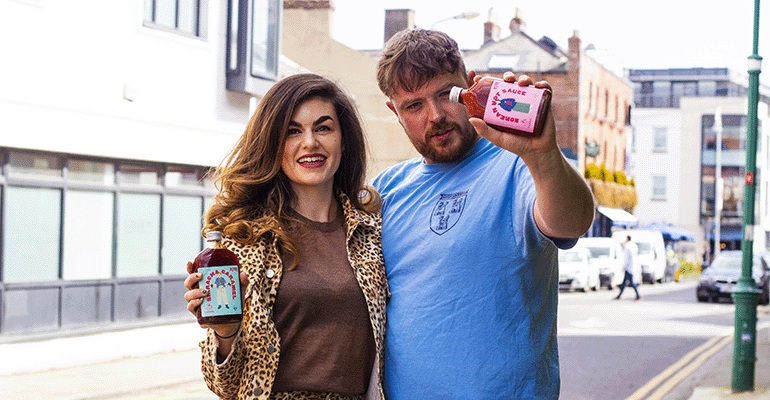
Chimac’s fusion sauces bring Korean flavours to Europe
25 Aug 2026
Irish sauce brand Chimac is tapping into Korea’s culinary traditions, bringing its flavours and products to European consumers who want a taste of K-food.
Read more
Savoury protein snacks shake up the on-the-go market
10 Aug 2026
Sweet flavours have dominated the high-protein snack category but savoury snacks, such as cheese bars and meat sticks, can appeal to health-conscious consumers.
Read more
Nestlé invests in regeneratively farmed wheat for KitKat
5 Aug 2026
Nestlé will pay a premium for Wildfarmed’s regeneratively farmed wheat but the CPG remains reticent to promote the move on packs of its KitKat bars.
Read more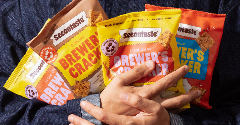
How Secon Taste is putting upcycled snacks on shelves
4 Aug 2026
Hungarian zero-waste startup Secon Taste is turning surplus food into upcycled snacks such as fibre-packed granola, instant porridge, and a circular coffee-tasting box.
Read more
Codex sets global thresholds for ‘may contain’ labels
3 Aug 2026
Codex Alimentarius has adopted its first global guidance on when to use “may contain” allergen warnings, setting thresholds intended to stop the label being used as blanket legal cover.
Read more