
Ingredients Categories
Finished Products
Finished Food Categories
- Bakery
- Beverages / Juices
- Cereal and grain products
- Confectionery
- Cooking Fats & Oils
- Dairy
- Egg products
- Fruits & Vegetables
- Infant & Baby food
- Meat, Poultry & Fish
- Nuts & Seeds products
- Other Finished Food Categories
- Pet Food
- Plant-based foods
- Prepared foods
- Sauces & Seasonings
- Sweet & Savoury Spreads
Specialised Finished Products
- Bee products
- Biotic products
- Dietary supplements
- Energy drinks
- Functional beverages
- Functional confectionery
- Functional food
- Functional powders
- Meal replacement products
- Nutricosmetics
- Other Specialised Finished Products
- Pet Dietary Supplements
- Pharma and OTC products
- Protein products
- Sugar replacers / Sweeteners
Health & Wellness Areas
Delivery Formats
Operations & Services
- 3D printing
- Analysis/ Testing
- Auditing & certifications
- Blending & mixing
- Bottling
- Certification
- Clinical trials
- Co-packing
- Coating
- Consulting
- Contract manufacturing
- Drying
- Electrospinning
- Encapsulating
- Enzymatic processing
- Extracting
- Extrusion
- Fat structuring
- Fermentation
- Filling
- Flavour development
- Freeze drying
- Granulating/ grinding/ milling / mixing
- High-pressure processing
- Labelling
- Other Operations & Services
- Packaging
- Packet filling
- Pasturising
- Quality assurance
- Saccharification
- Shear cell processing
- Spray drying
- Sterilisation
- Storage & Logistics
- Tabletting
- Toasting / roasting
- Ultra-high temperature processing
News
The rise of CPG disruptor brands
Kacey Culliney, Freelance Journalist 9 Apr 2026Bold, relevant, and agile disruptor brands, such as Olly and Poppi are reshaping consumer packaged goods (CPG) and driving growth in stagnant areas – reframing everything about the categories they are showing up in, say experts.
According to global management consulting firm McKinsey & Company, global consumer packaged goods (CPG) growth slowed dramatically in 2022 and has continued to decelerate for most categories, but disruptor brands are now reshaping pockets of industry.
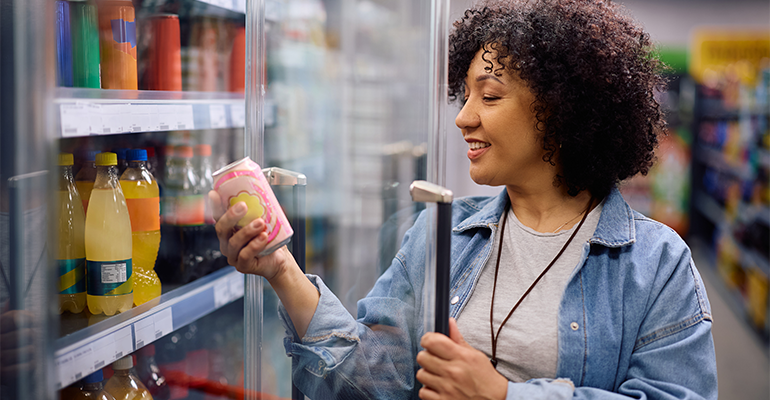
“Disruptor-led growth is reshaping nearly every CPG category,” said the company's CPG team in an article. “...These brands – defined by their rapid, outsize growth – are connecting deeply with consumers and reshaping the competitive landscape.”
These disruptor brands can be separated into “five distinct archetypes” based on category size, maturity, and the speed at which innovation occurs, they said.
The five disruption archetypes – limited, nascent, scaled, intense, and transformative – can occur across all categories but the first three are typically seen in larger, established categories, whilst intense disruption tends to happen in midsize categories and transformative disruption in smaller, sleepy categories.
The six hallmarks of a disruptive brand
The company said there are also six key hallmarks of what makes a brand disruptive.
· Disruptor brands use “bold and culturally relevant messaging”, working in real-time to engage with their communities.
· They show up in unexpected ways via a “unique physical sales strategy”, showcasing across varied spaces, from consumer events and conferences through to airports and immersive pop-ups.
· Disruptor brands always offer a “distinctive product innovation”, either in formulation terms, packaging, form factors or consumer benefits.
· They all operate with “digital fluency”, using digital channels for marketing, customer acquisition and community building.
· They pivot on “speed and agility”, reacting rapidly to consumer and market signals.
· And they will always have a “consumer-centric purpose”, working to plug unmet consumer needs or centre on a mission closely aligned to consumer values.
So, what exactly can bigger and more established brands learn from disruptive CPG brands today? And how exactly are these agile movers set to reshape the global market?
A ‘value innovators’ shift
Global food, health and nutrition innovation expert Peter Wennström, founder and lead consultant at innovation agency Healthy Marketing Team (HMT), said disruptor brands have evolved significantly in recent years.
“Over the past decade, disruptor brands in CPG have shifted from being primarily product innovators to being value innovators,” Wennström told Ingredients Network. “Ten years ago, disruption was often about format, channel (D2C), or ingredient novelty. Today, the strongest disruptors redefine the category narrative itself. They don't just launch better products; they reframe what the category stands for and who it is for.”
These companies, he said, are “opportunity driven” and will always work to plug trends and shifting consumer preferences, ultimately driving category interest and value for retailers.
Established versus disruption
By contrast, the bigger CPG brands are stuck in what can be described as “controller culture”, Wennström said – “more afraid of losing shares for their old brands than they are of winning with new ideas”. And this risk aversion, he said, continues as brands grow.
“The difference between the newer disruptor brands and the older CPG brands can be described with the 'downstairs and upstairs' analogy,” he said. “Old household brands are seen as family servants who live downstairs not visible to guests while the disruptor brands are invited upstairs as they rub off their positive image to the host family who like their attitude or share their values.”
According to Wennström, Swedish oat drink company Oatly is a good example of an intense disruptor brand that has both attractive values and attitude. Functional soft drink brand Poppi and Unilever-owned supplement gummy brand Olly are also good examples of scaled and intense disruptors driven by developer and marketer cultures.
Sometimes, established CPG companies acquire disruptor brands as a way of onboarding innovation, but Wennström said this runs the risk of bringing disruption into a “risk avert controller organisation”, which doesn't work.
“The way forward is to keep the disruptor at arm’s length from the CPG organisation to protect its independent culture and its brand values, since disruptor brand consumers are sensitive,” he explained.
One good example of this is how Unilever kept Ben & Jerrys independent for a long time to protect the brand's “rebellious values”.
Long-term disruptive growth
Overall, the expert said the most “powerful long-term growth engine” is a brand that “redefines the rules of the category rather than simply optimising within it”. True disruptive brands, he said, can change perception, not just distribution.
“Disruption is not about being louder or newer; it is about being clearer. In a world where 80% of launches fail, the brands that win are those that deeply understand where to play, who to target, and what singular promise they stand for. Science may open the door, but brand is what keeps you in the room,” Wennström said.

Get more of our news on Google
Set Ingredients Network as a 'Preferred Source' to get quicker access to the news you value.
Related news

Do the US dietary guidelines put UPFs under pressure?
10 Sep 2026
Will the US dietary guidelines change the way Americans eat, swapping ultra-processed foods for whole foods? We asked Dr Barry Popkin, renowned nutrition and obesity researcher.
Read more
Health and wellness engagement matures across Middle East and Africa
4 Sep 2026
Many consumers in the Middle East and Africa are now proactively engaged in health and wellness, looking to integrate better habits and products into their daily lives, say experts.
Read more
Skimpflation: An ‘unfair’ and risky approach to keeping prices low
2 Sep 2026
Consumers see skimpflation – reducing the quality of ingredients due to rising costs – as more unfair than shrinkflation, making it a risky strategy according to recent research.
Read more
‘Urgent gaps’ in achieving 2030 food system goals
27 Aug 2026
Global food systems are failing to meet 2030 targets across indicators including health, environment, and resilience, according to a report co-authored by the Food and Agriculture Organisation (FAO).
Read more
Seven-Eleven uses microbial testing tech to extend katsudon shelf life
26 Aug 2026
Japanese retail company Seven-Eleven has improved its factory’s microbial environment to keep comfort-food staple, katsudon, fresher for longer.
Read more
Chimac’s fusion sauces bring Korean flavours to Europe
25 Aug 2026
Irish sauce brand Chimac is tapping into Korea’s culinary traditions, bringing its flavours and products to European consumers who want a taste of K-food.
Read more
Global demand for instant noodles continues to rise
24 Aug 2026
Global demand for instant noodles reached 124.21 billion servings last year, representing a 0.7% year-on-year increase – or 900 million extra servings.
Read more
Popular barbecue staples experience sharp price increases
19 Aug 2026
The typical cost of US shoppers’ barbecue baskets has risen by 12% over the past year – the fastest annual rise in a decade, figures from The Economist show.
Read more
Hot NPD: Nissin launches first cold-water Cup Noodles
18 Aug 2026
Nissin is taking one of Japan’s most iconic instant meals in a completely new direction with the launch of the first cold water-only Cup Noodles in the brand’s 55-year history.
Read more
Manam Chocolate aims to bring premium Indian cacao to 'the world stage'
11 Aug 2026
Craft chocolate brand Manam Chocolate is investing in local expansion and supply chain innovation throughout India as it works to build out the premium reputation of its locally produced cacao products.
Read more