
Ingredients Categories
Finished Products
Finished Food Categories
- Bakery
- Beverages / Juices
- Cereal and grain products
- Confectionery
- Cooking Fats & Oils
- Dairy
- Egg products
- Fruits & Vegetables
- Infant & Baby food
- Meat, Poultry & Fish
- Nuts & Seeds products
- Other Finished Food Categories
- Pet Food
- Plant-based foods
- Prepared foods
- Sauces & Seasonings
- Sweet & Savoury Spreads
Specialised Finished Products
- Bee products
- Biotic products
- Dietary supplements
- Energy drinks
- Functional beverages
- Functional confectionery
- Functional food
- Functional powders
- Meal replacement products
- Nutricosmetics
- Other Specialised Finished Products
- Pet Dietary Supplements
- Pharma and OTC products
- Protein products
- Sugar replacers / Sweeteners
Health & Wellness Areas
Delivery Formats
Operations & Services
- 3D printing
- Analysis/ Testing
- Auditing & certifications
- Blending & mixing
- Bottling
- Certification
- Clinical trials
- Co-packing
- Coating
- Consulting
- Contract manufacturing
- Drying
- Electrospinning
- Encapsulating
- Enzymatic processing
- Extracting
- Extrusion
- Fat structuring
- Fermentation
- Filling
- Flavour development
- Freeze drying
- Granulating/ grinding/ milling / mixing
- High-pressure processing
- Labelling
- Other Operations & Services
- Packaging
- Packet filling
- Pasturising
- Quality assurance
- Saccharification
- Shear cell processing
- Spray drying
- Sterilisation
- Storage & Logistics
- Tabletting
- Toasting / roasting
- Ultra-high temperature processing
News
EU Omnibus proposal risks dismantling ESG protections for smallholder farmers
Rik Moors 1 Apr 2025Civil society organisations are calling on policymakers to reject proposed changes to EU sustainability legislation, saying they pose a risk to protections for smallholder farmers.
The European Commission’s Omnibus Simplification Package, published on 26 February, sets out amendments that would affect the Corporate Sustainability Reporting Directive (CSRD) and the Corporate Sustainability Due Diligence Directive (CSDDD).
While not yet adopted, the proposal is expected to go to a European Parliament vote today and must also be approved by the Council of the EU.
If passed, it would roll back corporate responsibility rules by restricting due diligence obligations to direct suppliers only and exempting most mid-sized companies from CSRD reporting.
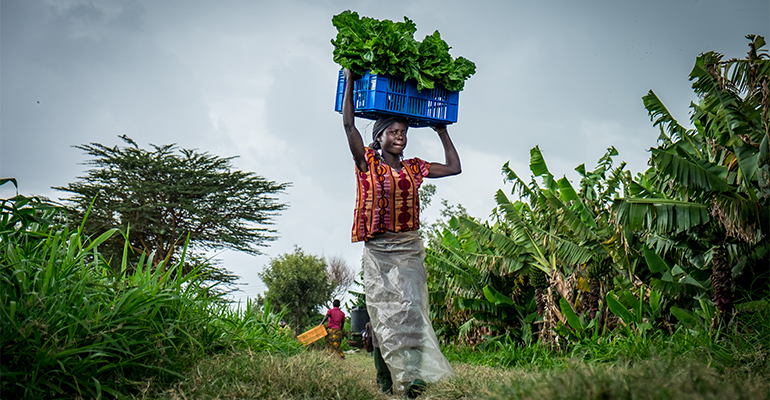
Civil society organisations, including Solidaridad, are calling on EU policymakers to reject the proposed changes, which they say would remove essential protections for smallholder farmers and weaken supply chain transparency in the food and agriculture sector.
Bram Verkerke, senior communications specialist at Solidaridad, told Ingredients Network that the proposal would “eliminate full supply chain responsibility”.
He said that companies would no longer be legally required to assess, prevent, or remedy human rights violations, environmental harms, or structural poverty in the upstream supply chain.
“Farmers, processors, and most manufacturers are no longer in scope of the regulation when the EC Omnibus proposal is adopted,” he said.
Loss of supply chain safeguards
One of the most contentious elements of the proposal is the removal of provisions that prevent companies from ending commercial relationships with suppliers unless all remediation options have been exhausted.
Verkerke said this protection was vital for smallholder farmers, who are often deemed high-risk suppliers and therefore especially vulnerable to exclusion.
“Smallholders are oftentimes considered high-risk suppliers by companies in scope, and therefore over-exposed to cut-and-run,” he said. “If the CSDDD does not require disengagement to be responsible and used as a last resort, companies may cut ties prematurely, threatening smallholders’ livelihoods and market access.”
The existing CSDDD text requires companies to work with suppliers to address risks before terminating contracts. The revised version removes these safeguards and introduces the option of “suspension”, a term Verkerke said is undefined and could be interpreted as equivalent to termination.
Reduced reporting scope under CSRD
The CSRD, which was originally set to apply to companies with more than 250 employees, would under the omnibus proposal be limited to companies with over 1,000 employees, turnover above €50 million, or total assets exceeding €25 million.
According to Commission figures, this change would remove up to 82% of previously in-scope companies.
Reporting deadlines would also be delayed. Companies that were due to begin reporting in 2026 would now be expected to do so in 2028. Sector-specific standards will be cancelled, and the transition from limited to reasonable audit assurance halted.
The European Commission argues that the proposal will reduce the regulatory burden on smaller firms and improve competitiveness. It estimates total administrative cost savings of €6.3 billion, with an additional €350 million in reduced compliance costs for SMEs.
Sectoral impacts in food and agriculture
Solidaridad said the rollback would disproportionately affect smallholder farmers working in cocoa, tea, and other commodity supply chains.
“For more than 50% of cocoa and tea farmers in World Bank datasets, household income would need to double in order to earn a living income,” said Verkerke, citing research produced in collaboration with Wageningen University.
Without enforceable obligations for buyers to engage with upstream suppliers, smallholders face increased risk of exclusion from European supply chains.
Verkerke said the current CSDDD recognises living wage and living income as human rights, and removing these references would strip the regulation of its core impact.
“Eliminating most of the supply chain from corporate due diligence means those actors facing the biggest sustainability challenges will most likely see no benefit from CSDDD,” he said.
Solidaridad is urging members of the European Parliament and Council to reject the proposal and preserve full supply chain due diligence obligations.
It argues that the CSDDD, as originally adopted, recognises the specific vulnerabilities of the world’s 600 million smallholder farmers and includes legal tools to address structural poverty and environmental degradation.
Stakeholder pressure remains despite deregulation
Although the proposal would ease formal reporting requirements, surveys conducted after the announcement of the ESG policy shift indicate that most companies plan to continue sustainability reporting voluntarily.
Sustainability platform Coolset found that 90% of businesses intend to keep disclosing ESG data. Of these, 67% will follow CSRD standards voluntarily or because they remain in scope, while 14% plan to transition to the less stringent Voluntary Standard for SMEs (VSME).
Nine percent are considering switching to other frameworks, such as the Global Reporting Initiative. Eighty-five percent of respondents cited ongoing pressure from investors, customers and financial institutions as a reason for maintaining ESG disclosures.
PwC’s 2025 State of Decarbonization report, published in March this year, also highlighted the growing importance of Scope 3 data across the food and beverage industry. Many ingredient suppliers likely will continue to receive ESG data requests from their buyers, particularly for Scope 3 emissions reporting, which covers indirect impacts such as raw material sourcing.
Verkerke said many large companies already understand the business case for stronger sustainability standards.
“Full supply chain due diligence is crucial for stable international trade relations and supply chain resilience,” he said. “That’s why many big corporations support CSDDD as it is, including multinationals in the Cocoa Coalition.”

Get more of our news on Google
Set Ingredients Network as a 'Preferred Source' to get quicker access to the news you value.
Related news

M&S launches own-brand pet food range
11 Sep 2026
UK retailer Marks & Spencer has launched its own-brand pet food line Paws & Pals – a well-timed and strategic move that will appeal to loyal shoppers, says a marketing expert.
Read more
Do the US dietary guidelines put UPFs under pressure?
10 Sep 2026
Will the US dietary guidelines change the way Americans eat, swapping ultra-processed foods for whole foods? We asked Dr Barry Popkin, renowned nutrition and obesity researcher.
Read more
Food fraud costs UK economy £2bn each year
9 Sep 2026
Food fraud is costing the UK economy up to £2 billion (€2.3 billion) every year although the food sector is more “resilient” than others, according to a recent study.
Read more
EU's ban on Brazilian meat expected to raise prices
7 Sep 2026
Around 25% of the EU’s imported chicken and beef comes from Brazil. From September, products that fail to meet the EU antimicrobial resistance rules will be banned.
Read more
Skimpflation: An ‘unfair’ and risky approach to keeping prices low
2 Sep 2026
Consumers see skimpflation – reducing the quality of ingredients due to rising costs – as more unfair than shrinkflation, making it a risky strategy according to recent research.
Read more
NielsenIQ’s EU barometer shows Britain leading in grocery inflation
31 Aug 2026
Britain was the only country to record grocery inflation above 2%, according to NielsenIQ data that compared Europe’s five biggest grocery markets from February to May 2026.
Read more
‘Urgent gaps’ in achieving 2030 food system goals
27 Aug 2026
Global food systems are failing to meet 2030 targets across indicators including health, environment, and resilience, according to a report co-authored by the Food and Agriculture Organisation (FAO).
Read more
Seven-Eleven uses microbial testing tech to extend katsudon shelf life
26 Aug 2026
Japanese retail company Seven-Eleven has improved its factory’s microbial environment to keep comfort-food staple, katsudon, fresher for longer.
Read more
Chimac’s fusion sauces bring Korean flavours to Europe
25 Aug 2026
Irish sauce brand Chimac is tapping into Korea’s culinary traditions, bringing its flavours and products to European consumers who want a taste of K-food.
Read more
Global demand for instant noodles continues to rise
24 Aug 2026
Global demand for instant noodles reached 124.21 billion servings last year, representing a 0.7% year-on-year increase – or 900 million extra servings.
Read more