
Ingredients Categories
Finished Products
Finished Food Categories
- Bakery
- Beverages / Juices
- Cereal and grain products
- Confectionery
- Cooking Fats & Oils
- Dairy
- Egg products
- Fruits & Vegetables
- Infant & Baby food
- Meat, Poultry & Fish
- Nuts & Seeds products
- Other Finished Food Categories
- Pet Food
- Plant-based foods
- Prepared foods
- Sauces & Seasonings
- Sweet & Savoury Spreads
Specialised Finished Products
- Bee products
- Biotic products
- Dietary supplements
- Energy drinks
- Functional beverages
- Functional confectionery
- Functional food
- Functional powders
- Meal replacement products
- Nutricosmetics
- Other Specialised Finished Products
- Pet Dietary Supplements
- Pharma and OTC products
- Protein products
- Sugar replacers / Sweeteners
Health & Wellness Areas
Delivery Formats
Operations & Services
- 3D printing
- Analysis/ Testing
- Auditing & certifications
- Blending & mixing
- Bottling
- Certification
- Clinical trials
- Co-packing
- Coating
- Consulting
- Contract manufacturing
- Drying
- Electrospinning
- Encapsulating
- Enzymatic processing
- Extracting
- Extrusion
- Fat structuring
- Fermentation
- Filling
- Flavour development
- Freeze drying
- Granulating/ grinding/ milling / mixing
- High-pressure processing
- Labelling
- Other Operations & Services
- Packaging
- Packet filling
- Pasturising
- Quality assurance
- Saccharification
- Shear cell processing
- Spray drying
- Sterilisation
- Storage & Logistics
- Tabletting
- Toasting / roasting
- Ultra-high temperature processing
News
EU's ban on Brazilian meat expected to raise prices
Tessa Wiles, Content Editor - Food 7 Sep 2026Around 25% of the EU’s imported chicken and beef comes from Brazil. From September, products that fail to meet the EU antimicrobial resistance rules will be banned.
In May 2026, experts from EU member states voted and unanimously agreed to remove Brazil from the list of countries approved to export animal products. This decision came after the European Commission stated it was unable to guarantee Brazil meets EU restrictions on antimicrobial use in farmed animals.
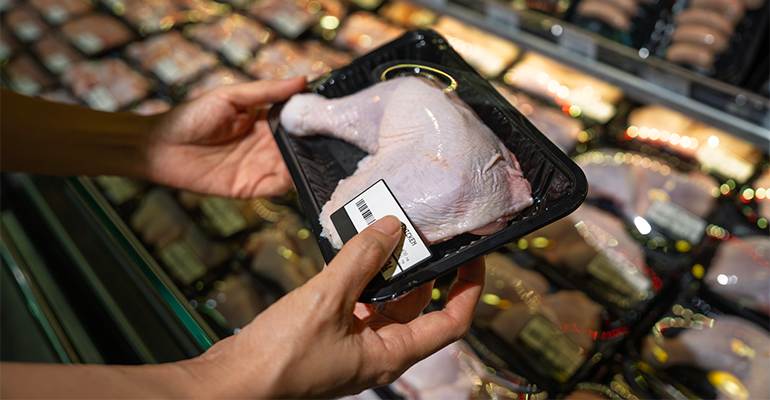
At a glance:
- A quarter of the EU’s chicken imports – 211,000 tonnes annually – comes from Brazil.
- RaboResearch expects prices of chicken breast meat to increase first, followed by processed products.
- Gelatine and collagen are exempt from the ban but only comprise a small fraction of Brazilian meat exports.
The ban will begin on 3 September, when Brazil will no longer be able to export chicken, eggs, horse, beef, fish, and honey to the EU. Until Brazil can prove compliance with the EU antimicrobial resistance rules, the ban will remain in place.
According to RaboResearch – the knowledge and research centre of Rabobank – Brazil exports around 211,000 tonnes of chicken and 92,000 tonnes of beef to the EU every year, which accounts for approximately 25% of total chicken and 25% of total beef imports.
Ingredients Network spoke with Eva Gocsik, global head of animal protein at RaboResearch, on how quickly buyers will be impacted, and how long it will realistically take for Brazil to make its way back onto the approved import list.
Brazilian chicken imports were suspended in 2025, and prices rose
The upcoming ban is not the first time Brazilian imports have been suspended.
In May and September of 2025, two outbreaks of avian influenza led to the suspension of chicken imports. At the time, prices of fresh chicken in the EU were already at historic highs, and the loss of Brazilian imports pushed those prices higher.
Those in the supply chain impacted first were the companies purchasing frozen Brazilian chicken breast. The flow-on effect meant these companies turned to fresh European chicken as an alternative, which pushed prices up.
As of 2026, most Brazilian beef imports into the EU are high-value cuts, so the effects of the suspension are expected to concentrate in premium retail and foodservice.
Chicken, on the other hand, is purchased in bulk and appears in many different products, so a shortage is not as segmented as that of high-value beef. RaboResearch expects European chicken breast meat prices to rise as a direct result, with processed foods that use chicken to follow.
“Price signals typically emerge before physical shortages occur, so even if stocks remain available for months, the market is likely to feel the tightening supply and reduced availability of Brazilian products much earlier," Gocsik told Ingredients Network.
How long before the Brazilian meat stockpiles in the EU run out?
According to RaboResearch figures, in the first half of 2026, Brazilian chicken and beef exports to the EU were up 53% and 7% year-on-year, respectively.
RaboResearch suggested that while part of the increase comes from the anticipated ban and buyers stockpiling, it may also be driven by the EU-Mercosur agreement – a trade deal with Brazil, Argentina, Paraguay and Uruguay, which cut import costs from May 2026.
When asked how long additional stock could last, Gocsik explained that it could be “anywhere from a few weeks to several months”.
“However, this will likely vary by product category, as we do not have visibility into the composition of these inventories," she added.
Brazil is, of course, not the sole supplier of chicken and beef to the EU, and as such, alternative suppliers do exist. For poultry, RaboResearch names China, Thailand, and Ukraine, and for beef it points to Argentina, Australia, and Uruguay.
And while these markets may provide some volume of EU-compliant products, it will likely not be enough to supplement what is lost from Brazil’s supply.
Brazilian ban exemptions: Gelatine and collagen
While the September ban applies antimicrobial requirements to imports, certain products are exempt, including gelatine and collagen.
“This is certainly an opportunity that the export sector should take advantage of,” Gocsik said, with the caveat that its impact will be minor.
“In 2025, exports [of exempt products from Brazil] to the EU amounted to approximately $50 million [€45 million] out of a total [global exports] of $269 million, whereas poultry meat alone generated [global] export revenues of $9.6 billion [€8.2 billion], in the same year,” she said.
“The value of these products is relatively low and would not sufficiently offset the loss of higher-value beef and poultry exports,” she added.
When could Brazil be allowed to resume exports?
In April of 2026, Brazil banned all antimicrobials for growth promotion.
This order allows producers 180 days – around six months – to comply, followed by a further 90 days – around three months – to clear existing stocks.
Brazil’s ban, however, does not include a national system tracking demonstrating how antimicrobials are used and sold, which is exactly what the European Commission requires for its assessment of compliance.
In terms of how Brazilian exporters will comply, RaboResearch expects they will likely offer individual guarantees demonstrating how their EU-shipment supply chain is compliant. RaboResearch says that this may be enough.
As for how long a process like this could take a Brazilian exporter to demonstrate, Gocsik said that while she couldn’t provide an exact timeline, she expects “for chicken it would likely take a couple of months” and “for beef, the process would probably take longer”.
The EU ban begins on 3 September, and Brazilian authorities are aiming to be compliant prior to that, according to RaboResearch.
This is not to say that if Brazil successfully complies, the ban is instantly lifted.
RaboReseach expects an EU audit will be required once guarantees are in place, which will take time.

Get more of our news on Google
Set Ingredients Network as a 'Preferred Source' to get quicker access to the news you value.
Related news

M&S launches own-brand pet food range
11 Sep 2026
UK retailer Marks & Spencer has launched its own-brand pet food line Paws & Pals – a well-timed and strategic move that will appeal to loyal shoppers, says a marketing expert.
Read more
Do the US dietary guidelines put UPFs under pressure?
10 Sep 2026
Will the US dietary guidelines change the way Americans eat, swapping ultra-processed foods for whole foods? We asked Dr Barry Popkin, renowned nutrition and obesity researcher.
Read more
Food fraud costs UK economy £2bn each year
9 Sep 2026
Food fraud is costing the UK economy up to £2 billion (€2.3 billion) every year although the food sector is more “resilient” than others, according to a recent study.
Read more
Skimpflation: An ‘unfair’ and risky approach to keeping prices low
2 Sep 2026
Consumers see skimpflation – reducing the quality of ingredients due to rising costs – as more unfair than shrinkflation, making it a risky strategy according to recent research.
Read more
NielsenIQ’s EU barometer shows Britain leading in grocery inflation
31 Aug 2026
Britain was the only country to record grocery inflation above 2%, according to NielsenIQ data that compared Europe’s five biggest grocery markets from February to May 2026.
Read more
‘Urgent gaps’ in achieving 2030 food system goals
27 Aug 2026
Global food systems are failing to meet 2030 targets across indicators including health, environment, and resilience, according to a report co-authored by the Food and Agriculture Organisation (FAO).
Read more
Seven-Eleven uses microbial testing tech to extend katsudon shelf life
26 Aug 2026
Japanese retail company Seven-Eleven has improved its factory’s microbial environment to keep comfort-food staple, katsudon, fresher for longer.
Read more
Chimac’s fusion sauces bring Korean flavours to Europe
25 Aug 2026
Irish sauce brand Chimac is tapping into Korea’s culinary traditions, bringing its flavours and products to European consumers who want a taste of K-food.
Read more
Global demand for instant noodles continues to rise
24 Aug 2026
Global demand for instant noodles reached 124.21 billion servings last year, representing a 0.7% year-on-year increase – or 900 million extra servings.
Read more
Popular barbecue staples experience sharp price increases
19 Aug 2026
The typical cost of US shoppers’ barbecue baskets has risen by 12% over the past year – the fastest annual rise in a decade, figures from The Economist show.
Read more