
Ingredients Categories
Finished Products
Finished Food Categories
- Bakery
- Beverages / Juices
- Cereal and grain products
- Confectionery
- Cooking Fats & Oils
- Dairy
- Egg products
- Fruits & Vegetables
- Infant & Baby food
- Meat, Poultry & Fish
- Nuts & Seeds products
- Other Finished Food Categories
- Pet Food
- Plant-based foods
- Prepared foods
- Sauces & Seasonings
- Sweet & Savoury Spreads
Specialised Finished Products
- Bee products
- Biotic products
- Dietary supplements
- Energy drinks
- Functional beverages
- Functional confectionery
- Functional food
- Functional powders
- Meal replacement products
- Nutricosmetics
- Other Specialised Finished Products
- Pet Dietary Supplements
- Pharma and OTC products
- Protein products
- Sugar replacers / Sweeteners
Health & Wellness Areas
Delivery Formats
Operations & Services
- 3D printing
- Analysis/ Testing
- Auditing & certifications
- Blending & mixing
- Bottling
- Certification
- Clinical trials
- Co-packing
- Coating
- Consulting
- Contract manufacturing
- Drying
- Electrospinning
- Encapsulating
- Enzymatic processing
- Extracting
- Extrusion
- Fat structuring
- Fermentation
- Filling
- Flavour development
- Freeze drying
- Granulating/ grinding/ milling / mixing
- High-pressure processing
- Labelling
- Other Operations & Services
- Packaging
- Packet filling
- Pasturising
- Quality assurance
- Saccharification
- Shear cell processing
- Spray drying
- Sterilisation
- Storage & Logistics
- Tabletting
- Toasting / roasting
- Ultra-high temperature processing
News
Food fraud costs UK economy £2bn each year
David Burrows, Freelance Journalist 9 Sep 2026Food fraud is costing the UK economy up to £2 billion (€2.3 billion) every year although the food sector is more “resilient” than others, according to a recent study.
This makes it one of the country's most expensive forms of economic crime, but the number of cases are far lower than for other types of fraud and theft.
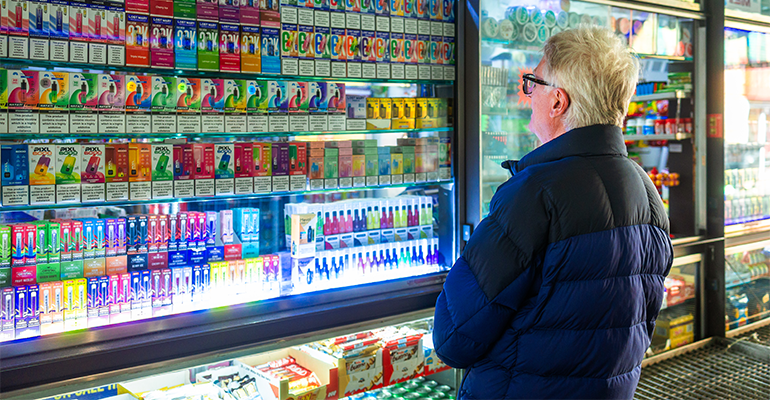
At a glance:
- UK academics have designed a new approach to assess impact of food fraud, which costs up to £2bn (€2.3 billion) annually.
- Their research shows the food industry’s “resilience” to fraud, versus other sectors.
- The UK’s food crime unit seized 33 tonnes of suspected illegal frozen food in August, making one arrest.
The experts from the University of Portsmouth, UK, examined offences including food substitution, false labelling and document fraud, where products are deliberately misrepresented for financial gain.
They found that around three-quarters of the total economic cost comes from the direct replacement of legitimate products with fraudulent alternatives, such as the marketing of smoked salmon as Scottish despite being sourced in Norway.
Although consumers may never realise they have been deceived, the consequences can include financial losses for businesses, damage to confidence in food supply chains and, in some cases, serious risks to public health. Fake spirits, for example, have been found to contain industrial chemicals.
“It is not just about consumers paying for something that is not what it claims to be. It undermines honest businesses, distorts markets and, in the most serious cases, puts people's health at risk,” explained David Shepherd, from the School of Criminology and Criminal Justice at the University of Portsmouth.
Novel assessment of total food fraud costs introduced
The study, published in the Journal of Economic Criminology, introduces a “new way” of measuring the cost of food fraud by looking at entire criminal operations rather than individual incidents. It also captures the wider impact on the legitimate food industry, including the loss of sales when fraudulent products displace genuine ones.
“The total annual cost of food fraud to the UK’s economy is estimated at between £410 million [€479 million] and £1.96 billion [€2.29 billion],” the paper reads. “The largest element (75%) is the direct property loss to businesses and individuals, between £296 million [€346 million] and £1.48 billion [€1.73 billion] per year. This is equivalent to between 0.05% and 0.25% of the annual turnover of the UK food industry.”
The wide margins are due to uncertainty in annual crime rates: between 610 and, at the top end, 3,050 crimes recorded by the Food Standards Agency (FSA).
These estimates are “very low” compared to the high volume of acquisitive crimes in 2022, theft and other types of fraud. Overall police recorded fraud crimes for example were 400,763. “The implication is that the food industry is resilient to the threat of food fraud,” the academics wrote.
Extensive checks have, for example, been built into the UK's food supply chains. Collaboration between regulators, manufacturers, retailers, and certification bodies has created “multiple layers of quality assurance” that make it much harder for rogue traders to operate.
"One of the most encouraging findings from this research is that the UK's food industry has developed systems that make fraud significantly more difficult than in many other sectors,” noted professor Lisa Jack, another of the study’s authors. “Continued investment in prevention and enforcement is essential if we are to maintain public confidence in the food we buy and protect businesses that play by the rules," she added.
Based on the cases analysed, the researchers estimated that prosecutions may deliver a return on investment of more than 400%, indicating that “stronger enforcement could pay for itself while reducing harm across the food system”.
Frozen food fraud
In August this year, an FSA National Food Crime Unit operation led to one arrest and the seizure of 33 tonnes of suspected illegal frozen food products across England, Wales, and Scotland.
The operation involved visits to hundreds of businesses. There was no indication of a health risk to the public, the FSA said.
The FSA’s latest incident prevention update, highlighting recent food and feed incidents, emerging risks, and practical measures businesses can take to prevent them, detailed the connection between food fraud, authenticity, and food safety.
“The FSA highlights saffron as a commodity at risk from food crime, noting that fraud can in some cases create safety risks,” explained Selvarani Elahi, executive director of the Food Authenticity Network and vice president at the Institute of Food Science and Technology.
Businesses are advised to source from reputable suppliers and maintain robust authenticity and allergen management controls.

Get more of our news on Google
Set Ingredients Network as a 'Preferred Source' to get quicker access to the news you value.
Related news

Do the US dietary guidelines put UPFs under pressure?
10 Sep 2026
Will the US dietary guidelines change the way Americans eat, swapping ultra-processed foods for whole foods? We asked Dr Barry Popkin, renowned nutrition and obesity researcher.
Read more
Kellogg accelerates work to remove artificial colours from all US cereals
3 Sep 2026
WK Kellogg has announced an accelerated timeline to eliminate all artificial colours and the chemical preservative, BHT, across its full US portfolio of cereals and cereal packaging.
Read more
Skimpflation: An ‘unfair’ and risky approach to keeping prices low
2 Sep 2026
Consumers see skimpflation – reducing the quality of ingredients due to rising costs – as more unfair than shrinkflation, making it a risky strategy according to recent research.
Read more
NielsenIQ’s EU barometer shows Britain leading in grocery inflation
31 Aug 2026
Britain was the only country to record grocery inflation above 2%, according to NielsenIQ data that compared Europe’s five biggest grocery markets from February to May 2026.
Read more
‘Urgent gaps’ in achieving 2030 food system goals
27 Aug 2026
Global food systems are failing to meet 2030 targets across indicators including health, environment, and resilience, according to a report co-authored by the Food and Agriculture Organisation (FAO).
Read more
Chimac’s fusion sauces bring Korean flavours to Europe
25 Aug 2026
Irish sauce brand Chimac is tapping into Korea’s culinary traditions, bringing its flavours and products to European consumers who want a taste of K-food.
Read more
Global demand for instant noodles continues to rise
24 Aug 2026
Global demand for instant noodles reached 124.21 billion servings last year, representing a 0.7% year-on-year increase – or 900 million extra servings.
Read more
Popular barbecue staples experience sharp price increases
19 Aug 2026
The typical cost of US shoppers’ barbecue baskets has risen by 12% over the past year – the fastest annual rise in a decade, figures from The Economist show.
Read more
Hot NPD: Nissin launches first cold-water Cup Noodles
18 Aug 2026
Nissin is taking one of Japan’s most iconic instant meals in a completely new direction with the launch of the first cold water-only Cup Noodles in the brand’s 55-year history.
Read more
Savoury protein snacks shake up the on-the-go market
10 Aug 2026
Sweet flavours have dominated the high-protein snack category but savoury snacks, such as cheese bars and meat sticks, can appeal to health-conscious consumers.
Read more