
Ingredients Categories
Finished Products
Finished Food Categories
- Bakery
- Beverages / Juices
- Cereal and grain products
- Confectionery
- Cooking Fats & Oils
- Dairy
- Egg products
- Fruits & Vegetables
- Infant & Baby food
- Meat, Poultry & Fish
- Nuts & Seeds products
- Other Finished Food Categories
- Pet Food
- Plant-based foods
- Prepared foods
- Sauces & Seasonings
- Sweet & Savoury Spreads
Specialised Finished Products
- Bee products
- Biotic products
- Dietary supplements
- Energy drinks
- Functional beverages
- Functional confectionery
- Functional food
- Functional powders
- Meal replacement products
- Nutricosmetics
- Other Specialised Finished Products
- Pet Dietary Supplements
- Pharma and OTC products
- Protein products
- Sugar replacers / Sweeteners
Health & Wellness Areas
Delivery Formats
Operations & Services
- 3D printing
- Analysis/ Testing
- Auditing & certifications
- Blending & mixing
- Bottling
- Certification
- Clinical trials
- Co-packing
- Coating
- Consulting
- Contract manufacturing
- Drying
- Electrospinning
- Encapsulating
- Enzymatic processing
- Extracting
- Extrusion
- Fat structuring
- Fermentation
- Filling
- Flavour development
- Freeze drying
- Granulating/ grinding/ milling / mixing
- High-pressure processing
- Labelling
- Other Operations & Services
- Packaging
- Packet filling
- Pasturising
- Quality assurance
- Saccharification
- Shear cell processing
- Spray drying
- Sterilisation
- Storage & Logistics
- Tabletting
- Toasting / roasting
- Ultra-high temperature processing
News
Do the US dietary guidelines put UPFs under pressure?
Natasha Spencer-Jolliffe, Freelance Journalist 10 Sep 2026Will the US dietary guidelines change the way Americans eat, swapping ultra-processed foods for whole foods? We asked Dr Barry Popkin, renowned nutrition and obesity researcher.
In 2026, the US announced its 2025-2030 Dietary Guidelines for Americans, moving away from its typical American diet, which contains high levels of ultra-processed foods (UPF), towards one that comprises “real food”.
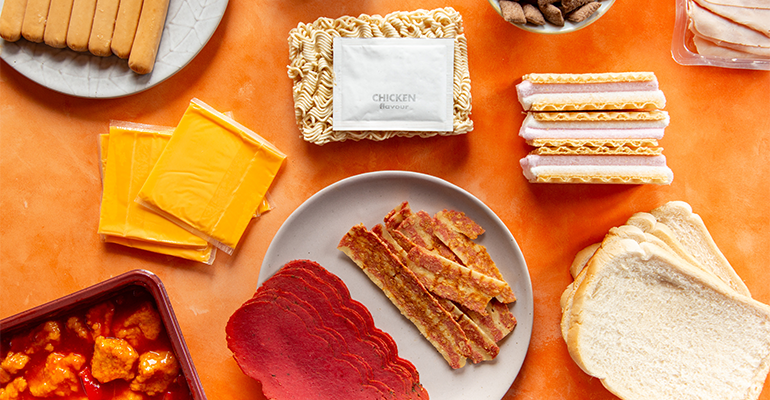
At a glance:
- US dietary guidelines now promote whole foods and animal protein while reducing UPFs.
- GLP-1 users represent a growing market and could result in more higher-protein, nutrient-dense foods.
- Manufacturers are preparing through reformulation and new launches, but changing a US-built system will likely take decades.
It followed a mandate from Health Secretary Robert F. Kennedy Jr. for Americans to ‘eat real food’, promoting a diet that centres on whole fruits, vegetables and whole grains, while limiting UPF consumption.
Analysis in February 2026 by bank and financial services provider BNP Paribas into the effects of the US’s 2026 dietary guidelines on the food industry suggests this could transform the food investment landscape.
Proposing a new national diet for Americans signals a change for both consumers, who are rethinking their UPF purchases, and investors, who may redirect the billions of dollars spent on institutional food purchases toward UPF alternatives.
A 2025 research study on UPF consumption showed that food products in this category account for 53% of calories consumed by adults and almost two-thirds (62%) of those eaten by children.
“The reality is we're a nation where our diet is killing us,” Barry Popkin, renowned nutrition and obesity researcher, told Ingredients Network.
A near-complete reversal: The US’s new dietary direction
Comparing the US’s new-for-2026 national diet with its 1992 food pyramid, BNP Paribas said: “The 2025-2030 Guidelines represent a near-complete reversal”. The USDA has created a new ‘inverted pyramid’ framework, in which grains have been moved to the bottom, and high-quality proteins, full-fat dairy, and healthy fats form the focus of a healthy diet.
In raising the concept of a new national diet, the USDA recommends Americans consume between 1.2 and 1.6 grams of protein per kilogram of body weight per day.
The US government has replaced the idea that added sugar should make up 10% of total daily calories, instead recommending a cap of 10 grams of added sugar per meal. For children under four, the guidelines are stricter, indicating that no added sugar should form part of a healthy diet.
GLP-1 medications create new consumer subset
According to Gallup data, 11% of US consumers will use GLP-1 medications for weight loss in 2026, a significant increase from 3% in 2024.
“That subpopulation will grow as the prices of the GLP-1s come down more, as more generics hit the market, and they will [happen] this year and next,” said Popkin. “As that happens, we'll start to see that subpopulation shifting, and we'll see a reduction in lots of purchases of some subsets of UPFs.”
Exploring nutritional priorities, joint advisory research in 2025 from the American College of Lifestyle Medicine, the American Society for Nutrition, the Obesity Medicine Association and the Obesity Society found that evidence-based nutritional and lifestyle strategies play a pivotal role in addressing key challenges associated with GLP-1 treatment for obesity.
“The markets will start producing food for them – higher protein, healthier kinds of things theoretically,” Popkin added.
A turning point or early signal?
While manufacturers are likely undertaking research behind the scenes, moves away from UPF-heavy portfolios are more subtle as the policy landscape remains unclear. “Food manufacturers are guessing on that, are selling where the market is and making as much profit as they can,” said Popkin. “They prepare for the worst and the best.”
Maintaining taste while increasing the nutritional profile of products remains paramount. Increasingly, the industry may see manufacturers partner with specialist ingredient and reformulation companies to get a head start on the US’s new national dietary projections.
Yet reformulations play a prominent role in growing the number of UPF alternatives in product portfolios. Manufacturers are already updating existing products and rolling out new ones that reduce or remove added sugar. But without clear direction, supported by policy, change won’t happen overnight.
“A transformation will take decades to move to sustainable eating and to move the world toward much more real food,” said Popkin.

Get more of our news on Google
Set Ingredients Network as a 'Preferred Source' to get quicker access to the news you value.
Related news

Health and wellness engagement matures across Middle East and Africa
4 Sep 2026
Many consumers in the Middle East and Africa are now proactively engaged in health and wellness, looking to integrate better habits and products into their daily lives, say experts.
Read more
Skimpflation: An ‘unfair’ and risky approach to keeping prices low
2 Sep 2026
Consumers see skimpflation – reducing the quality of ingredients due to rising costs – as more unfair than shrinkflation, making it a risky strategy according to recent research.
Read more
‘Urgent gaps’ in achieving 2030 food system goals
27 Aug 2026
Global food systems are failing to meet 2030 targets across indicators including health, environment, and resilience, according to a report co-authored by the Food and Agriculture Organisation (FAO).
Read more
Seven-Eleven uses microbial testing tech to extend katsudon shelf life
26 Aug 2026
Japanese retail company Seven-Eleven has improved its factory’s microbial environment to keep comfort-food staple, katsudon, fresher for longer.
Read more
Chimac’s fusion sauces bring Korean flavours to Europe
25 Aug 2026
Irish sauce brand Chimac is tapping into Korea’s culinary traditions, bringing its flavours and products to European consumers who want a taste of K-food.
Read more
Global demand for instant noodles continues to rise
24 Aug 2026
Global demand for instant noodles reached 124.21 billion servings last year, representing a 0.7% year-on-year increase – or 900 million extra servings.
Read more
Popular barbecue staples experience sharp price increases
19 Aug 2026
The typical cost of US shoppers’ barbecue baskets has risen by 12% over the past year – the fastest annual rise in a decade, figures from The Economist show.
Read more
Hot NPD: Nissin launches first cold-water Cup Noodles
18 Aug 2026
Nissin is taking one of Japan’s most iconic instant meals in a completely new direction with the launch of the first cold water-only Cup Noodles in the brand’s 55-year history.
Read more
Manam Chocolate aims to bring premium Indian cacao to 'the world stage'
11 Aug 2026
Craft chocolate brand Manam Chocolate is investing in local expansion and supply chain innovation throughout India as it works to build out the premium reputation of its locally produced cacao products.
Read more
Savoury protein snacks shake up the on-the-go market
10 Aug 2026
Sweet flavours have dominated the high-protein snack category but savoury snacks, such as cheese bars and meat sticks, can appeal to health-conscious consumers.
Read more