
Ingredients Categories
Finished Products
Finished Food Categories
- Bakery
- Beverages / Juices
- Cereal and grain products
- Confectionery
- Cooking Fats & Oils
- Dairy
- Egg products
- Fruits & Vegetables
- Infant & Baby food
- Meat, Poultry & Fish
- Nuts & Seeds products
- Other Finished Food Categories
- Pet Food
- Plant-based foods
- Prepared foods
- Sauces & Seasonings
- Sweet & Savoury Spreads
Specialised Finished Products
- Bee products
- Biotic products
- Dietary supplements
- Energy drinks
- Functional beverages
- Functional confectionery
- Functional food
- Functional powders
- Meal replacement products
- Nutricosmetics
- Other Specialised Finished Products
- Pet Dietary Supplements
- Pharma and OTC products
- Protein products
- Sugar replacers / Sweeteners
Health & Wellness Areas
Delivery Formats
Operations & Services
- 3D printing
- Analysis/ Testing
- Auditing & certifications
- Blending & mixing
- Bottling
- Certification
- Clinical trials
- Co-packing
- Coating
- Consulting
- Contract manufacturing
- Drying
- Electrospinning
- Encapsulating
- Enzymatic processing
- Extracting
- Extrusion
- Fat structuring
- Fermentation
- Filling
- Flavour development
- Freeze drying
- Granulating/ grinding/ milling / mixing
- High-pressure processing
- Labelling
- Other Operations & Services
- Packaging
- Packet filling
- Pasturising
- Quality assurance
- Saccharification
- Shear cell processing
- Spray drying
- Sterilisation
- Storage & Logistics
- Tabletting
- Toasting / roasting
- Ultra-high temperature processing
News
Fighting food fraud: Europol seizes fake goods valued at €91m
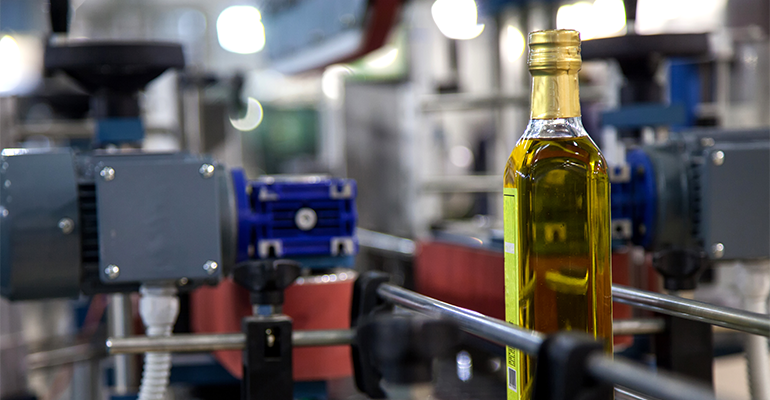
Tessa Wiles, Content Editor - Food 11 Nov 2024Oil dyed with chlorophyll to look like extra virgin olive oil and low-quality tuna labelled as premium were just some of the counterfeit products seized by Europol in Operation OPSON, which hauled goods worth over €91 million.
Food fraud has many implications, from posing health risks for consumers and eroding their trust, to diminishing supply chain integrity and undermining companies who follow the regulations.
To combat food fraud, Europol, European nations, and private-sector food and beverage companies join forces annually as part of Operation OPSON. The operation aims to protect public safety and health by dismantling criminal networks involved in food fraud.
This year, OPSON brought together 29 countries from across Europe, alongside private sector food and beverage companies, law enforcement, customs, and food regulatory agencies, including Europol, the European Anti-Fraud Office (OLAF), Directorate-General for Health and Food Safety (DG SANTE), and the Directorate-General for Agriculture and Rural Development (DG AGRI).
What food fraud was detected in Europe in 2024?
When it comes to counterfeit or incorrectly designated foods, wines with Protected Designation of Origin (PDO) or Protected Geographic Indication (PGI) status and olive oil are particularly vulnerable. Lower-grade olive oils can be falsely labelled as extra virgin olive oil and PDO or PDI labels can be forged.
In a collaboration between the Spanish Guardia Civil, the Italian Carabinieri, and Europol, OPSON XIII saw four people arrested and 120,000 cans of tuna and 45,000 litres of ‘olive oil’ seized. The owners of a canning company in La Rioja, Spain, had been mislabelling lower-quality tuna as premium and labelling the product as olive oil despite using sunflower oil or pomace instead. This allowed the company to sell the ‘premium’ product at a lower price than legitimate competitors, undercutting their competition.
In Italy, Italian authorities seized around 42 tonnes of counterfeit extra virgin olive oil. The product was both ready to be distributed and, in some cases, the oils had already entered the market. After searching various locations, including warehouses, the officers also uncovered and seized around 71 tonnes of “oily substances”, housed in plastic tubs and cans of varying sizes.
In addition to the substances, 623 litres of chlorophyll, a natural green colour pigment found in plants and algae, was also seized, and found to have been used to give the oily substances the appearance of extra virgin olive oil. The approximate value of these seized items was €900,000 and included electronics, forklifts, a transport vehicle, and packing equipment.
Wine counterfeiting operation selling individual bottles for €15,000 dismantled
Also in Italy, 60,000 litres of counterfeit wine were seized. A criminal network had been mislabelling wines and selling the bottles at a higher market value by manipulating wine quality certification records.
A French wine counterfeiting operation was also dismantled. The network has been forging French PDO red wines in Italy, before delivering them to an Italian airport and exporting the bottles across the world, in some cases charging up to €15,000 per bottle. Six people were arrested as part of this operation, over €100,000 in cash and documents were confiscated, and seizures valued at €1.4 million.
The 2023 edition of OPSON spanned 25 countries and seized 8,000 tonnes of food and beverages valued at €30 m. According to a Europol press release, those numbers have increased substantially: 185% more food and beverage products by weight and a more than 200% increase in value seized.
What can food and beverage companies do to avoid food fraud?
Food and beverage companies may inadvertently participate in food fraud; however, several steps can be taken to reduce the risk of substandard or counterfeit products.
According to the UK’s Food Standards Agency (FSA), companies can conduct food fraud vulnerability assessments to identify and evaluate areas of the supply chain at risk of fraud. Prevention plans can also be implemented to mitigate the risks identified in the vulnerability assessment.
Product tracking is also a key component to ensuring transparency across the supply chain. The UK FSA recommends implementing a chain of custody system. This system tracks the flow of products from production and processing, all the way to distribution.
To detect discrepancies mass balance analyses can be put in place to compare volumes of finished products to quantities of raw materials sourced.
Technologies, including Internet of Things (IoT) and blockchain can be used to increase transparency and traceability, enabling real-time tracking of products moving through the supply chain.
Multi-agency collaboration can also be beneficial in staying ahead of potential threats and strengthening collective efforts, as it enables real-time intelligence sharing from multiple touchpoints. Employees and staff across the supply chain should also be provided with regular training around fraud prevention and detection.

Get more of our news on Google
Set Ingredients Network as a 'Preferred Source' to get quicker access to the news you value.
Related news

M&S launches own-brand pet food range
11 Sep 2026
UK retailer Marks & Spencer has launched its own-brand pet food line Paws & Pals – a well-timed and strategic move that will appeal to loyal shoppers, says a marketing expert.
Read more
Do the US dietary guidelines put UPFs under pressure?
10 Sep 2026
Will the US dietary guidelines change the way Americans eat, swapping ultra-processed foods for whole foods? We asked Dr Barry Popkin, renowned nutrition and obesity researcher.
Read more
Food fraud costs UK economy £2bn each year
9 Sep 2026
Food fraud is costing the UK economy up to £2 billion (€2.3 billion) every year although the food sector is more “resilient” than others, according to a recent study.
Read more
EU's ban on Brazilian meat expected to raise prices
7 Sep 2026
Around 25% of the EU’s imported chicken and beef comes from Brazil. From September, products that fail to meet the EU antimicrobial resistance rules will be banned.
Read more
Skimpflation: An ‘unfair’ and risky approach to keeping prices low
2 Sep 2026
Consumers see skimpflation – reducing the quality of ingredients due to rising costs – as more unfair than shrinkflation, making it a risky strategy according to recent research.
Read more
NielsenIQ’s EU barometer shows Britain leading in grocery inflation
31 Aug 2026
Britain was the only country to record grocery inflation above 2%, according to NielsenIQ data that compared Europe’s five biggest grocery markets from February to May 2026.
Read more
‘Urgent gaps’ in achieving 2030 food system goals
27 Aug 2026
Global food systems are failing to meet 2030 targets across indicators including health, environment, and resilience, according to a report co-authored by the Food and Agriculture Organisation (FAO).
Read more
Seven-Eleven uses microbial testing tech to extend katsudon shelf life
26 Aug 2026
Japanese retail company Seven-Eleven has improved its factory’s microbial environment to keep comfort-food staple, katsudon, fresher for longer.
Read more
Chimac’s fusion sauces bring Korean flavours to Europe
25 Aug 2026
Irish sauce brand Chimac is tapping into Korea’s culinary traditions, bringing its flavours and products to European consumers who want a taste of K-food.
Read more
Global demand for instant noodles continues to rise
24 Aug 2026
Global demand for instant noodles reached 124.21 billion servings last year, representing a 0.7% year-on-year increase – or 900 million extra servings.
Read more