
Ingredients Categories
Finished Products
Finished Food Categories
- Bakery
- Beverages / Juices
- Cereal and grain products
- Confectionery
- Cooking Fats & Oils
- Dairy
- Egg products
- Fruits & Vegetables
- Infant & Baby food
- Meat, Poultry & Fish
- Nuts & Seeds products
- Other Finished Food Categories
- Pet Food
- Plant-based foods
- Prepared foods
- Sauces & Seasonings
- Sweet & Savoury Spreads
Specialised Finished Products
- Bee products
- Biotic products
- Dietary supplements
- Energy drinks
- Functional beverages
- Functional confectionery
- Functional food
- Functional powders
- Meal replacement products
- Nutricosmetics
- Other Specialised Finished Products
- Pet Dietary Supplements
- Pharma and OTC products
- Protein products
- Sugar replacers / Sweeteners
Health & Wellness Areas
Delivery Formats
Operations & Services
- 3D printing
- Analysis/ Testing
- Auditing & certifications
- Blending & mixing
- Bottling
- Certification
- Clinical trials
- Co-packing
- Coating
- Consulting
- Contract manufacturing
- Drying
- Electrospinning
- Encapsulating
- Enzymatic processing
- Extracting
- Extrusion
- Fat structuring
- Fermentation
- Filling
- Flavour development
- Freeze drying
- Granulating/ grinding/ milling / mixing
- High-pressure processing
- Labelling
- Other Operations & Services
- Packaging
- Packet filling
- Pasturising
- Quality assurance
- Saccharification
- Shear cell processing
- Spray drying
- Sterilisation
- Storage & Logistics
- Tabletting
- Toasting / roasting
- Ultra-high temperature processing
News
FreshDirect makes first foray into physical retail
Simon Pitman, Freelance Journalist 9 Jul 2025FreshDirect has made its first foray into physical retail – a bold strategic move for the pure-play digital grocer, which has operated exclusively online since its founding in 2002.
The pop-up store, named FreshDirect on Main, opened in New York at the end of May and will operate until December. Located in the heart of the upscale Hamptons, on Long Island, it offers a curated selection of seasonal produce, local artisanal items, and FreshDirect’s own prepared foods.
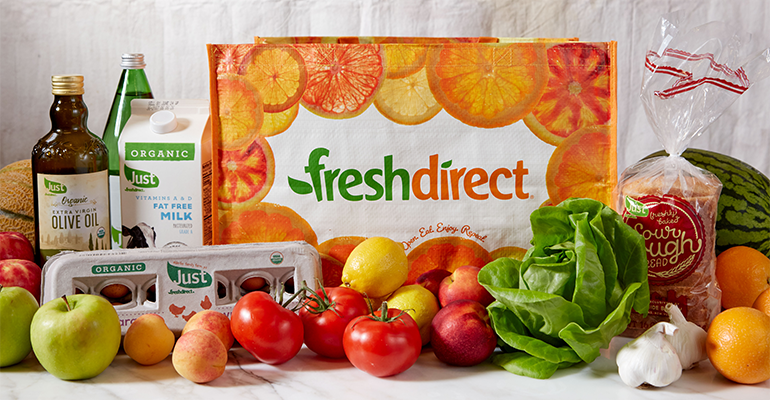
In addition to shopping, the bricks-and-mortar site will host community-driven experiences, from ice cream socials to wine tastings and pizza-making classes.
“This milestone marks an exciting new chapter for the company as it expands beyond its digital roots for the first time in nearly 25 years,” the company said.
FreshDirect: Bridging the online-offline divide
While the initiative may appear hyperlocal and experiential, analysts suggest it reflects a broader strategic recalibration among online-first food retailers looking to deepen customer engagement and optimise delivery infrastructure.
For FreshDirect, a long-standing leader in the US online grocery sector, the move supports both brand building and logistical expansion.
Its first-ever storefront has been intentionally designed to give a farmer’s market feel, complete with crates, natural textures, and a dedicated Jack’s Stir Brew Coffee counter.
These touches were incorporated to reinforce FreshDirect’s commitment to local sourcing and premium fresh produce – critical categories where online retail continues to lag.
While growth in online US grocery sales has been significant – with reports that sales grew 27% year-on-year in May, to reach $8.7 billion – most grocery shoppers continue to prefer physical stores.
For online retailers like FreshDirect, establishing a tangible, sensory retail experience can help overcome consumer hesitance around freshness, quality, and trust – particularly for perishable categories.
Mintel’s US Online Grocery Retailing Market Report 2024 echoed this need for omnichannel innovation. While online grocery usage remains high, particularly among gen Z and millennial consumers, Mintel highlighted the enduring value of offline experiences.
“Younger shoppers are digitally fluent but still enjoy shopping in-store for inspiration, impulse buying and the tactile connection to food,” it said.
Physical store offers strategic value beyond sales
While the Southampton pop-up functions as a retail outlet, its core value may be in customer engagement, logistics testing, and local market research.
FreshDirect has hinted at longer-term ambitions for the physical store to combine delivery, stating in its press release: “The company is exploring opportunities for same-day delivery for the Hamptons region directly from FreshDirect on Main.”
This reveals a dual role for the store as both consumer touchpoint and micro-fulfilment hub, enabling faster delivery, lower transportation costs, and potentially higher order accuracy, while ultimately providing infrastructure as a fulfilment hub for deliveries throughout the local area, helping to ensure perishable items remain fresher.
The temporary nature of the pop-up also allows for agile, low-risk experimentation. Rather than committing to permanent leases or complex buildouts, FreshDirect can assess consumer response, test operations and gather feedback within a defined timeframe – serving to help merge the digital with the physical in a far more relatable way.
Cautious but considered pivot
FreshDirect’s move comes as other digital-native grocers, including Amazon, reassess their brick-and-mortar strategies.
Despite ambitious efforts with Amazon Fresh and Go stores, the tech giant has faced operational hurdles and mixed consumer uptake, leading to closures and a strategic reset.
FreshDirect’s pop-up, by contrast, is more tactile, localized, and community-driven, sidestepping the high overheads and rigid format of large-scale permanent stores. It also aligns more closely with its brand ethos: a focus on freshness, locality, and direct farmer relationships.
With experiential offerings like Tiny Tastemakers events for children and exclusive tastings from regional producers, the company is emphasising engaging elements that are difficult to replicate online.

Get more of our news on Google
Set Ingredients Network as a 'Preferred Source' to get quicker access to the news you value.
Related news

M&S launches own-brand pet food range
11 Sep 2026
UK retailer Marks & Spencer has launched its own-brand pet food line Paws & Pals – a well-timed and strategic move that will appeal to loyal shoppers, says a marketing expert.
Read more
Do the US dietary guidelines put UPFs under pressure?
10 Sep 2026
Will the US dietary guidelines change the way Americans eat, swapping ultra-processed foods for whole foods? We asked Dr Barry Popkin, renowned nutrition and obesity researcher.
Read more
Food fraud costs UK economy £2bn each year
9 Sep 2026
Food fraud is costing the UK economy up to £2 billion (€2.3 billion) every year although the food sector is more “resilient” than others, according to a recent study.
Read more
Health and wellness engagement matures across Middle East and Africa
4 Sep 2026
Many consumers in the Middle East and Africa are now proactively engaged in health and wellness, looking to integrate better habits and products into their daily lives, say experts.
Read more
Kellogg accelerates work to remove artificial colours from all US cereals
3 Sep 2026
WK Kellogg has announced an accelerated timeline to eliminate all artificial colours and the chemical preservative, BHT, across its full US portfolio of cereals and cereal packaging.
Read more
Skimpflation: An ‘unfair’ and risky approach to keeping prices low
2 Sep 2026
Consumers see skimpflation – reducing the quality of ingredients due to rising costs – as more unfair than shrinkflation, making it a risky strategy according to recent research.
Read more
Royal Canin launches ‘freshly-cooked’ therapeutic dog food
1 Sep 2026
Mars-owned Royal Canin has moved into the therapeutic diet sector with the launch of its Fresh Veterinary Diets range for dogs with health conditions. We asked a veterinary nutritionist for her opinion.
Read more
NielsenIQ’s EU barometer shows Britain leading in grocery inflation
31 Aug 2026
Britain was the only country to record grocery inflation above 2%, according to NielsenIQ data that compared Europe’s five biggest grocery markets from February to May 2026.
Read more
‘Urgent gaps’ in achieving 2030 food system goals
27 Aug 2026
Global food systems are failing to meet 2030 targets across indicators including health, environment, and resilience, according to a report co-authored by the Food and Agriculture Organisation (FAO).
Read more
Seven-Eleven uses microbial testing tech to extend katsudon shelf life
26 Aug 2026
Japanese retail company Seven-Eleven has improved its factory’s microbial environment to keep comfort-food staple, katsudon, fresher for longer.
Read more