
Ingredients Categories
Finished Products
Finished Food Categories
- Bakery
- Beverages / Juices
- Cereal and grain products
- Confectionery
- Cooking Fats & Oils
- Dairy
- Egg products
- Fruits & Vegetables
- Infant & Baby food
- Meat, Poultry & Fish
- Nuts & Seeds products
- Other Finished Food Categories
- Pet Food
- Plant-based foods
- Prepared foods
- Sauces & Seasonings
- Sweet & Savoury Spreads
Specialised Finished Products
- Bee products
- Biotic products
- Dietary supplements
- Energy drinks
- Functional beverages
- Functional confectionery
- Functional food
- Functional powders
- Meal replacement products
- Nutricosmetics
- Other Specialised Finished Products
- Pet Dietary Supplements
- Pharma and OTC products
- Protein products
- Sugar replacers / Sweeteners
Health & Wellness Areas
Delivery Formats
Operations & Services
- 3D printing
- Analysis/ Testing
- Auditing & certifications
- Blending & mixing
- Bottling
- Certification
- Clinical trials
- Co-packing
- Coating
- Consulting
- Contract manufacturing
- Drying
- Electrospinning
- Encapsulating
- Enzymatic processing
- Extracting
- Extrusion
- Fat structuring
- Fermentation
- Filling
- Flavour development
- Freeze drying
- Granulating/ grinding/ milling / mixing
- High-pressure processing
- Labelling
- Other Operations & Services
- Packaging
- Packet filling
- Pasturising
- Quality assurance
- Saccharification
- Shear cell processing
- Spray drying
- Sterilisation
- Storage & Logistics
- Tabletting
- Toasting / roasting
- Ultra-high temperature processing
News
Front-of-pack labels gaining support, but not everywhere
Katja Knox, Editorial Account Manager 6 Apr 2022
More and more frequently, consumers want to know what is in their food. While ingredients lists have long been present on packaged goods, front-of-package labeling has come into vogue in recent years as a shorthand signal to consumers about whether a product is healthy or should be considered ‘junk food.’
In Mexico, Israel and Chile, front-of-pack labeling schemes are already mandatory. However, worldwide, calls for mandated front-of-pack labeling schemes that help consumers identify high fat, salt and sugar products (HFSS) are gaining steam. The World Health Organisation (WHO) formally took the position last fall that these labeling schemes are “an important policy implementation tool to promote healthy diets through facilitating the consumers’ understanding of the nutritional values of the food and making healthier food choices and drive reformulation by the food industry.”
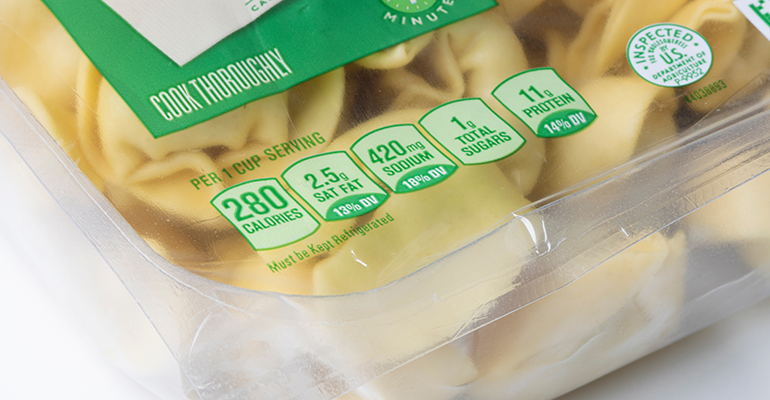
According to the WHO, the Americas is one of the most advanced regions globally in terms of front-of-pack labeling requirements. Europe is following closely behind, and the European Commission is continuing to pursue mandatory font-of-pack nutrition labelling plans as part of its revision of packaging labeling under the Farm-to-Fork strategy.
Studies have shown that the voluntary traffic light labelling system (TLS) in the UK and the EU’s Nutri-Score (NS) choice direct consumers to products containing fewer calories as well as less salt, fat or saturated fat. Despite their efficacy, since these systems are currently voluntary, around one in four products do not display these labeling schemes, according to the nonprofit Action on Salt and Sugar.
Not everyone is a proponent
Although the majority of these front-of-pack labeling systems remain voluntary despite institutional support to require them on the packaging, there are opponents.
In the EU, the Italian government remains opposed to the widely-supported NutriScore system. Last fall the Italian antitrust body, the Competition and Market Authority, launched an investigation into five companies using the labeling scheme, saying that consumers may erroneously view the recommendations made on the label as an absolute truth.
In Israel, where front-of-pack labeling identifying HFSS foods has been mandatory since 2020, the United States Foreign Department of Agriculture found “labeling regulation has not had a significant effect on market trends, and sales of labeled products did not decline in this period.”
New supportors the space
Despite obstacles in the path of adoption, several regions are showing a growing interest in these labeling schemes. In the Caribbean, the regional public health sector is advocating to begin using the ‘stop sign’ system that Chile introduced in 2016. This system indicates if a product is high in fat, sugar or sodium and is based on thresholds set by the Pan American Health Organisation (PAHO), which is informed by the World Health Organization.
In the UK, there is growing support from public health organisations and nonprofits to make front-of-pack labeling compulsory. India too is seeing growing support for such a system with the Food Safety and Standards Authority of India (FSSAI) recently announcing that it would begin instituting new requirements for food packaging labels based on a health star rating system.

Get more of our news on Google
Set Ingredients Network as a 'Preferred Source' to get quicker access to the news you value.
Related news

M&S launches own-brand pet food range
11 Sep 2026
UK retailer Marks & Spencer has launched its own-brand pet food line Paws & Pals – a well-timed and strategic move that will appeal to loyal shoppers, says a marketing expert.
Read more
Do the US dietary guidelines put UPFs under pressure?
10 Sep 2026
Will the US dietary guidelines change the way Americans eat, swapping ultra-processed foods for whole foods? We asked Dr Barry Popkin, renowned nutrition and obesity researcher.
Read more
Food fraud costs UK economy £2bn each year
9 Sep 2026
Food fraud is costing the UK economy up to £2 billion (€2.3 billion) every year although the food sector is more “resilient” than others, according to a recent study.
Read more
Kellogg accelerates work to remove artificial colours from all US cereals
3 Sep 2026
WK Kellogg has announced an accelerated timeline to eliminate all artificial colours and the chemical preservative, BHT, across its full US portfolio of cereals and cereal packaging.
Read more
‘Urgent gaps’ in achieving 2030 food system goals
27 Aug 2026
Global food systems are failing to meet 2030 targets across indicators including health, environment, and resilience, according to a report co-authored by the Food and Agriculture Organisation (FAO).
Read more
Chimac’s fusion sauces bring Korean flavours to Europe
25 Aug 2026
Irish sauce brand Chimac is tapping into Korea’s culinary traditions, bringing its flavours and products to European consumers who want a taste of K-food.
Read more
Savoury protein snacks shake up the on-the-go market
10 Aug 2026
Sweet flavours have dominated the high-protein snack category but savoury snacks, such as cheese bars and meat sticks, can appeal to health-conscious consumers.
Read more
Nestlé invests in regeneratively farmed wheat for KitKat
5 Aug 2026
Nestlé will pay a premium for Wildfarmed’s regeneratively farmed wheat but the CPG remains reticent to promote the move on packs of its KitKat bars.
Read more
How Secon Taste is putting upcycled snacks on shelves
4 Aug 2026
Hungarian zero-waste startup Secon Taste is turning surplus food into upcycled snacks such as fibre-packed granola, instant porridge, and a circular coffee-tasting box.
Read more
Codex sets global thresholds for ‘may contain’ labels
3 Aug 2026
Codex Alimentarius has adopted its first global guidance on when to use “may contain” allergen warnings, setting thresholds intended to stop the label being used as blanket legal cover.
Read more