
Ingredients Categories
Finished Products
Finished Food Categories
- Bakery
- Beverages / Juices
- Cereal and grain products
- Confectionery
- Cooking Fats & Oils
- Dairy
- Egg products
- Fruits & Vegetables
- Infant & Baby food
- Meat, Poultry & Fish
- Nuts & Seeds products
- Other Finished Food Categories
- Pet Food
- Plant-based foods
- Prepared foods
- Sauces & Seasonings
- Sweet & Savoury Spreads
Specialised Finished Products
- Bee products
- Biotic products
- Dietary supplements
- Energy drinks
- Functional beverages
- Functional confectionery
- Functional food
- Functional powders
- Meal replacement products
- Nutricosmetics
- Other Specialised Finished Products
- Pet Dietary Supplements
- Pharma and OTC products
- Protein products
- Sugar replacers / Sweeteners
Health & Wellness Areas
Delivery Formats
Operations & Services
- 3D printing
- Analysis/ Testing
- Auditing & certifications
- Blending & mixing
- Bottling
- Certification
- Clinical trials
- Co-packing
- Coating
- Consulting
- Contract manufacturing
- Drying
- Electrospinning
- Encapsulating
- Enzymatic processing
- Extracting
- Extrusion
- Fat structuring
- Fermentation
- Filling
- Flavour development
- Freeze drying
- Granulating/ grinding/ milling / mixing
- High-pressure processing
- Labelling
- Other Operations & Services
- Packaging
- Packet filling
- Pasturising
- Quality assurance
- Saccharification
- Shear cell processing
- Spray drying
- Sterilisation
- Storage & Logistics
- Tabletting
- Toasting / roasting
- Ultra-high temperature processing
News
Germany releases new nutrition guidelines
Natasha Spencer-Jolliffe, Freelance Journalist 5 Apr 2024The German Society for Nutrition (DGE) publishes its latest dietary guidelines, focusing more on plant-based foods and highlighting health and sustainability.
The German Society for Nutrition (DGE) released its latest Food-Based Dietary Guidelines (FBDGs) at its 61st Scientific Congress in March 2024.
“The German FBDGs aim to summarise how a health-promoting diet can be implemented in everyday life and provide consumers with simple rules of conduct,” a spokesperson for DGE told Ingredients Network.
A committee formed by DGE consisting of scientists from nutrition science and related disciplines developed the current guidelines based on D-A-CH reference values for nutrient intake and the prevention of non-communicable diseases. “Ecological aspects, physical activity and mindful eating/enjoyment were also considered,” DGE’s spokesperson says.
In an Eat and Drink Well portal, DGE has released its new recommendations, which consist of the DGE recommendations to replace the ten rules of the DGE and the DGE nutrition circle. Highlighting the difference small changes make in consumers’ daily diets, the DGE says these represent a step towards a health-promoting and more environmentally friendly diet. The recommendations apply to healthy adults aged 18 to 65 who eat a mixed diet, including meat and fish, the DGE says.
Plant-based to play a more significant role
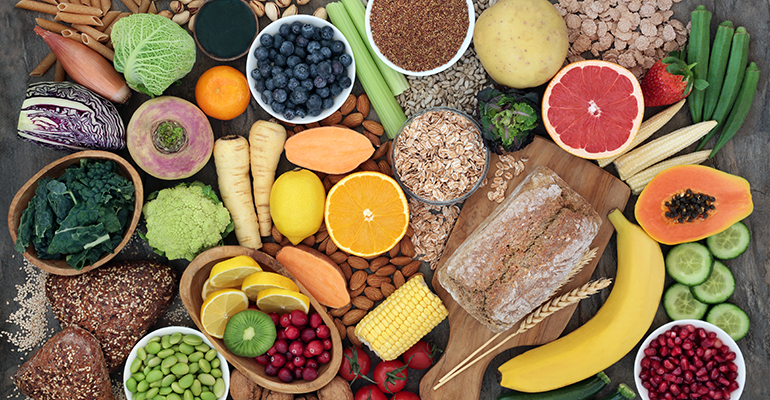
According to the DGE, a healthy and eco-friendly diet should consist of over 75% plant- and almost 25% animal-based foods. The DGE suggests opting for primarily plant-based foods and consuming more food groups offering various options. The guidelines also favour plant-based fats like vegetable oils over animal sources like butter.
“The now-released FBDG was derived for healthy German adults following an omnivorous diet, which is the most common diet in Germany, but it can still give orientation for all healthy adults,” says a spokesperson for DGE. The DGE adds that specific FBDG for kids or vegetarian and vegan diets will follow.
The new dietary guidance states it is possible to replace dairy products with plant-based alternatives as long as consumers receive adequate calcium, vitamin B2, and iodine intake.
Beans, legumes and nuts are now recognised as a separate food group, further emphasising plant-based foods. These foods having a separate category is a positive step, “recognising the important role that beans and legumes have to play in transforming our food system”, Haffner says in a LinkedIn post. However, noting that fungi proteins are not included in the recommendations, Haffner adds that this is “missing a trick”.
Fruit and vegetables remain the most essential food group in terms of quantity. The DGE recommends consumers eat five portions of fruit and vegetables daily. However, in its latest guidelines, it has removed additional individual portion information detailing its suggestion to eat three portions of vegetables and two portions of fruit.
Revising its food-based dietary recommendations for Germany, the FBDG recommends that consumers limit their meat intake to 300g per week and reduce dairy consumption to two servings a day, compared to the previous recommendation of three. Guidance on fish intake is recommended at one to two portions per week.
Calls for consumer and planetary health
The new guidelines focus on health and sustainability and highlight the benefits of plant-based diets for human health and the planet. “If we want to eat healthily and at the same time protect the environment, we have to change our diet now,” says Prof. Dr. Bernhard Watzl, DGE President and head of the DGE working group on food-related nutritional recommendations.
 © AdobeStock/Christian Müller
The DGE says the guideline aims to explore different aspects of nutrition, such as sustainability, environmental impact, and the German eating pattern, in its FBDG as a first step towards greater health and environmental protection.
“The new German food-based dietary guidelines take into account health and sustainability, which are inextricably intertwined and two sides of the same coin,” Tanya Haffner, Dietitian and founder of MyNutriWeb, told Ingredients Network. “They reflect the current evidence for the health and planetary benefits of plant-based diets and echo other’s recent country updates,” Haffner adds.
A 2022 research study assessed and benchmarked Germany’s nutrition policies against international best practices. The findings revealed that Germany lags behind international best practices in several key policy areas and that adopting global best practices in key policy areas could help reduce the burden of nutrition-related chronic disease and related inequalities in nutrition and health in Germany.
“Since food system changes will use these as a guide, this will be one key step forward in helping to shape consumer behaviour,” Haffner says.
The new model behind dietary advice
Germany’s guidelines are based on a new mathematical optimisation model developed by DGE and other industry professionals. Expanding upon its healthy diet recommendations, the latest model considers aspects such as reducing risks for diet-related diseases, minimising harmful environmental and climate effects (greenhouse gas emissions and land use), and usual consumption habits in Germany.
“The results of the mathematical optimisation model confirm the previously valid food-related dietary recommendations of the DGE, which include predominantly plant-based foods supplemented by a lower proportion of foods of animal origin,” says the DGE spokesperson.
The industry may wonder how Germany’s updated nutrition guidelines impact manufacturers and new product developments. The spokesperson says DGE currently gives recommendations on plant-based milk alternatives. In addition, DGE plans to provide more detailed information on the recommendations, including plant-based milk alternatives and meat substitutes.

Get more of our news on Google
Set Ingredients Network as a 'Preferred Source' to get quicker access to the news you value.
Related news

Do the US dietary guidelines put UPFs under pressure?
10 Sep 2026
Will the US dietary guidelines change the way Americans eat, swapping ultra-processed foods for whole foods? We asked Dr Barry Popkin, renowned nutrition and obesity researcher.
Read more
Food fraud costs UK economy £2bn each year
9 Sep 2026
Food fraud is costing the UK economy up to £2 billion (€2.3 billion) every year although the food sector is more “resilient” than others, according to a recent study.
Read more
Pump-based liquid pet supplement focuses on health and convenience
8 Sep 2026
Prefera Pet Food uses a plastic pump-based packaging to make administering its liquid supplements for cats and dogs easier, healthier, and more accurate.
Read more
Health and wellness engagement matures across Middle East and Africa
4 Sep 2026
Many consumers in the Middle East and Africa are now proactively engaged in health and wellness, looking to integrate better habits and products into their daily lives, say experts.
Read more
Kellogg accelerates work to remove artificial colours from all US cereals
3 Sep 2026
WK Kellogg has announced an accelerated timeline to eliminate all artificial colours and the chemical preservative, BHT, across its full US portfolio of cereals and cereal packaging.
Read more
Royal Canin launches ‘freshly-cooked’ therapeutic dog food
1 Sep 2026
Mars-owned Royal Canin has moved into the therapeutic diet sector with the launch of its Fresh Veterinary Diets range for dogs with health conditions. We asked a veterinary nutritionist for her opinion.
Read more
‘Urgent gaps’ in achieving 2030 food system goals
27 Aug 2026
Global food systems are failing to meet 2030 targets across indicators including health, environment, and resilience, according to a report co-authored by the Food and Agriculture Organisation (FAO).
Read more
Seven-Eleven uses microbial testing tech to extend katsudon shelf life
26 Aug 2026
Japanese retail company Seven-Eleven has improved its factory’s microbial environment to keep comfort-food staple, katsudon, fresher for longer.
Read more
Chimac’s fusion sauces bring Korean flavours to Europe
25 Aug 2026
Irish sauce brand Chimac is tapping into Korea’s culinary traditions, bringing its flavours and products to European consumers who want a taste of K-food.
Read more
China beverages: Is herbal innovation the future?
20 Aug 2026
Herbal and botanical innovation in China's drinks market continues to grow, with ingredients like astragalus root, ginger, and ginseng in the spotlight – and focus shifting far beyond refreshment.
Read more