
Ingredients Categories
Finished Products
Finished Food Categories
- Bakery
- Beverages / Juices
- Cereal and grain products
- Confectionery
- Cooking Fats & Oils
- Dairy
- Egg products
- Fruits & Vegetables
- Infant & Baby food
- Meat, Poultry & Fish
- Nuts & Seeds products
- Other Finished Food Categories
- Pet Food
- Plant-based foods
- Prepared foods
- Sauces & Seasonings
- Sweet & Savoury Spreads
Specialised Finished Products
- Bee products
- Biotic products
- Dietary supplements
- Energy drinks
- Functional beverages
- Functional confectionery
- Functional food
- Functional powders
- Meal replacement products
- Nutricosmetics
- Other Specialised Finished Products
- Pet Dietary Supplements
- Pharma and OTC products
- Protein products
- Sugar replacers / Sweeteners
Health & Wellness Areas
Delivery Formats
Operations & Services
- 3D printing
- Analysis/ Testing
- Auditing & certifications
- Blending & mixing
- Bottling
- Certification
- Clinical trials
- Co-packing
- Coating
- Consulting
- Contract manufacturing
- Drying
- Electrospinning
- Encapsulating
- Enzymatic processing
- Extracting
- Extrusion
- Fat structuring
- Fermentation
- Filling
- Flavour development
- Freeze drying
- Granulating/ grinding/ milling / mixing
- High-pressure processing
- Labelling
- Other Operations & Services
- Packaging
- Packet filling
- Pasturising
- Quality assurance
- Saccharification
- Shear cell processing
- Spray drying
- Sterilisation
- Storage & Logistics
- Tabletting
- Toasting / roasting
- Ultra-high temperature processing
News
Tagatose exempt from added sugar labelling in US
Kacey Culliney, Freelance Journalist 19 May 2026Tagatose, a low-calorie, natural sweetener with EU-approved health claims, is now exempt from added sugar labelling in the US – a move that could see uptake scale significantly.
The US Food and Drug Administration (FDA) outlined the exemption in a letter of enforcement discretion addressed to the CEO of Virginia-based tagatose manufacturer Bonumose. The startup has been campaigning for several years for such an exemption.

A sugar alternative with approved health claims
Tagatose is found naturally in a variety of foods, including some dairy products, whole wheat, and various fruits, and is produced commercially via a multi-step enzymatic process. It is 90% as sweet as sugar but much lower in calories, containing 1.5 calories per gram.
In the EU, the ingredient has two approved EU health claims for contributing to tooth mineralisation and inducing a lower blood glucose spike than table sugar – two aspects recognised by the FDA in its letter to Bonumose.
Speaking to Ingredients Network, Edwin Rogers, CEO of Bonumose, said the decision indicates an FDA leadership that has “common sense, sincerity, and a desire for action to solve solvable diet-related diseases”.
“There are a lot of promising solutions to reducing sugar, and a lot of bad solutions,” Rogers said, adding that Bonomuse believes its tagatose could be “one of the most important sugar alternatives going forward”.
This is largely to do with its versatility as a sugar alternative and the scalability of Bonomuse's production method, he said.
Bonumose to scale up tagatose production
Tagatose comes “really close” to matching the sweetness, taste, flavour, bulking and other properties of sucrose, Rogers said, making it suitable for all categories. Some of the best opportunities for its wider commercial use, though, are in chocolate, ready-to-eat cereal, ice cream, yoghurt and other confections, he said.
“Now the focus is all about scaling,” the CEO said.
Bonumose's proprietary method, which uses enzymes to create tagatose from plant-derived ingredients, gives good scalability promise, he said, not only because it is low-cost but also because it can be done locally.
The startup's method relies on existing food ingredient value chains and farmer-grown crops, which means scaling can happen in the US, he explained, instead of relying on China where around 90% of sugar alternatives currently come from.
“Food and beverage companies can reformulate with tagatose to reduce sugar and add prebiotic fibre benefits whilst maintaining sugar-like taste and texture and not confusing consumers with contradictory messages,” he said.
Cause for concern: Tagatose is ‘poorly absorbed’
Marion Nestle, Paulette Goddard professor of nutrition, food studies and public health at New York University, Emerita, said that the tagatose exemption from sugar labelling will see companies “immediately start using more of it” but added that this is not necessarily a good idea.
“Tagatose is one of those things that marks products as ultra-processed,” Nestle said. “It's a naturally occurring sugar, sweet, but poorly absorbed, used in place of sugar to present fewer calories and less risk for tooth decay.”
The US-based non-profit, Center for Science in the Public Interest (CSPI), had shared findings from a study indicating tagatose is “poorly absorbed by the body”, she said, and also cited reports on the ingredient being linked to gastrointestinal effects when consumed in excess amounts.
Health Canada, Food Standards Australia New Zealand, and the World Health Organization (WHO), however, had not raised concerns over the use of tagatose in foods, according to the CSPI.
“A zero calorie, safe replacement for sugar is the holy grail of the food industry. They keep trying,” Nestle said.
Rogers said Bonumose will certainly continue to use its enzyme technology to develop other rare sugars and push ahead with scaling tagatose in the bid to widen access to sugar alternatives. “We think rare sugar production is important to the national interest,” he said.

Get more of our news on Google
Set Ingredients Network as a 'Preferred Source' to get quicker access to the news you value.
Related news

Do the US dietary guidelines put UPFs under pressure?
10 Sep 2026
Will the US dietary guidelines change the way Americans eat, swapping ultra-processed foods for whole foods? We asked Dr Barry Popkin, renowned nutrition and obesity researcher.
Read more
Food fraud costs UK economy £2bn each year
9 Sep 2026
Food fraud is costing the UK economy up to £2 billion (€2.3 billion) every year although the food sector is more “resilient” than others, according to a recent study.
Read more
Kellogg accelerates work to remove artificial colours from all US cereals
3 Sep 2026
WK Kellogg has announced an accelerated timeline to eliminate all artificial colours and the chemical preservative, BHT, across its full US portfolio of cereals and cereal packaging.
Read more
Skimpflation: An ‘unfair’ and risky approach to keeping prices low
2 Sep 2026
Consumers see skimpflation – reducing the quality of ingredients due to rising costs – as more unfair than shrinkflation, making it a risky strategy according to recent research.
Read more
NielsenIQ’s EU barometer shows Britain leading in grocery inflation
31 Aug 2026
Britain was the only country to record grocery inflation above 2%, according to NielsenIQ data that compared Europe’s five biggest grocery markets from February to May 2026.
Read more
‘Urgent gaps’ in achieving 2030 food system goals
27 Aug 2026
Global food systems are failing to meet 2030 targets across indicators including health, environment, and resilience, according to a report co-authored by the Food and Agriculture Organisation (FAO).
Read more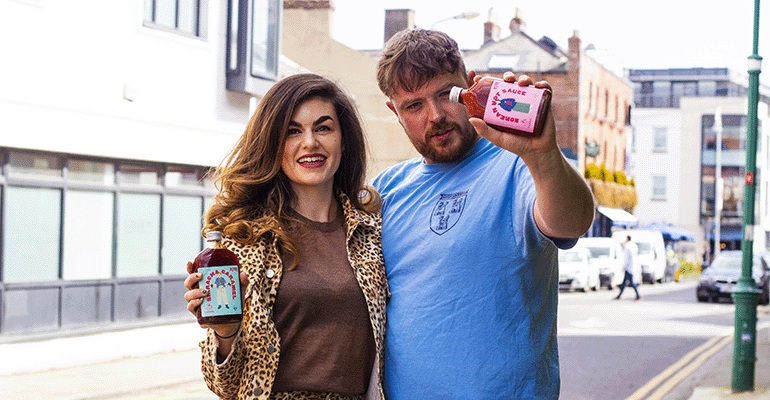
Chimac’s fusion sauces bring Korean flavours to Europe
25 Aug 2026
Irish sauce brand Chimac is tapping into Korea’s culinary traditions, bringing its flavours and products to European consumers who want a taste of K-food.
Read more
Global demand for instant noodles continues to rise
24 Aug 2026
Global demand for instant noodles reached 124.21 billion servings last year, representing a 0.7% year-on-year increase – or 900 million extra servings.
Read more
Popular barbecue staples experience sharp price increases
19 Aug 2026
The typical cost of US shoppers’ barbecue baskets has risen by 12% over the past year – the fastest annual rise in a decade, figures from The Economist show.
Read more
Hot NPD: Nissin launches first cold-water Cup Noodles
18 Aug 2026
Nissin is taking one of Japan’s most iconic instant meals in a completely new direction with the launch of the first cold water-only Cup Noodles in the brand’s 55-year history.
Read more