
Ingredients Categories
Finished Products
Finished Food Categories
- Bakery
- Beverages / Juices
- Cereal and grain products
- Confectionery
- Cooking Fats & Oils
- Dairy
- Egg products
- Fruits & Vegetables
- Infant & Baby food
- Meat, Poultry & Fish
- Nuts & Seeds products
- Other Finished Food Categories
- Pet Food
- Plant-based foods
- Prepared foods
- Sauces & Seasonings
- Sweet & Savoury Spreads
Specialised Finished Products
- Bee products
- Biotic products
- Dietary supplements
- Energy drinks
- Functional beverages
- Functional confectionery
- Functional food
- Functional powders
- Meal replacement products
- Nutricosmetics
- Other Specialised Finished Products
- Pet Dietary Supplements
- Pharma and OTC products
- Protein products
- Sugar replacers / Sweeteners
Health & Wellness Areas
Delivery Formats
Operations & Services
- 3D printing
- Analysis/ Testing
- Auditing & certifications
- Blending & mixing
- Bottling
- Certification
- Clinical trials
- Co-packing
- Coating
- Consulting
- Contract manufacturing
- Drying
- Electrospinning
- Encapsulating
- Enzymatic processing
- Extracting
- Extrusion
- Fat structuring
- Fermentation
- Filling
- Flavour development
- Freeze drying
- Granulating/ grinding/ milling / mixing
- High-pressure processing
- Labelling
- Other Operations & Services
- Packaging
- Packet filling
- Pasturising
- Quality assurance
- Saccharification
- Shear cell processing
- Spray drying
- Sterilisation
- Storage & Logistics
- Tabletting
- Toasting / roasting
- Ultra-high temperature processing
News
UNICEF issues toolkit on child-focused food marketing
Natasha Spencer-Jolliffe, Freelance Journalist 1 May 2026Global organisation UNICEF has released a best practice toolkit on children’s rights and digital marketing, calling on policymakers and industry to stop unhealthy ads.
UNICEF, the United Nations agency for children, has published a new Industry Toolkit on Children’s Rights and Digital Marketing that aims to break down how policymakers can prohibit all marketing of unhealthy foods to children, and craft strong, effective legal measures to protect children from harmful marketing practices.
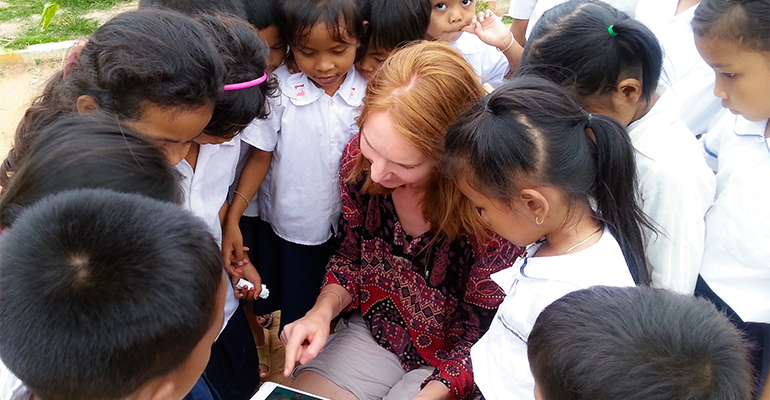
“Globally, children continue to be exposed to pervasive and powerful marketing for foods that are ultra-processed and high in sugars, salt and unhealthy fats,” Katherine Shats, legal specialist at the child nutrition and development section at UNICEF, told Ingredients Network.
In its toolkit, UNICEF calls for regulatory action to tackle the crisis – with laws already being introduced. “We are seeing progress as countries are beginning to implement more comprehensive, mandatory regulation,” said Shats. Most recently, Norway enacted legislation banning the marketing of unhealthy foods and beverages to children under 18.
Obesity is now leading form of malnutrition among children
Unhealthy food environments are a serious health concern in all regions of the world, with unhealthy diets now among the leading causes of death and disability globally. UNICEF’s flagship child nutrition report, Feeding Profit, recently found that obesity has overtaken underweight as the dominant form of malnutrition among school-age children and adolescents around the world.
An unhealthy food environment is characterised by low availability, accessibility, desirability, and affordability of healthy foods, and high availability, affordability, and promotion or marketing of unhealthy foods. “The majority of food and beverage marketing, across all media and settings, is classified as unhealthy and dominated by ultra-processed foods,” said Shats.
A 2025 UNICEF study in Tanzania, Uganda, and Zimbabwe found that 96 to 99% of products appearing in marketing content and influencer posts popular among children were unsuitable for marketing to children under WHO standards. Despite this, over half of the posts were found to appeal to youth through themes of fun, fame and friendship.
“Digital platforms have intensified children’s exposure to marketing,” said Shats. UNICEF sees this trend across different countries and regions. In the Philippines, a recent study found that 99% of promoted products in the 1,035 food advertisements analysed did not meet WHO’s standards for marketing to children.
“Despite progress, most children worldwide remain unprotected and exposed to pervasive marketing,” said Shats.
Calls for immediate and far-reaching policy changes
UNICEF wants to see policymakers move quickly and adopt comprehensive, mandatory legal restrictions that cover all forms of marketing across all channels.
These include broadcast and print media, digital media, outdoor media, in schools, and in all spaces where children and their families live, learn, eat, play, and meet. Laws need to focus on reducing children’s exposure to marketing, the power of that marketing, and ensuring marketing is adequately monitored and enforced.
“We have plenty of evidence to show that voluntary industry self‑regulation has proven ineffective, and that mandatory and comprehensive legal measures are needed,” said Shats.
“However, before developing any policies, the most important thing policymakers need to do is to ensure there are adequate protections against industry interference and conflicts of interest in place,” she added.
UNICEF surveys indicate that one of the greatest barriers to regulating marketing is industry interference in policymaking. Steps to adequately address and manage this are at the forefront of UNICEF’s new toolkit recommendations, which provides guidance on how to do this and how to respond to common industry arguments.
Transforming food marketing around the globe
Food and drink brands need to adopt comprehensive approaches that account for differences in cultures, socioeconomic factors, and legal systems. Yet, the sentiment should not be a barrier to implementation.
“Despite differences in cultures and legal systems, what we know is that the food industry uses the same tactics to aggressively market its products all around the world,” said Shats.
“Regardless of the country or legal framework, the solution is the same: to prohibit all marketing of unhealthy foods to which children may be exposed.”
UNICEF has included evidence and legal basis in its toolkit, designed to support such laws. The global organisation guides them through a series of steps to ensure that the final legal measures are adapted to their specific legal systems and processes.
As part of its best practices, UNICEF has developed a model legal language that can be adapted to each country’s legal framework and help ensure that no common loopholes, such as brand marketing or cross-promotion, remain. It has also developed a policy brief template for countries to adapt to their local context and to input local data.
Actions to end unhealthy marketing to children
UNICEF’s message is clear: it welcomes all efforts by major brands to end unhealthy marketing to children.
The problem, UNICEF sets out, is that corporate directors owe a fiduciary duty to shareholders, typically interpreted as a responsibility to maximise shareholder value through commercial activity. Marketing is central to these business strategies.
“Ultimately, the only way to create meaningful corporate change is to change the legal landscape in which these companies operate — namely, for governments to introduce binding restrictions on what marketing is permitted,” said Shats.
“We encourage companies to make explicit public commitments supporting government efforts to introduce comprehensive laws, based on WHO and UNICEF guidance, that prohibit all forms of unhealthy marketing to which children may be exposed,” added Shats.

Get more of our news on Google
Set Ingredients Network as a 'Preferred Source' to get quicker access to the news you value.
Related news

Do the US dietary guidelines put UPFs under pressure?
10 Sep 2026
Will the US dietary guidelines change the way Americans eat, swapping ultra-processed foods for whole foods? We asked Dr Barry Popkin, renowned nutrition and obesity researcher.
Read more
Health and wellness engagement matures across Middle East and Africa
4 Sep 2026
Many consumers in the Middle East and Africa are now proactively engaged in health and wellness, looking to integrate better habits and products into their daily lives, say experts.
Read more
Skimpflation: An ‘unfair’ and risky approach to keeping prices low
2 Sep 2026
Consumers see skimpflation – reducing the quality of ingredients due to rising costs – as more unfair than shrinkflation, making it a risky strategy according to recent research.
Read more
‘Urgent gaps’ in achieving 2030 food system goals
27 Aug 2026
Global food systems are failing to meet 2030 targets across indicators including health, environment, and resilience, according to a report co-authored by the Food and Agriculture Organisation (FAO).
Read more
Seven-Eleven uses microbial testing tech to extend katsudon shelf life
26 Aug 2026
Japanese retail company Seven-Eleven has improved its factory’s microbial environment to keep comfort-food staple, katsudon, fresher for longer.
Read more
Chimac’s fusion sauces bring Korean flavours to Europe
25 Aug 2026
Irish sauce brand Chimac is tapping into Korea’s culinary traditions, bringing its flavours and products to European consumers who want a taste of K-food.
Read more
Global demand for instant noodles continues to rise
24 Aug 2026
Global demand for instant noodles reached 124.21 billion servings last year, representing a 0.7% year-on-year increase – or 900 million extra servings.
Read more
Popular barbecue staples experience sharp price increases
19 Aug 2026
The typical cost of US shoppers’ barbecue baskets has risen by 12% over the past year – the fastest annual rise in a decade, figures from The Economist show.
Read more
Hot NPD: Nissin launches first cold-water Cup Noodles
18 Aug 2026
Nissin is taking one of Japan’s most iconic instant meals in a completely new direction with the launch of the first cold water-only Cup Noodles in the brand’s 55-year history.
Read more
Manam Chocolate aims to bring premium Indian cacao to 'the world stage'
11 Aug 2026
Craft chocolate brand Manam Chocolate is investing in local expansion and supply chain innovation throughout India as it works to build out the premium reputation of its locally produced cacao products.
Read more