
Ingredients Categories
Finished Products
Finished Food Categories
- Bakery
- Beverages / Juices
- Cereal and grain products
- Confectionery
- Cooking Fats & Oils
- Dairy
- Egg products
- Fruits & Vegetables
- Infant & Baby food
- Meat, Poultry & Fish
- Nuts & Seeds products
- Other Finished Food Categories
- Pet Food
- Plant-based foods
- Prepared foods
- Sauces & Seasonings
- Sweet & Savoury Spreads
Specialised Finished Products
- Bee products
- Biotic products
- Dietary supplements
- Energy drinks
- Functional beverages
- Functional confectionery
- Functional food
- Functional powders
- Meal replacement products
- Nutricosmetics
- Other Specialised Finished Products
- Pet Dietary Supplements
- Pharma and OTC products
- Protein products
- Sugar replacers / Sweeteners
Health & Wellness Areas
Delivery Formats
Operations & Services
- 3D printing
- Analysis/ Testing
- Auditing & certifications
- Blending & mixing
- Bottling
- Certification
- Clinical trials
- Co-packing
- Coating
- Consulting
- Contract manufacturing
- Drying
- Electrospinning
- Encapsulating
- Enzymatic processing
- Extracting
- Extrusion
- Fat structuring
- Fermentation
- Filling
- Flavour development
- Freeze drying
- Granulating/ grinding/ milling / mixing
- High-pressure processing
- Labelling
- Other Operations & Services
- Packaging
- Packet filling
- Pasturising
- Quality assurance
- Saccharification
- Shear cell processing
- Spray drying
- Sterilisation
- Storage & Logistics
- Tabletting
- Toasting / roasting
- Ultra-high temperature processing
News
Unibio to open ‘world’s largest’ single-cell protein plant in Saudi Arabia
Natasha Spencer-Jolliffe, Freelance Journalist 29 Apr 2026Unibio is forging ahead with plans to open the “world’s largest” single-cell protein plant in Saudi Arabia. “The Middle East conflict has reinforced how critical local food production is,” says its CEO.
Protein producer Unibio has teamed up with Saudi Industrial Investment Group (SIIG) to launch a single-cell protein plant, designed to feed the world's growing population and improve food security.
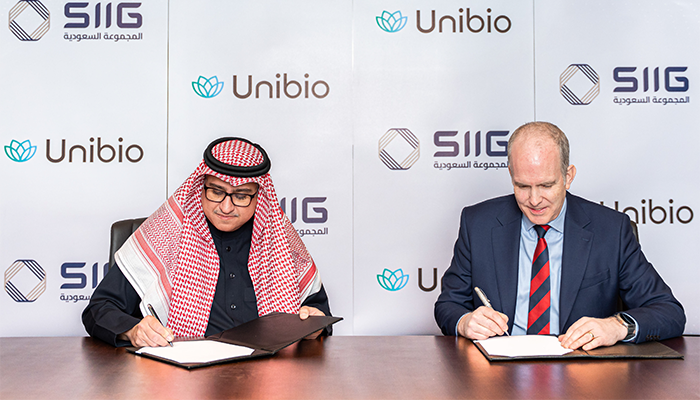
Located in Saudi Arabia, the new 50,000-tonne-per-year production facility is tipped to be the largest single-cell protein built to date, according to the company.
David Henstrom, CEO of Unibio, told Ingredients Network that the current war in the Middle East has not changed the company’s plans to expand in the Gulf region.
"The current conflict in the Middle East has reinforced how critical local feed and food production is to regional food security. For us, it has reconfirmed the relevance of our plans in the region and increased the urgency to move forward,” he said.
“In that sense, the conflict has not changed our direction but reinforced and validated the need for local deployment and timely execution.”
Unibio and SIIG plan to increase the output of single-cell protein, Uniprotein, to over 300,000 tonnes in the coming years. In doing so, the duo hopes to reduce Saudi Arabia’s dependency on animal feed imports and sell Uniprotein worldwide.
“Our Uniprotein will deliver on this promise by delivering the scale and scalability required for the feed and food industries,” Henstrom added.
Unibio: Gaining novel food approval
Currently, single-cell protein is only suitable for direct inclusion in animal feed, after gaining approval for animal and fish feed in the European Union (EU) and several other territories. Global registrations are also in progress.
Based on preliminary in vitro assessments and genomic investigations, the board of Unibio has decided to target the food sector as well and began this process in November 2024. Unibio’s nutritional and sustainable properties make it an attractive prospect for the food sector, to meet consumer demands for high-protein products.
The company is now pursuing the necessary novel food approvals to enable it to roll it out to the food industry. The process requires preparing a full dossier that provides proof that the product is safe for human consumption.
“We are conducting all the necessary studies in vivo for the safety assessment, and after the preparation of the dossiers, we are planning to do parallel submissions for novel food approval in multiple territories,” Eleni Ntokou, new product development, sustainability and regulatory affairs director at Unibio, said.
Upon approval, Unibio’s single-cell protein will be used as a food ingredient in bakery goods, sauces and spreads, sports nutrition, meat alternatives, and dairy alternatives.
High protein content
Uniprotein has high protein content, containing over 70% of dry matter. The ingredient has an amino acid composition similar to that of fishmeal or soybean meal and is highly digestible.
The protein source is free of contaminants such as pesticides, herbicides and fungicides, and is non-GMO. Primed for industrial-scale production, the brand states it is a deforestation-free and land-conversion-free protein source that can be easily traced throughout the supply chain.
The ingredient can also be developed with uniform product quality and has a long shelf life.
Novel biofermentation tech will power the protein plant
The plant will use Unibio’s proprietary vertical loop bioreactor technology, a continuous-flow fermentation process, to convert carbon-rich gases into microbial protein. The technology mimics natural processes to convert methane into the company’s flagship product, Uniprotein.
“Unibio’s U-Loop vertical loop bioreactor is the most efficient gas fermentation reactor design,” said Henstrom. The technology reduces the energy required and reactor volume needed to efficiently produce protein biomass on a continuous basis.
Unibio has developed the full process that will be deployed at the protein plant. It has designed and developed it from the laboratory through to the pilot and demonstration stages, and into the first commercial facility, which was deployed several years ago. The front-end engineering design (FEED) was completed in 2025.
Preparing to transform food security
The new facility in Saudi Arabia will be about 10 times the size of the first commercial facility built by a licensing partner. A gas allocation for the plant has been received from the Saudi Ministry of Energy, and the Royal Commission for Jubail and Yanbu has nominated a site.
Looking ahead, plant construction is expected to start in the second half of 2026, with commercialisation commencing in 2028.
“Using Unibio’s technology, we aim to make Saudi Arabia the leader in single-cell protein production and improve food security for both Saudi Arabia and the world’s growing population,” said Abdulrahman Alismail of Saudi Industrial Investment Group.
The joint venture will form part of Saudi Arabia’s Vision 2030, a framework designed to reduce reliance on oil, diversify the economy and strengthen public service sectors. The agreement follows SIIG's $70 million investment in Unibio in 2023.

Get more of our news on Google
Set Ingredients Network as a 'Preferred Source' to get quicker access to the news you value.
Related news

Do the US dietary guidelines put UPFs under pressure?
10 Sep 2026
Will the US dietary guidelines change the way Americans eat, swapping ultra-processed foods for whole foods? We asked Dr Barry Popkin, renowned nutrition and obesity researcher.
Read more
Health and wellness engagement matures across Middle East and Africa
4 Sep 2026
Many consumers in the Middle East and Africa are now proactively engaged in health and wellness, looking to integrate better habits and products into their daily lives, say experts.
Read more
Skimpflation: An ‘unfair’ and risky approach to keeping prices low
2 Sep 2026
Consumers see skimpflation – reducing the quality of ingredients due to rising costs – as more unfair than shrinkflation, making it a risky strategy according to recent research.
Read more
‘Urgent gaps’ in achieving 2030 food system goals
27 Aug 2026
Global food systems are failing to meet 2030 targets across indicators including health, environment, and resilience, according to a report co-authored by the Food and Agriculture Organisation (FAO).
Read more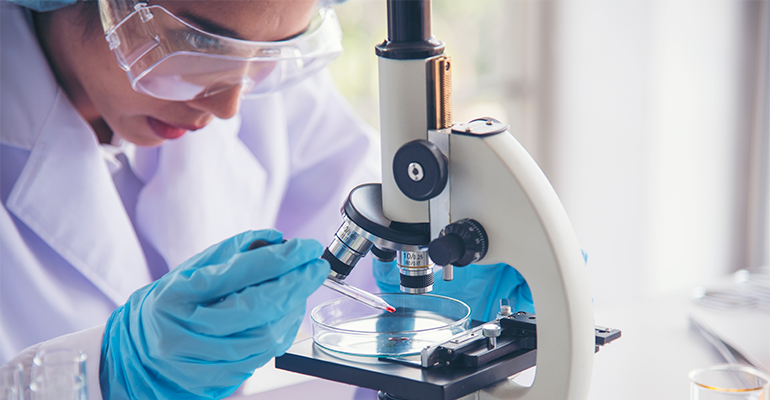
Seven-Eleven uses microbial testing tech to extend katsudon shelf life
26 Aug 2026
Japanese retail company Seven-Eleven has improved its factory’s microbial environment to keep comfort-food staple, katsudon, fresher for longer.
Read more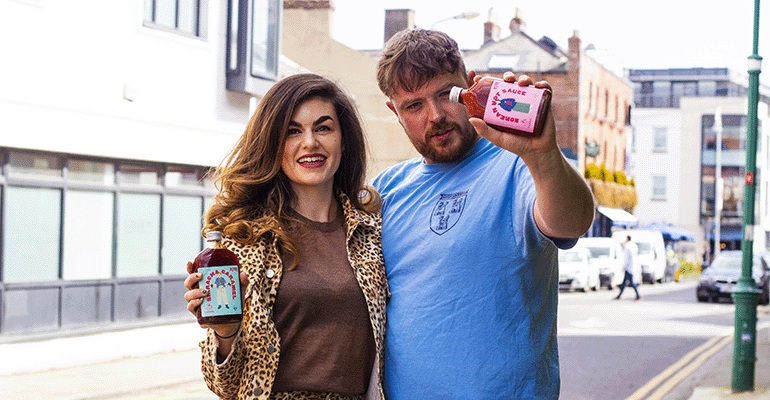
Chimac’s fusion sauces bring Korean flavours to Europe
25 Aug 2026
Irish sauce brand Chimac is tapping into Korea’s culinary traditions, bringing its flavours and products to European consumers who want a taste of K-food.
Read more
Global demand for instant noodles continues to rise
24 Aug 2026
Global demand for instant noodles reached 124.21 billion servings last year, representing a 0.7% year-on-year increase – or 900 million extra servings.
Read more
Popular barbecue staples experience sharp price increases
19 Aug 2026
The typical cost of US shoppers’ barbecue baskets has risen by 12% over the past year – the fastest annual rise in a decade, figures from The Economist show.
Read more
Hot NPD: Nissin launches first cold-water Cup Noodles
18 Aug 2026
Nissin is taking one of Japan’s most iconic instant meals in a completely new direction with the launch of the first cold water-only Cup Noodles in the brand’s 55-year history.
Read more
Manam Chocolate aims to bring premium Indian cacao to 'the world stage'
11 Aug 2026
Craft chocolate brand Manam Chocolate is investing in local expansion and supply chain innovation throughout India as it works to build out the premium reputation of its locally produced cacao products.
Read more