
Ingredients Categories
Finished Products
Finished Food Categories
- Bakery
- Beverages / Juices
- Cereal and grain products
- Confectionery
- Cooking Fats & Oils
- Dairy
- Egg products
- Fruits & Vegetables
- Infant & Baby food
- Meat, Poultry & Fish
- Nuts & Seeds products
- Other Finished Food Categories
- Pet Food
- Plant-based foods
- Prepared foods
- Sauces & Seasonings
- Sweet & Savoury Spreads
Specialised Finished Products
- Bee products
- Biotic products
- Dietary supplements
- Energy drinks
- Functional beverages
- Functional confectionery
- Functional food
- Functional powders
- Meal replacement products
- Nutricosmetics
- Other Specialised Finished Products
- Pet Dietary Supplements
- Pharma and OTC products
- Protein products
- Sugar replacers / Sweeteners
Health & Wellness Areas
Delivery Formats
Operations & Services
- 3D printing
- Analysis/ Testing
- Auditing & certifications
- Blending & mixing
- Bottling
- Certification
- Clinical trials
- Co-packing
- Coating
- Consulting
- Contract manufacturing
- Drying
- Electrospinning
- Encapsulating
- Enzymatic processing
- Extracting
- Extrusion
- Fat structuring
- Fermentation
- Filling
- Flavour development
- Freeze drying
- Granulating/ grinding/ milling / mixing
- High-pressure processing
- Labelling
- Other Operations & Services
- Packaging
- Packet filling
- Pasturising
- Quality assurance
- Saccharification
- Shear cell processing
- Spray drying
- Sterilisation
- Storage & Logistics
- Tabletting
- Toasting / roasting
- Ultra-high temperature processing
News
Healthy eating guidelines could help EU hit the methane reduction targets
1 Jul 2022
National healthy eating guidelines calling for 50% cut in red meat and 25% drop in dairy consumption could be key for the European Union (EU) to meet its 2030 methane reduction targets, according to the Changing Markets Foundation.
The EU has targeted a 30% to 45% reduction in methane between 2020 and 2030 – a greenhouse gas known to be 86 times more potent than carbon dioxide over a 20 year cycle, accounting for almost one-fifth of global greenhouse gas emissions – the Netherlands-headquartered environmental and social change lobby, Changing Markets Foundations, said in its recent report.

Farming is the EU’s largest source of methane emissions
The report’s researchers quote the Intergovernmental Panel on Climate Change (IPCC) analyses which further suggests that, globally, methane emissions must be reduced by between 40 to 45% by 2030 to achieve “least cost pathways that limit global warming to 1.5˚C this century” and that it is “possible and cost effective to realise this reduction”.
However, the report – including research commissioned from consultancy CE Delft – stresses that the EU cannot hope to meet its targets without “behavioural and technical” changes in the livestock agriculture sector.
The region’s methane trajectory currently falls short of targets, projected at just 17% reduction by 2030, the researchers said.
“The agricultural sector is the largest source of methane emissions in the EU, responsible for 8 mt of methane per year or 53% of EU’s overall methane emissions,” they said. “This is equivalent to the total emissions from 50 coal-fired power plants, according to conservative calculations.”
Policy changes for healthier diets could also cut emissions
Policy changes which could be extremely impactful for the EU reaching its target methane emissions could coincide with healthy eating guidance, the researchers said.
“The biggest potential comes from policies that would drive the uptake of healthier diets, as recommended by national dietary health guidelines,” according to Changing Markets Foundations, stressing that European consumers “overconsume” animal products.
In 2007, 50% of protein intake in the EU was of animal origin, and people were already consuming 70% more protein than required, they said.
The researchers cite another recent report from the European Public Health Alliance (EPHA), which laments the “excessive consumption of energy, saturated fats, trans fats, sugar and salt, as well as low consumption of vegetables, fruits and whole grains” and the health risks associated.
Current national guidelines in the EU include a suggested 50% reduction in red meat, and a 25% cut in dairy consumption for Europeans, the researchers added.
Alongside potentially improving health risk, a switch from the current average EU diet to the EU-advised diet with less animal products would have a big impact on methane reduction, they said.
“The adoption of healthier consumer diets alone could reduce EU methane emissions by 15% to 19%, if new policy initiatives would influence all EU citizens to switch to an advised diet based on national dietary health guidelines with lower meat and dairy consumption,” the researchers said.
“This makes clear that the livestock agriculture sector has an important role to play in the reduction of EU methane emissions.”
The researchers went on to urge EU policymakers to increase their efforts to implement policies for dietary change, targeting lower production and consumption levels of meat and dairy.
Other agricultural changes recommended
Beside dietary changes, the researchers highlighted issues within the agriculture sector as a whole.
“The EU has very few policies to deal with emissions from its meat and dairy industries,” they said, adding that EU policy initiatives on methane reduction are “least advanced and least concrete” in the livestock agriculture sector.
The researchers therefore also pushed for the adoption of technical measures by livestock farmers, such as manure management.
“Enteric fermentation and manure management account for 27% and 3% of global anthropogenic methane emissions respectively,” they said.

Get more of our news on Google
Set Ingredients Network as a 'Preferred Source' to get quicker access to the news you value.
Related news

Health and wellness engagement matures across Middle East and Africa
4 Sep 2026
Many consumers in the Middle East and Africa are now proactively engaged in health and wellness, looking to integrate better habits and products into their daily lives, say experts.
Read more
Kellogg accelerates work to remove artificial colours from all US cereals
3 Sep 2026
WK Kellogg has announced an accelerated timeline to eliminate all artificial colours and the chemical preservative, BHT, across its full US portfolio of cereals and cereal packaging.
Read more
Skimpflation: An ‘unfair’ and risky approach to keeping prices low
2 Sep 2026
Consumers see skimpflation – reducing the quality of ingredients due to rising costs – as more unfair than shrinkflation, making it a risky strategy according to recent research.
Read more
‘Urgent gaps’ in achieving 2030 food system goals
27 Aug 2026
Global food systems are failing to meet 2030 targets across indicators including health, environment, and resilience, according to a report co-authored by the Food and Agriculture Organisation (FAO).
Read more
Global demand for instant noodles continues to rise
24 Aug 2026
Global demand for instant noodles reached 124.21 billion servings last year, representing a 0.7% year-on-year increase – or 900 million extra servings.
Read more
Savoury protein snacks shake up the on-the-go market
10 Aug 2026
Sweet flavours have dominated the high-protein snack category but savoury snacks, such as cheese bars and meat sticks, can appeal to health-conscious consumers.
Read more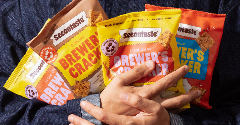
How Secon Taste is putting upcycled snacks on shelves
4 Aug 2026
Hungarian zero-waste startup Secon Taste is turning surplus food into upcycled snacks such as fibre-packed granola, instant porridge, and a circular coffee-tasting box.
Read more
EU sets maximum MOAH levels to protect human health
28 Jul 2026
The EU will adopt maximum levels for mineral oil aromatic hydrocarbons (MOAH) in food to protect human health. What do manufacturers need to know?
Read more
UK publishes guidance on SPS food trade agreement with EU
27 Jul 2026
The UK government has shared guidance on how food businesses can prepare for its upcoming Sanitary and Phytosanitary (SPS) agreement with the EU.
Read more
Industry hits back at UK’s proposed healthy food rules
24 Jul 2026
Food brands, including Haribo, have hit out against the UK’s proposed nutrient profiling model, which places a new focus on free sugars that are added during manufacturing.
Read more