
Ingredients Categories
Finished Products
Finished Food Categories
- Bakery
- Beverages / Juices
- Cereal and grain products
- Confectionery
- Cooking Fats & Oils
- Dairy
- Egg products
- Fruits & Vegetables
- Infant & Baby food
- Meat, Poultry & Fish
- Nuts & Seeds products
- Other Finished Food Categories
- Pet Food
- Plant-based foods
- Prepared foods
- Sauces & Seasonings
- Sweet & Savoury Spreads
Specialised Finished Products
- Bee products
- Biotic products
- Dietary supplements
- Energy drinks
- Functional beverages
- Functional confectionery
- Functional food
- Functional powders
- Meal replacement products
- Nutricosmetics
- Other Specialised Finished Products
- Pet Dietary Supplements
- Pharma and OTC products
- Protein products
- Sugar replacers / Sweeteners
Health & Wellness Areas
Delivery Formats
Operations & Services
- 3D printing
- Analysis/ Testing
- Auditing & certifications
- Blending & mixing
- Bottling
- Certification
- Clinical trials
- Co-packing
- Coating
- Consulting
- Contract manufacturing
- Drying
- Electrospinning
- Encapsulating
- Enzymatic processing
- Extracting
- Extrusion
- Fat structuring
- Fermentation
- Filling
- Flavour development
- Freeze drying
- Granulating/ grinding/ milling / mixing
- High-pressure processing
- Labelling
- Other Operations & Services
- Packaging
- Packet filling
- Pasturising
- Quality assurance
- Saccharification
- Shear cell processing
- Spray drying
- Sterilisation
- Storage & Logistics
- Tabletting
- Toasting / roasting
- Ultra-high temperature processing
News
Will Wicks’ Killer Bar harm the protein bar category?
Lynda Searby, Freelance Journalist 23 Oct 2025Joe Wicks’ deliberately dangerous protein bar is fuelling anti-UPF sentiment – but there are concerns that his messaging is misguided and could have unintended consequences.
In October, a new nutrition bar was launched in the UK. However, the Killer Bar is no ordinary snack, but a stunt by health and fitness influencer Joe Wicks.
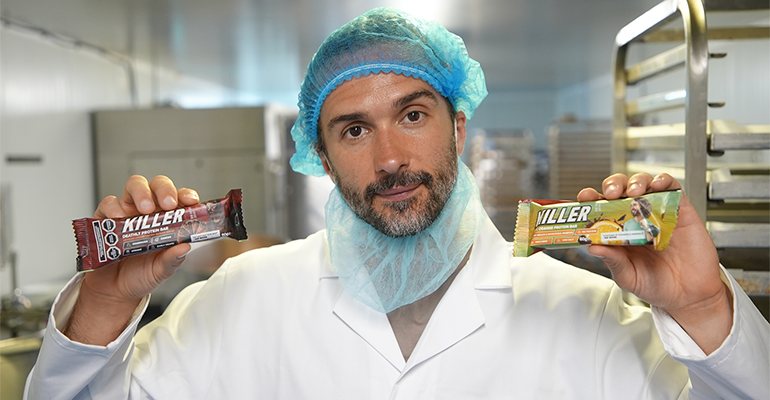
His aim, he said, was to draw attention to the “harmful” ingredients that are in many ultra-processed foods (UPFs) and to convince the government to change labelling regulations so that foods containing these ingredients are forced to carry warnings.
“The bar is for sale – it’s not to be eaten; it’s a vehicle for a campaign; to get the government to change and put legislation in place to help us eat better and give us honest, transparent, truthful information about the foods we are eating,” Wicks wrote in an Instagram post.
The Killer Bar is high in both protein and fibre, and fortified with vitamins and minerals, allowing it to make corresponding health and nutrition claims. But it also carries an on-pack warning that "excessive consumption may increase your risk of cancer, stroke, and early death”.
Some of the 96 ingredients that have been called out for potential health risks include aspartame, maltitol, maltodextrin, glycerol, hydrolysed protein, and stabilisers and emulsifiers such as lecithin, polydextrose, and polyglycerol polyricinoleate.
Killer Bar: Mixed reactions
In a one-off Channel 4 documentary aired in October, Wicks and Ultra-Processed People author Professor Chris van Tulleken told the story behind the campaign and exposed the alleged dangers of UPFs.
The campaign has elicited both positive and negative reactions, getting everyone from consumers to protein bar brands, academics, and marketers talking about UPFs.
One of the criticisms is that the science on which the campaign is based – namely that UPFs and certain industrial ingredients pose a risk to human health – is shaky.
As yet, there is no universally agreed definition of what a UPF is, and of what foods fall into this classification.
What’s more, although research consistently shows a strong association between a high intake of UPFs and poor health outcomes, direct causation has yet to be established.
Campaign under fire
Dietitian Dr Carrie Ruxton told Ingredients Network: “I’m not supportive of the campaign as it is jumping the gun and promoting a concept for which there is still no consensus in the academic community or at government level.
“All of the evidence for disease associations is based on observational studies and the authors of these have retrofitted the NOVA classification to the data. So, it remains unproven that foods from a particular NOVA category are to blame for increased risk of chronic diseases – it could easily be high intakes of sugar, saturated fat or salt, or low intakes of fibre, fruit, vegetables, vitamins, minerals, or polyphenols.”
Ruxton’s advice is that consumers ignore the noise around UPFs and focus on energy density (calories per serving) and the fibre, salt, and sugar content of foods, as this is where the strongest evidence lies. Consumers should also boost their intake of plant foods – aiming for five fruit and vegetables a day – as well as cook more at home and choose lean proteins, she added.
“These simple guidelines are likely to be more effective than creating unnecessary worry about processing. It’s worth remembering that the UPF category contains packaged wholemeal bread, cooking sauces in jars, low-fat yoghurts, infant formula milk, plant milks, meat/egg alternatives, high-fibre breakfast cereals, and some tinned vegetables,” she said.
“These are all healthy foods and useful for the time-pressed consumer. There is absolutely no need to avoid them.”
Consumers shun processed bars
However, it seems that the negative press around UPFs is starting to influence consumer buying habits.
According to Mintel's UK Snack Bars and Breakfast Biscuits Market Report 2025, 51% of consumers reported eating fewer cereal and snack bars in the past three months due to concerns about these products being overly processed.
Mintel said this trend is especially evident among younger, more engaged demographics and frequent consumers of these bars (57%), impacting consumption habits and potentially eroding the category's core consumer base.
Ruxton predicted that the Killer Bar campaign will probably harm perceptions but said that her concerns were more around what happens next.
“Will consumers stop eating processed snacks and choose fresh fruit instead?” she asked. “I think this is unlikely, as fear-based campaigning can often lead to unintended consequences such as people eating more ‘natural’ chocolate or ‘additive-free’ sugar confectionery, or baking cakes at home. This would not improve the nutritional quality of their diets.”

Get more of our news on Google
Set Ingredients Network as a 'Preferred Source' to get quicker access to the news you value.
Related news

Do the US dietary guidelines put UPFs under pressure?
10 Sep 2026
Will the US dietary guidelines change the way Americans eat, swapping ultra-processed foods for whole foods? We asked Dr Barry Popkin, renowned nutrition and obesity researcher.
Read more
Food fraud costs UK economy £2bn each year
9 Sep 2026
Food fraud is costing the UK economy up to £2 billion (€2.3 billion) every year although the food sector is more “resilient” than others, according to a recent study.
Read more
Kellogg accelerates work to remove artificial colours from all US cereals
3 Sep 2026
WK Kellogg has announced an accelerated timeline to eliminate all artificial colours and the chemical preservative, BHT, across its full US portfolio of cereals and cereal packaging.
Read more
Skimpflation: An ‘unfair’ and risky approach to keeping prices low
2 Sep 2026
Consumers see skimpflation – reducing the quality of ingredients due to rising costs – as more unfair than shrinkflation, making it a risky strategy according to recent research.
Read more
NielsenIQ’s EU barometer shows Britain leading in grocery inflation
31 Aug 2026
Britain was the only country to record grocery inflation above 2%, according to NielsenIQ data that compared Europe’s five biggest grocery markets from February to May 2026.
Read more
‘Urgent gaps’ in achieving 2030 food system goals
27 Aug 2026
Global food systems are failing to meet 2030 targets across indicators including health, environment, and resilience, according to a report co-authored by the Food and Agriculture Organisation (FAO).
Read more
Chimac’s fusion sauces bring Korean flavours to Europe
25 Aug 2026
Irish sauce brand Chimac is tapping into Korea’s culinary traditions, bringing its flavours and products to European consumers who want a taste of K-food.
Read more
Global demand for instant noodles continues to rise
24 Aug 2026
Global demand for instant noodles reached 124.21 billion servings last year, representing a 0.7% year-on-year increase – or 900 million extra servings.
Read more
Popular barbecue staples experience sharp price increases
19 Aug 2026
The typical cost of US shoppers’ barbecue baskets has risen by 12% over the past year – the fastest annual rise in a decade, figures from The Economist show.
Read more
Hot NPD: Nissin launches first cold-water Cup Noodles
18 Aug 2026
Nissin is taking one of Japan’s most iconic instant meals in a completely new direction with the launch of the first cold water-only Cup Noodles in the brand’s 55-year history.
Read more