
Ingredients Categories
Finished Products
Finished Food Categories
- Bakery
- Beverages / Juices
- Cereal and grain products
- Confectionery
- Cooking Fats & Oils
- Dairy
- Egg products
- Fruits & Vegetables
- Infant & Baby food
- Meat, Poultry & Fish
- Nuts & Seeds products
- Other Finished Food Categories
- Pet Food
- Plant-based foods
- Prepared foods
- Sauces & Seasonings
- Sweet & Savoury Spreads
Specialised Finished Products
- Bee products
- Biotic products
- Dietary supplements
- Energy drinks
- Functional beverages
- Functional confectionery
- Functional food
- Functional powders
- Meal replacement products
- Nutricosmetics
- Other Specialised Finished Products
- Pet Dietary Supplements
- Pharma and OTC products
- Protein products
- Sugar replacers / Sweeteners
Health & Wellness Areas
Delivery Formats
Operations & Services
- 3D printing
- Analysis/ Testing
- Auditing & certifications
- Blending & mixing
- Bottling
- Certification
- Clinical trials
- Co-packing
- Coating
- Consulting
- Contract manufacturing
- Drying
- Electrospinning
- Encapsulating
- Enzymatic processing
- Extracting
- Extrusion
- Fat structuring
- Fermentation
- Filling
- Flavour development
- Freeze drying
- Granulating/ grinding/ milling / mixing
- High-pressure processing
- Labelling
- Other Operations & Services
- Packaging
- Packet filling
- Pasturising
- Quality assurance
- Saccharification
- Shear cell processing
- Spray drying
- Sterilisation
- Storage & Logistics
- Tabletting
- Toasting / roasting
- Ultra-high temperature processing
News
Hooray! Plant-based bacon maker gets $2.7M
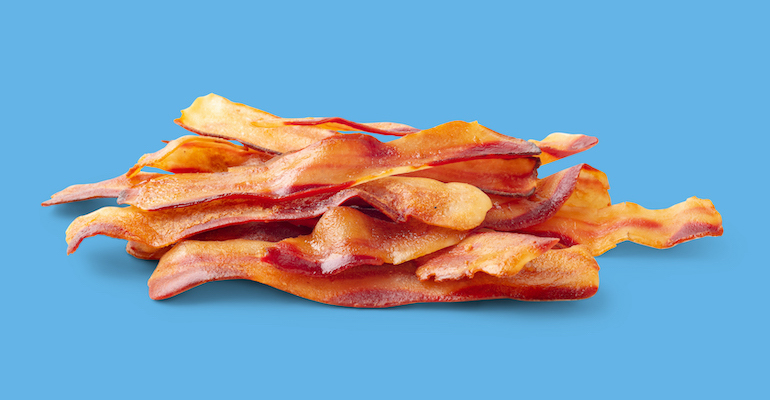
Katja Knox, Editorial Account Manager 6 Dec 2021Plant-based bacon startup Hooray Foods closed a $2.7 million extension of its seed round that originally brought the company a $2 million influx of cash this summer. The company says it intends to use this infusion of capital to scale its production of animal-free bacon strips that it sells in the U.S. and Canada.
Funding for this seed extension round came from existing investors Evolution VC Partners, Gaingels and Sad Hill Angels, as well as a new addition, David Hoffmann, the former CEO of Dunkin and Lyra Growth Partners.
“After witnessing the national appeal of meat alternatives in my previous roles at high-profile fast food brands, I am confident Hooray’s plant-based bacon will become a must-have on the menus at thousands of quick-service restaurants and sit-down establishments,” Hoffmann said in a statement.
Bacon may be the holy grail of animal products, so a vegan version of this coveted addition to many meals has the potential to go gangbusters. Hooray Foods was founded by Sri Artham, a meat lover who designed the recipe for these plant-based rashers in his home kitchen. Although the company has sold more than two million strips of its plant-based bacon and has become popular enough that it is now available both in foodservice as well as Whole Foods Markets in the U.S., the company said it would put a portion of this new funding to refining its recipe.
In its next iteration, the Artham said the bacon will appear even more realistic due to a color update that complements the beet juice concentrate the company is currently using. In its bacon 2.0, the flavor will also be of paramount concern and will be “a lot more like real animal bacon.”
Currently, the rashers are made with coconut oil that comprises 20% of the product's fat to protein ratio, allowing it to sizzle, smell, and taste like bacon. In fact, this alternative is not protein-focused at all, and the FDA says that one strip of this bacon alternative has 5% of the recommended daily intake of fat, making it not particularly healthy but similar to the real deal. In addition to that anchor ingredient, Hooray bacon is made out of shitake mushrooms, rice flour, tapioca starch, liquid smoke, umami seasoning, maple syrup, salt and beet juice concentrate.
With its total funds now sitting at $6.7 million, the startup will also be applying itself to R&D in order to expand its product portfolio using Hooray’s proprietary emulsion-forming food tech.

Get more of our news on Google
Set Ingredients Network as a 'Preferred Source' to get quicker access to the news you value.
Related news

Do the US dietary guidelines put UPFs under pressure?
10 Sep 2026
Will the US dietary guidelines change the way Americans eat, swapping ultra-processed foods for whole foods? We asked Dr Barry Popkin, renowned nutrition and obesity researcher.
Read more
Food fraud costs UK economy £2bn each year
9 Sep 2026
Food fraud is costing the UK economy up to £2 billion (€2.3 billion) every year although the food sector is more “resilient” than others, according to a recent study.
Read more
Kellogg accelerates work to remove artificial colours from all US cereals
3 Sep 2026
WK Kellogg has announced an accelerated timeline to eliminate all artificial colours and the chemical preservative, BHT, across its full US portfolio of cereals and cereal packaging.
Read more
Skimpflation: An ‘unfair’ and risky approach to keeping prices low
2 Sep 2026
Consumers see skimpflation – reducing the quality of ingredients due to rising costs – as more unfair than shrinkflation, making it a risky strategy according to recent research.
Read more
‘Urgent gaps’ in achieving 2030 food system goals
27 Aug 2026
Global food systems are failing to meet 2030 targets across indicators including health, environment, and resilience, according to a report co-authored by the Food and Agriculture Organisation (FAO).
Read more
Seven-Eleven uses microbial testing tech to extend katsudon shelf life
26 Aug 2026
Japanese retail company Seven-Eleven has improved its factory’s microbial environment to keep comfort-food staple, katsudon, fresher for longer.
Read more
Global demand for instant noodles continues to rise
24 Aug 2026
Global demand for instant noodles reached 124.21 billion servings last year, representing a 0.7% year-on-year increase – or 900 million extra servings.
Read more
Popular barbecue staples experience sharp price increases
19 Aug 2026
The typical cost of US shoppers’ barbecue baskets has risen by 12% over the past year – the fastest annual rise in a decade, figures from The Economist show.
Read more
Hot NPD: Nissin launches first cold-water Cup Noodles
18 Aug 2026
Nissin is taking one of Japan’s most iconic instant meals in a completely new direction with the launch of the first cold water-only Cup Noodles in the brand’s 55-year history.
Read more
Savoury protein snacks shake up the on-the-go market
10 Aug 2026
Sweet flavours have dominated the high-protein snack category but savoury snacks, such as cheese bars and meat sticks, can appeal to health-conscious consumers.
Read more