
Ingredients Categories
Finished Products
Finished Food Categories
- Bakery
- Beverages / Juices
- Cereal and grain products
- Confectionery
- Cooking Fats & Oils
- Dairy
- Egg products
- Fruits & Vegetables
- Infant & Baby food
- Meat, Poultry & Fish
- Nuts & Seeds products
- Other Finished Food Categories
- Pet Food
- Plant-based foods
- Prepared foods
- Sauces & Seasonings
- Sweet & Savoury Spreads
Specialised Finished Products
- Bee products
- Biotic products
- Dietary supplements
- Energy drinks
- Functional beverages
- Functional confectionery
- Functional food
- Functional powders
- Meal replacement products
- Nutricosmetics
- Other Specialised Finished Products
- Pet Dietary Supplements
- Pharma and OTC products
- Protein products
- Sugar replacers / Sweeteners
Health & Wellness Areas
Delivery Formats
Operations & Services
- 3D printing
- Analysis/ Testing
- Auditing & certifications
- Blending & mixing
- Bottling
- Certification
- Clinical trials
- Co-packing
- Coating
- Consulting
- Contract manufacturing
- Drying
- Electrospinning
- Encapsulating
- Enzymatic processing
- Extracting
- Extrusion
- Fat structuring
- Fermentation
- Filling
- Flavour development
- Freeze drying
- Granulating/ grinding/ milling / mixing
- High-pressure processing
- Labelling
- Other Operations & Services
- Packaging
- Packet filling
- Pasturising
- Quality assurance
- Saccharification
- Shear cell processing
- Spray drying
- Sterilisation
- Storage & Logistics
- Tabletting
- Toasting / roasting
- Ultra-high temperature processing
News
Imperfect Foods plans for net-zero carbon emissions by 2030
Katja Knox, Editorial Account Manager 25 Mar 2021Online grocer Imperfect Foods announced that by 2030, it will be a net-zero carbon company that has saved 1 billion pounds of food from waste. Successfully meeting this goal would put Imperfect Foods 10 years ahead of other major retailers striving for net-zero carbon emissions and 20 years before the Paris Climate Agreement deadline to achieve this designation, according to the company.
To achieve this lofty goal, the grocer said it would convert its fulfillment centers to 100% renewable power by 2026, fully electrify its vehicle fleet by 2027, certify six of its facilities as zero-waste-to-landfill by 2025 and convert its delivery boxes from recyclable cardboard to reusable containers.

Already, the company has converted its largest fulfillment facility in Los Angeles to solar power and it is working to transition 15% of its sourcing to more regional growers in order to reduce the number of trucks moving its products through its supply chain.
To combat the environmental impacts of its own success and demonstrate the ethos of sustainability which it professes, the company said in the release that it is its duty to lead the industry as “the grocery industry's effects on climate change are undeniable.”
Imperfect Foods was founded on principles of sustainability, which led to its business model initially focusing on gathering and reselling produce that did not meet the beauty standards required by retailers for sale on shelves. However, since its inception, the company has moved from a regional grocer to a national e-commerce retailer and has consequently expanded the geography of the growers with which it partners to keep pace with the triple-digit growth it saw between 2019 and 2020.
Nevertheless, Imperfect Foods’ emission of carbon dioxide per $1 of revenue has decreased since 2019. Despite this achievement, the company's growth has led to an increase in its overall carbon footprint within the same time frame, the company reported in its 2020 Impact Report. Part of the reduction in CO2 emissions per dollar of revenue is due to the 7,921 tons of post-consumer recycled packaging 52 million pounds of imperfect food that the company saved from landfills last year.
To continue to track its progress toward net-zero carbon emissions, Imperfect Foods teamed up with Watershed, which is a software platform that allows a business to track its carbon footprint across every touchpoint in its supply chain. Should Imperfect Foods need to redesign a part of its operations to reduce its greenhouse gas emissions, the company just received a $110 million investment this past February. But at the time that it received this influx of funding, Imperfect Foods said it intended to spend these funds to increase its private label program, bolster its production capacity, improve its online shopping experience and support farmers and suppliers.

Get more of our news on Google
Set Ingredients Network as a 'Preferred Source' to get quicker access to the news you value.
Related news

M&S launches own-brand pet food range
11 Sep 2026
UK retailer Marks & Spencer has launched its own-brand pet food line Paws & Pals – a well-timed and strategic move that will appeal to loyal shoppers, says a marketing expert.
Read more
Do the US dietary guidelines put UPFs under pressure?
10 Sep 2026
Will the US dietary guidelines change the way Americans eat, swapping ultra-processed foods for whole foods? We asked Dr Barry Popkin, renowned nutrition and obesity researcher.
Read more
Food fraud costs UK economy £2bn each year
9 Sep 2026
Food fraud is costing the UK economy up to £2 billion (€2.3 billion) every year although the food sector is more “resilient” than others, according to a recent study.
Read more
Kellogg accelerates work to remove artificial colours from all US cereals
3 Sep 2026
WK Kellogg has announced an accelerated timeline to eliminate all artificial colours and the chemical preservative, BHT, across its full US portfolio of cereals and cereal packaging.
Read more
‘Urgent gaps’ in achieving 2030 food system goals
27 Aug 2026
Global food systems are failing to meet 2030 targets across indicators including health, environment, and resilience, according to a report co-authored by the Food and Agriculture Organisation (FAO).
Read more
Chimac’s fusion sauces bring Korean flavours to Europe
25 Aug 2026
Irish sauce brand Chimac is tapping into Korea’s culinary traditions, bringing its flavours and products to European consumers who want a taste of K-food.
Read more
Savoury protein snacks shake up the on-the-go market
10 Aug 2026
Sweet flavours have dominated the high-protein snack category but savoury snacks, such as cheese bars and meat sticks, can appeal to health-conscious consumers.
Read more
Nestlé invests in regeneratively farmed wheat for KitKat
5 Aug 2026
Nestlé will pay a premium for Wildfarmed’s regeneratively farmed wheat but the CPG remains reticent to promote the move on packs of its KitKat bars.
Read more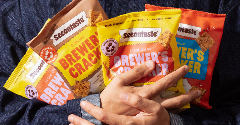
How Secon Taste is putting upcycled snacks on shelves
4 Aug 2026
Hungarian zero-waste startup Secon Taste is turning surplus food into upcycled snacks such as fibre-packed granola, instant porridge, and a circular coffee-tasting box.
Read more
Codex sets global thresholds for ‘may contain’ labels
3 Aug 2026
Codex Alimentarius has adopted its first global guidance on when to use “may contain” allergen warnings, setting thresholds intended to stop the label being used as blanket legal cover.
Read more