
Ingredients Categories
Finished Products
Finished Food Categories
- Bakery
- Beverages / Juices
- Cereal and grain products
- Confectionery
- Cooking Fats & Oils
- Dairy
- Egg products
- Fruits & Vegetables
- Infant & Baby food
- Meat, Poultry & Fish
- Nuts & Seeds products
- Other Finished Food Categories
- Pet Food
- Plant-based foods
- Prepared foods
- Sauces & Seasonings
- Sweet & Savoury Spreads
Specialised Finished Products
- Bee products
- Biotic products
- Dietary supplements
- Energy drinks
- Functional beverages
- Functional confectionery
- Functional food
- Functional powders
- Meal replacement products
- Nutricosmetics
- Other Specialised Finished Products
- Pet Dietary Supplements
- Pharma and OTC products
- Protein products
- Sugar replacers / Sweeteners
Health & Wellness Areas
Delivery Formats
Operations & Services
- 3D printing
- Analysis/ Testing
- Auditing & certifications
- Blending & mixing
- Bottling
- Certification
- Clinical trials
- Co-packing
- Coating
- Consulting
- Contract manufacturing
- Drying
- Electrospinning
- Encapsulating
- Enzymatic processing
- Extracting
- Extrusion
- Fat structuring
- Fermentation
- Filling
- Flavour development
- Freeze drying
- Granulating/ grinding/ milling / mixing
- High-pressure processing
- Labelling
- Other Operations & Services
- Packaging
- Packet filling
- Pasturising
- Quality assurance
- Saccharification
- Shear cell processing
- Spray drying
- Sterilisation
- Storage & Logistics
- Tabletting
- Toasting / roasting
- Ultra-high temperature processing
News
Kellogg’s loses UK legal case against high-sugar cereal rules
11 Jul 2022
US cereal manufacturer Kellogg has lost a UK High Court case that challenged regulations intended to restrict the promotion of high-sugar breakfast cereals in supermarkets.
The case revolves around UK plans to introduce regulations limiting the promotion of foods that are “high in fat, salt and sugar” (HFSS) in supermarkets and other large retailers, as part of its efforts to curb obesity.
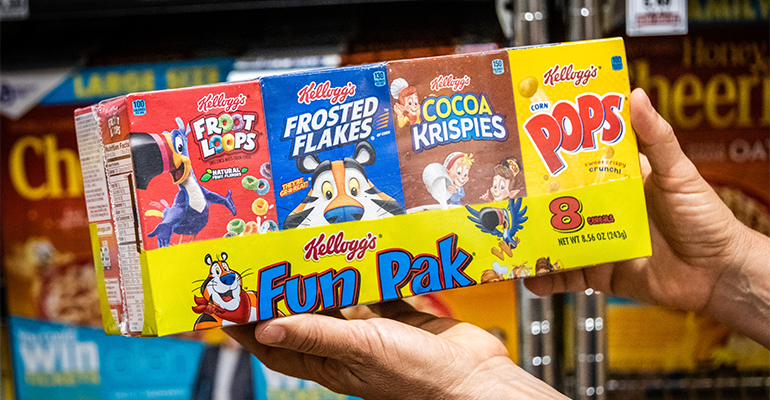
Kellogg’s claimed new regulations, which will restrict promotional offers and the prominent placement of high-sugar cereals that are classified as ‘less healthy’, was unfair.
As well as restrictions on offers, such as buy-one-get-one-free and TV advertising, the regulations also ban online or app promotions, including putting HFSS foods on website homepages or displaying them when consumers are looking for other items.
Should milk count towards the nutrient profile?
A major argument brought forward by Kellogg’s in the case was that the nutritional content of breakfast cereals should be assessed with milk, and not on a dry weight basis, with the multinational arguing that the UK government had failed to consider this point when making the regulations.
Furthermore, the company argued on several more technical legal points, including the fact that the UK Parliament was not given the opportunity to properly scrutinise the UK Nutrient Profiling Model (NPM) and its application because it is included in a technical guidance document and not in the actual legislation, and that the regulations go beyond the legal powers that the 1990 Food Safety Act was originally intended for.
However, in a UK High Court judgment on Monday, Mr Justice Linden dismissed the claim, concluding that that the addition of milk would not affect the fact that the cereal was high in sugar. He also rejected the claim that the government did not consult the UK Parliament fully or properly.
UK Court: A ‘wholly unconvincing’ argument
“Kellogg’s argument is not that its products are themselves lower in fat, sugar or salt; it is that they should be assessed in combination with other foods and ingredients, namely semi skimmed milk,” noted Linden in his concluding statement.
“The suggestion that “Frosties” should not be regarded as a ‘less healthy’ product because of the nutritional value of the milk with which they may be consumed is surprising,” he said.
Justice Linden noted that the proposition that other Kellogg products including ‘Krave Choc Nut’ and ‘Crunchy Nut Clusters Milk Chocolate Curls’ ‘”somehow” become healthy products if they are consumed with milk, is “wholly unconvincing, as the addition of milk does not alter the nutrition profile of the products themselves.”
Kellogg’s ‘disappointment’ at court ruling
Kellogg UK managing director, Chris Silcock, said the company was disappointed with the verdict, adding that Kellogg has “always supported Government’s obesity strategy and work to tackle obesity.”
“We brought this legal challenge because we believe the formula used to measure the nutritional value of food is wrong when it comes to breakfast cereals, and we believe it is right to stand up for what we believe in,” said Silcock.
He that Kellogg still believes it is important that cereals are measured in a way which reflects how most people eat them (with milk) and that it remains concerned at the way the UK government introduced the regulations.
“While disappointed with this judgement, we respect the decision of the Courts and do not intend to appeal,” commented the UK managing director.

Get more of our news on Google
Set Ingredients Network as a 'Preferred Source' to get quicker access to the news you value.
Related news
Kellogg accelerates work to remove artificial colours from all US cereals
3 Sep 2026
WK Kellogg has announced an accelerated timeline to eliminate all artificial colours and the chemical preservative, BHT, across its full US portfolio of cereals and cereal packaging.
Read more
‘Urgent gaps’ in achieving 2030 food system goals
27 Aug 2026
Global food systems are failing to meet 2030 targets across indicators including health, environment, and resilience, according to a report co-authored by the Food and Agriculture Organisation (FAO).
Read more
Chimac’s fusion sauces bring Korean flavours to Europe
25 Aug 2026
Irish sauce brand Chimac is tapping into Korea’s culinary traditions, bringing its flavours and products to European consumers who want a taste of K-food.
Read more
Savoury protein snacks shake up the on-the-go market
10 Aug 2026
Sweet flavours have dominated the high-protein snack category but savoury snacks, such as cheese bars and meat sticks, can appeal to health-conscious consumers.
Read more
Nestlé invests in regeneratively farmed wheat for KitKat
5 Aug 2026
Nestlé will pay a premium for Wildfarmed’s regeneratively farmed wheat but the CPG remains reticent to promote the move on packs of its KitKat bars.
Read more
How Secon Taste is putting upcycled snacks on shelves
4 Aug 2026
Hungarian zero-waste startup Secon Taste is turning surplus food into upcycled snacks such as fibre-packed granola, instant porridge, and a circular coffee-tasting box.
Read more
Codex sets global thresholds for ‘may contain’ labels
3 Aug 2026
Codex Alimentarius has adopted its first global guidance on when to use “may contain” allergen warnings, setting thresholds intended to stop the label being used as blanket legal cover.
Read more
EU sets maximum MOAH levels to protect human health
28 Jul 2026
The EU will adopt maximum levels for mineral oil aromatic hydrocarbons (MOAH) in food to protect human health. What do manufacturers need to know?
Read more
UK publishes guidance on SPS food trade agreement with EU
27 Jul 2026
The UK government has shared guidance on how food businesses can prepare for its upcoming Sanitary and Phytosanitary (SPS) agreement with the EU.
Read more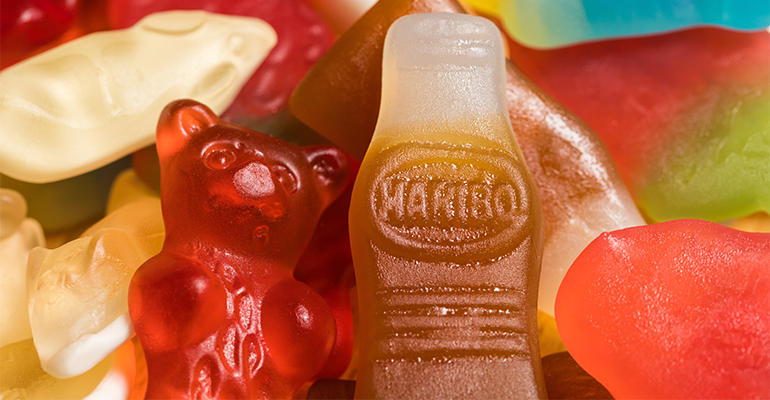
Industry hits back at UK’s proposed healthy food rules
24 Jul 2026
Food brands, including Haribo, have hit out against the UK’s proposed nutrient profiling model, which places a new focus on free sugars that are added during manufacturing.
Read more