
Ingredients Categories
Finished Products
Finished Food Categories
- Bakery
- Beverages / Juices
- Cereal and grain products
- Confectionery
- Cooking Fats & Oils
- Dairy
- Egg products
- Fruits & Vegetables
- Infant & Baby food
- Meat, Poultry & Fish
- Nuts & Seeds products
- Other Finished Food Categories
- Pet Food
- Plant-based foods
- Prepared foods
- Sauces & Seasonings
- Sweet & Savoury Spreads
Specialised Finished Products
- Bee products
- Biotic products
- Dietary supplements
- Energy drinks
- Functional beverages
- Functional confectionery
- Functional food
- Functional powders
- Meal replacement products
- Nutricosmetics
- Other Specialised Finished Products
- Pet Dietary Supplements
- Pharma and OTC products
- Protein products
- Sugar replacers / Sweeteners
Health & Wellness Areas
Delivery Formats
Operations & Services
- 3D printing
- Analysis/ Testing
- Auditing & certifications
- Blending & mixing
- Bottling
- Certification
- Clinical trials
- Co-packing
- Coating
- Consulting
- Contract manufacturing
- Drying
- Electrospinning
- Encapsulating
- Enzymatic processing
- Extracting
- Extrusion
- Fat structuring
- Fermentation
- Filling
- Flavour development
- Freeze drying
- Granulating/ grinding/ milling / mixing
- High-pressure processing
- Labelling
- Other Operations & Services
- Packaging
- Packet filling
- Pasturising
- Quality assurance
- Saccharification
- Shear cell processing
- Spray drying
- Sterilisation
- Storage & Logistics
- Tabletting
- Toasting / roasting
- Ultra-high temperature processing
News
Malaysian Palm Oil Council calls for a fair and consistent EUDR
Natasha Spencer-Jolliffe, Freelance Journalist 28 Nov 2025The Malaysian Palm Oil Council (MPOC) is calling for the European Commission to reconsider its U-turn on the European Union Deforestation Regulation (EUDR).
The MPOC, an organisation that works to position the Southeast Asian country as a global leader in certified sustainable palm oil, has expressed concerns over what it calls a “fundamentally unjust and protectionist” EUDR.
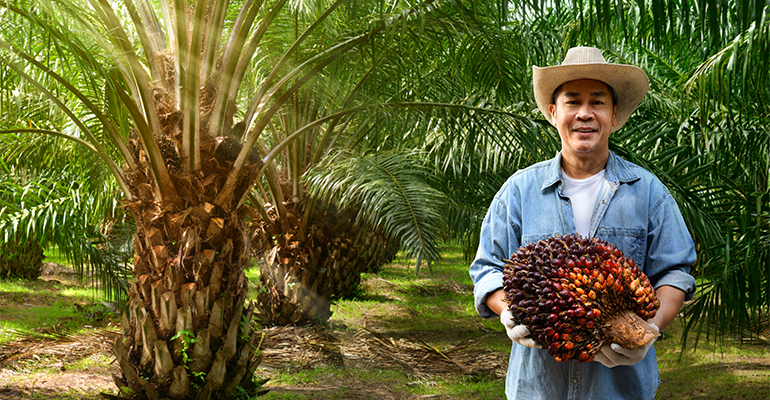
The organisation, which works to raise awareness of the technological, economic, and environmental benefits of using certified, sustainable palm oil, is now urging the European Commission to provide a fair and consistent law for its producers and exporters.
“The EU has crafted a regulation that conveniently exempts its own member states from administrative burden while imposing stringent requirements on producers from the Global South,” said Belvinder Sron, chief executive of the MPOC. “Malaysian exporters and smallholders will bear the full weight of this bureaucratic juggernaut, whilst EU producers enjoy preferential treatment.”
EUDR U-turn: What now?
Currently, food and beverage companies are waiting to see how the European Commission will respond to calls to push back the EUDR’s implementation date again from December 2025 to December 2026.
Amid the ongoing discussions, the MPOC has urged lawmakers to consider the effect its regulatory framework will have on Malaysian businesses’ operations and finances.
On 27 October, the MPOC released a statement expressing its deep concern about the Commission’s decision to lift the delay on the EUDR’s full implementation. Backing the approach, it stated, will effectively ramp up a framework which it believes is unfair and poses a risk to Malaysian businesses.
Malaysia is the world’s second-largest palm oil producer, accounting for approximately 25% of the globe’s total production.
In the 2024/25 season, the United States Department of Agriculture (USDA) put Malaysia’s total palm oil production output at 19.4 million metric tons.
Palm oil production has increased substantially over the past decade, with the globe’s total production growing by 26.5%. In 2024, palm oil was the most commonly produced vegetable oil worldwide, with a share of almost a third (32.2%).
The MPOC stated that it remains committed to sustainable palm oil production and environmental stewardship. However, it requires equitable and science-based regulation to support its dedication to certified sustainable production of the commodity.
The problem is that Malaysian exporters have spent months investing considerable resources into preparing for the EUDR in response to the EU’s previous announcement of an "infinite delay” to the law’s introduction date.
Reversing the policy decision now, the MPOC said, indicates a lack of consistency, transparency, and consideration for disruption and financial losses.
“This pattern of huge policy adjustments – postponement followed by abrupt enforcement – sends a troubling signal to companies which have worked in good faith to align themselves with the EU’s expectations,” it said.
Fighting for framework fairness
The MPOC wants the European Commission to defer EUDR implementation pending a comprehensive and independent audit of the EU’s country classification methodology to ensure consistency and fairness. It also wants the Commission to reclassify Malaysia as a “low-risk” country.
To achieve a fair application of the EUDR rules, it is calling on the Commission to give Malaysian smallholders the same compliance pathways available to EU producers.
Specifically, it is requesting access to one-time declarations rather than per-shipment documentation.
In addition, it wants the Commission to “engage in a credible dialogue” with Malaysia and other global producers to develop and design proportionate and science-based compliance regimes.
“If the EU wants to lead the world on sustainability, then it must start by applying its own principles fairly. True progress depends on partnership, not protectionism,” Sron added.
An ‘uneven two-tier regulatory architecture’
The MPOC is particularly disappointed with the EUDR’s framework, specifying its “uneven two-tier regulatory architecture”.
Within the EUDR is a country risk classification system. The EU has apportioned a level of risk to each country, with the MPOC highlighting that it has classified all single EU member states as low risk.
As such, countries with this designation receive automatic access to simplified compliance procedures and streamlined one-time declarations.
While Malaysian producers are investing in sustainable practices and certification schemes, such as the EU-recognised Malaysian Sustainable Palm Oil (MSPO 2.0), the country is unable to access compliance relief mechanisms available to EU suppliers.
“This represents a clear imbalance in enforcement which undermines confidence in the regulation’s fairness,” said the MPOC.
The organisation is concerned that the two-tier system may damage the EUDR’s credibility. Palm oil producers may lack confidence and trust in the law, limiting their willingness to embrace the regulatory framework.
“While EU and other ‘low-risk’ suppliers can submit a single simplified declaration, Malaysian exporters must continue to compile exhaustive due diligence statements for every single export consignment,” Sron said.
Pausing sustainable palm oil progress?
Under the EU’s rules, EU importers that source palm oil from Malaysia need to demand and verify three core requirements.
First, they must gather exact plantation geolocation data. Next, they need to obtain comprehensive evidence of legal production and lastly, they must show proof that no land use change occurred after 31 December 2020, involving deforestation.
The MPOC stated that these regulatory requirements significantly increase compliance costs, especially for smallholder farmers who, in 2023, accounted for approximately 26.4% of the palm oil production industry. According to the MPOC, there are more than 300,000 smallholder farmers in Malaysia.
“When well-intentioned cooperation is met with uneven treatment, it risks discouraging meaningful participation and investment in sustainability,” Sron said.
Producers and exporters may move their supply chains from Malaysia to countries designated as low risk.
“Malaysian exporters have invested in traceability infrastructure, training and compliance systems in anticipation of these regulations. Now the goalposts have moved again,” she added.

Get more of our news on Google
Set Ingredients Network as a 'Preferred Source' to get quicker access to the news you value.
Related news

Do the US dietary guidelines put UPFs under pressure?
10 Sep 2026
Will the US dietary guidelines change the way Americans eat, swapping ultra-processed foods for whole foods? We asked Dr Barry Popkin, renowned nutrition and obesity researcher.
Read more
Skimpflation: An ‘unfair’ and risky approach to keeping prices low
2 Sep 2026
Consumers see skimpflation – reducing the quality of ingredients due to rising costs – as more unfair than shrinkflation, making it a risky strategy according to recent research.
Read more
‘Urgent gaps’ in achieving 2030 food system goals
27 Aug 2026
Global food systems are failing to meet 2030 targets across indicators including health, environment, and resilience, according to a report co-authored by the Food and Agriculture Organisation (FAO).
Read more
Seven-Eleven uses microbial testing tech to extend katsudon shelf life
26 Aug 2026
Japanese retail company Seven-Eleven has improved its factory’s microbial environment to keep comfort-food staple, katsudon, fresher for longer.
Read more
Chimac’s fusion sauces bring Korean flavours to Europe
25 Aug 2026
Irish sauce brand Chimac is tapping into Korea’s culinary traditions, bringing its flavours and products to European consumers who want a taste of K-food.
Read more
Global demand for instant noodles continues to rise
24 Aug 2026
Global demand for instant noodles reached 124.21 billion servings last year, representing a 0.7% year-on-year increase – or 900 million extra servings.
Read more
China beverages: Is herbal innovation the future?
20 Aug 2026
Herbal and botanical innovation in China's drinks market continues to grow, with ingredients like astragalus root, ginger, and ginseng in the spotlight – and focus shifting far beyond refreshment.
Read more
Popular barbecue staples experience sharp price increases
19 Aug 2026
The typical cost of US shoppers’ barbecue baskets has risen by 12% over the past year – the fastest annual rise in a decade, figures from The Economist show.
Read more
Hot NPD: Nissin launches first cold-water Cup Noodles
18 Aug 2026
Nissin is taking one of Japan’s most iconic instant meals in a completely new direction with the launch of the first cold water-only Cup Noodles in the brand’s 55-year history.
Read more
Manam Chocolate aims to bring premium Indian cacao to 'the world stage'
11 Aug 2026
Craft chocolate brand Manam Chocolate is investing in local expansion and supply chain innovation throughout India as it works to build out the premium reputation of its locally produced cacao products.
Read more