
Ingredients Categories
Finished Products
Finished Food Categories
- Bakery
- Beverages / Juices
- Cereal and grain products
- Confectionery
- Cooking Fats & Oils
- Dairy
- Egg products
- Fruits & Vegetables
- Infant & Baby food
- Meat, Poultry & Fish
- Nuts & Seeds products
- Other Finished Food Categories
- Pet Food
- Plant-based foods
- Prepared foods
- Sauces & Seasonings
- Sweet & Savoury Spreads
Specialised Finished Products
- Bee products
- Biotic products
- Dietary supplements
- Energy drinks
- Functional beverages
- Functional confectionery
- Functional food
- Functional powders
- Meal replacement products
- Nutricosmetics
- Other Specialised Finished Products
- Pet Dietary Supplements
- Pharma and OTC products
- Protein products
- Sugar replacers / Sweeteners
Health & Wellness Areas
Delivery Formats
Operations & Services
- 3D printing
- Analysis/ Testing
- Auditing & certifications
- Blending & mixing
- Bottling
- Certification
- Clinical trials
- Co-packing
- Coating
- Consulting
- Contract manufacturing
- Drying
- Electrospinning
- Encapsulating
- Enzymatic processing
- Extracting
- Extrusion
- Fat structuring
- Fermentation
- Filling
- Flavour development
- Freeze drying
- Granulating/ grinding/ milling / mixing
- High-pressure processing
- Labelling
- Other Operations & Services
- Packaging
- Packet filling
- Pasturising
- Quality assurance
- Saccharification
- Shear cell processing
- Spray drying
- Sterilisation
- Storage & Logistics
- Tabletting
- Toasting / roasting
- Ultra-high temperature processing
News
Mealworm protein faces commercial roadblocks as producers struggle
Rik Moors 25 Feb 2025The financial struggles of Ÿnsect, one of Europe’s largest insect protein producers, have raised concerns about the viability of large-scale mealworm farming.
The company, which had positioned itself as a leader in the sector, now requires €130 million to continue operating its facility.
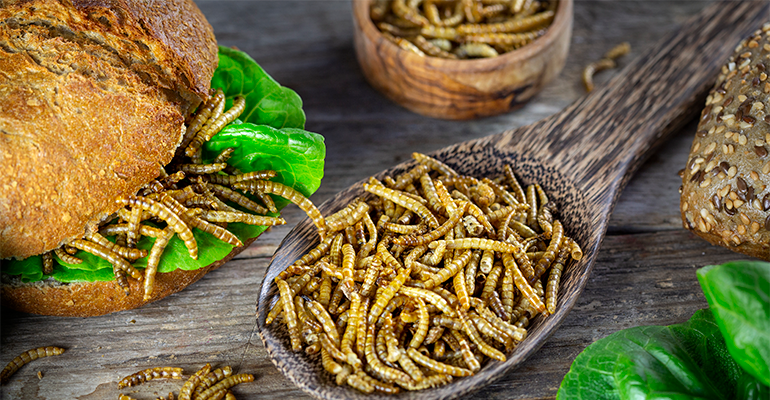
Its difficulties reflect broader challenges in the industry, including slow consumer adoption, high production costs, and regulatory hurdles.
Mealworm protein: Revenues crawling to a halt
Ÿnsect operates mealworm farming sites in Dole and Amiens and has raised nearly €600 million since its launch in 2011. However, its 2023 revenue was just €5.8 million, while third-party liabilities stand at approximately €104 million.
The company had expected strong demand for mealworm-derived protein, citing its sustainability credentials and nutritional value. However, market acceptance has been slower than anticipated, limiting investment and slowing commercialisation.
On LinkedIn, food industry strategist Peter Kürti argued that consumer demand remains too low to justify large-scale production. “Nobody wants insect protein in the food chain, customers do not, regardless of whether they are vegan or not,” he said.
Others believe the sector is still adjusting. Adrián Odio, a bioeconomy and biotechnology expert, suggested that companies may need to shift their focus from alternative protein to waste upcycling and biorefining.
Insect farming startups facing insolvency
Ÿnsect is not alone in its financial struggles. Agronutris, another well-financed insect farming startup, has also entered safeguarding proceedings, a voluntary legal procedure for companies facing insolvency.
The company, which operates a black soldier fly farm in Toulouse and focuses on protein production for aquaculture feed and pet food, raised €100 million in 2021 but said that an uncertain economic context had made further investment more difficult.
“Access to funding has become harder due to an uncertain economic context and investments that have been curbed by the latest news in the industry, and the announcements made recently by other industrial actors,” Agronutris said in a statement.
The setbacks for these two companies mark a major challenge for the insect farming sector, which raised an impressive $68 million in funding in 2024 but is now struggling to maintain investor confidence.
Consumer resistance slows market growth
While insect-based food products are widely consumed in parts of Asia and Africa, European acceptance remains limited. Surveys suggest that younger consumers and those concerned with sustainability are more open to trying insect protein, but widespread adoption has yet to materialise.
Dr Alexia Nectoux, post-doctoral researcher at Haute École Libre Mosane (HELMo) and INSECTA researcher, told Ingredients Network that there is a vicious cycle where low public acceptance limits investment, hindering product development and availability.
Cultural perceptions remain a major barrier.
“People are not used to this idea because it is still uncommon to have such products in our Western diet and might see it as something sudden, but it’s actually nothing new… The cultural resistance really is the only obstacle in consumer acceptance,” she said.
“And without more accessible choices, people don’t get the chance to normalise insects as a protein source.”
However, research indicates that attitudes may be shifting. In a 2024 study, 55.7% of consumers surveyed said they would consider purchasing yoghurt enriched with insect protein and were willing to pay an average of 24% more than the conventional price. Acceptance was highest among younger adults, men, rural residents, and families with children.
Several companies are continuing to develop and release insect-based food products.
French company Micronutris has developed protein bars and crackers incorporating mealworm powder and crickets. Italian company Small Giants sells cricket protein pasta – marketing it as a rich source of vitamin B12, fibre, and omega-3 – online throughout the EU and in stores in several European countries.
And Innovafeed, also based in France, has focused on producing insect-based protein for both food and animal feed, highlighting the environmental benefits of insect farming.
Regulatory delays hinder investment
Regulatory barriers have also made commercial expansion difficult. Although the European Food Safety Authority (EFSA) approved yellow mealworms as a novel food in 2021, further approvals remain a slow process.
Dr Matthias Gosselin, a scientific co-ordinator of the ongoing Entomological Innovations for Food Supplements (INSECTA) project, told Ingredients Network that long regulatory timelines discourage investment.
“It can take five or six years for an application to be approved,” he said. “This delays market entry and makes it harder to attract funding.”
Discussions around humane insect processing, including freezing methods, could lead to additional regulatory changes that require process adjustments. Securing funding for research has also proven difficult, particularly in regions where edible insects are not yet seen as a priority.
“Here in Wallonia, it’s very difficult to get funding for insect projects because they do not fully believe [in their potential] yet,” said Dr Birgit Quinting, another INSECTA scientific co-ordinator.
Future outlook for insect protein
Advocates of insect protein highlight its low environmental impact compared with livestock farming.
Studies indicate that insects can produce the same amount of protein while requiring just 10% of the land and producing as little as 1% of the greenhouse gas emissions. They can also be reared on organic by-products, creating a circular economy model that reduces food waste while producing high-quality protein.
A Foodvalley industry innovation report projects that by 2030, Europe’s edible insect industry will produce 1 million tons of insect-based feed annually, with 390 million Europeans consuming insect-based products.
For insect protein companies, the next few years will be critical in determining whether regulatory changes, shifting perceptions, and new technological developments can push mealworm protein into the mainstream.
While the INSECTA project has explored ways to optimise mealworm protein production , the future of the industry likely mainly depends on shifting consumer attitudes and lower production costs.
“Right now, insect protein is more expensive than soy or dairy on a small scale, but with investment and larger-scale production, costs could drop significantly,” said Nectoux.
“Meanwhile, animal proteins are likely to grow more expensive in the future, making alternatives like insects increasingly viable.”

Get more of our news on Google
Set Ingredients Network as a 'Preferred Source' to get quicker access to the news you value.
Related news

M&S launches own-brand pet food range
11 Sep 2026
UK retailer Marks & Spencer has launched its own-brand pet food line Paws & Pals – a well-timed and strategic move that will appeal to loyal shoppers, says a marketing expert.
Read more
Do the US dietary guidelines put UPFs under pressure?
10 Sep 2026
Will the US dietary guidelines change the way Americans eat, swapping ultra-processed foods for whole foods? We asked Dr Barry Popkin, renowned nutrition and obesity researcher.
Read more
Food fraud costs UK economy £2bn each year
9 Sep 2026
Food fraud is costing the UK economy up to £2 billion (€2.3 billion) every year although the food sector is more “resilient” than others, according to a recent study.
Read more
Health and wellness engagement matures across Middle East and Africa
4 Sep 2026
Many consumers in the Middle East and Africa are now proactively engaged in health and wellness, looking to integrate better habits and products into their daily lives, say experts.
Read more
Kellogg accelerates work to remove artificial colours from all US cereals
3 Sep 2026
WK Kellogg has announced an accelerated timeline to eliminate all artificial colours and the chemical preservative, BHT, across its full US portfolio of cereals and cereal packaging.
Read more
Skimpflation: An ‘unfair’ and risky approach to keeping prices low
2 Sep 2026
Consumers see skimpflation – reducing the quality of ingredients due to rising costs – as more unfair than shrinkflation, making it a risky strategy according to recent research.
Read more
Royal Canin launches ‘freshly-cooked’ therapeutic dog food
1 Sep 2026
Mars-owned Royal Canin has moved into the therapeutic diet sector with the launch of its Fresh Veterinary Diets range for dogs with health conditions. We asked a veterinary nutritionist for her opinion.
Read more
NielsenIQ’s EU barometer shows Britain leading in grocery inflation
31 Aug 2026
Britain was the only country to record grocery inflation above 2%, according to NielsenIQ data that compared Europe’s five biggest grocery markets from February to May 2026.
Read more
‘Urgent gaps’ in achieving 2030 food system goals
27 Aug 2026
Global food systems are failing to meet 2030 targets across indicators including health, environment, and resilience, according to a report co-authored by the Food and Agriculture Organisation (FAO).
Read more
Seven-Eleven uses microbial testing tech to extend katsudon shelf life
26 Aug 2026
Japanese retail company Seven-Eleven has improved its factory’s microbial environment to keep comfort-food staple, katsudon, fresher for longer.
Read more