
Ingredients Categories
Finished Products
Finished Food Categories
- Bakery
- Beverages / Juices
- Cereal and grain products
- Confectionery
- Cooking Fats & Oils
- Dairy
- Egg products
- Fruits & Vegetables
- Infant & Baby food
- Meat, Poultry & Fish
- Nuts & Seeds products
- Other Finished Food Categories
- Pet Food
- Plant-based foods
- Prepared foods
- Sauces & Seasonings
- Sweet & Savoury Spreads
Specialised Finished Products
- Bee products
- Biotic products
- Dietary supplements
- Energy drinks
- Functional beverages
- Functional confectionery
- Functional food
- Functional powders
- Meal replacement products
- Nutricosmetics
- Other Specialised Finished Products
- Pet Dietary Supplements
- Pharma and OTC products
- Protein products
- Sugar replacers / Sweeteners
Health & Wellness Areas
Delivery Formats
Operations & Services
- 3D printing
- Analysis/ Testing
- Auditing & certifications
- Blending & mixing
- Bottling
- Certification
- Clinical trials
- Co-packing
- Coating
- Consulting
- Contract manufacturing
- Drying
- Electrospinning
- Encapsulating
- Enzymatic processing
- Extracting
- Extrusion
- Fat structuring
- Fermentation
- Filling
- Flavour development
- Freeze drying
- Granulating/ grinding/ milling / mixing
- High-pressure processing
- Labelling
- Other Operations & Services
- Packaging
- Packet filling
- Pasturising
- Quality assurance
- Saccharification
- Shear cell processing
- Spray drying
- Sterilisation
- Storage & Logistics
- Tabletting
- Toasting / roasting
- Ultra-high temperature processing
News
Mexican brand Sigma launches amaranth-based snack in the US market
Katja Knox, Editorial Account Manager 4 Feb 2022Chocke-Obleas are arriving from Mexico to key markets in the U.S., thanks to multinational company Sigma. The Mexican snack wafer is made with chocolate, artisan wafers and crispy popped amaranth, and the wafers currently come in two flavors: chocolate and amaranth.
According to the company, each 110-calorie package offers 3 grams of plant-based protein and has no preservatives. However, it is to the star ingredient of this wafer — amaranth — that Sigma is bringing consumers' attention.
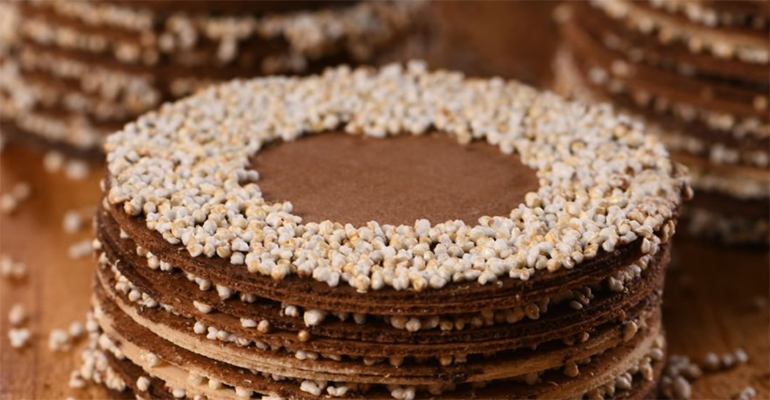
Amaranth is an ancient grain that is considered a superfood thanks to its gluten-free status and the fact that it contains more essential amino acids than any other plant source. Studies have also shown that the grain lowers cholesterol. The company is positioning its Chocke-Obleas as a better-for-you indulgence and “a snack they can feel good eating and sharing with their families.”
This particular combination of better-for-you ingredients is sure to attract attention from American consumers who are interested in foods with these ingredients. While the better-for-you trend is nothing new and has only been accelerated by the onset of COVID-19, foods with ethnic flavors have been steadily growing in popularity. A 2019 Snack Index survey by Frito-Lay showed that more than two-thirds of Americans say they eat snacks with international flavors at least once a month. At the time of the survey, Latin American flavors topped the list in terms of popularity with 26% of respondents saying they were a favorite choice.
In addition to its health credentials, Sigma is positioning its wafers as a snack with “authentic Mexican roots” thanks to the use of Mexican amaranth and the 70% cocoa-rich chocolate, an ingredient that was known and prized by ancient Mexican Mayans.
"There's nothing like Chocke-Obleas on American shelves today. It's not just another cookie, cracker, bar or snack," says Juan Carlos Duran Soriano, Founder and CEO of Golmex, the producer of Chocke-Obleas.
While these Mexican wafers do use superfood ingredients, they are still an indulgent snack, a category that has been on the rise. In the 2020 State of Snacking report by Mondelez International, the No. 1 driver for 53% of snackers was seeking comfort. Many of these people leaned toward indulgent treats as snacks, and this trend has not abated. In the 2022 State of Snacking report, 85% of consumers said they eat two types of snacks daily: one for sustenance and one for indulgence. As consumers are more willing to eat treats for snacks, companies have responded. Recently, Kind has moved from bars into candy-flavored bark and it introduced its frozen ice cream bars. Nestlé launched its Rallies chilled snack bars that are made with creamy nut butters and chocolate.
As these feel-good snacks continue to make inroads into grocery store aisles, it would not be surprising to see Chocke-Obleas expand beyond the six U.S. markets where Sigma is initially piloting this brand.

Get more of our news on Google
Set Ingredients Network as a 'Preferred Source' to get quicker access to the news you value.
Related news

Do the US dietary guidelines put UPFs under pressure?
10 Sep 2026
Will the US dietary guidelines change the way Americans eat, swapping ultra-processed foods for whole foods? We asked Dr Barry Popkin, renowned nutrition and obesity researcher.
Read more
Food fraud costs UK economy £2bn each year
9 Sep 2026
Food fraud is costing the UK economy up to £2 billion (€2.3 billion) every year although the food sector is more “resilient” than others, according to a recent study.
Read more
Health and wellness engagement matures across Middle East and Africa
4 Sep 2026
Many consumers in the Middle East and Africa are now proactively engaged in health and wellness, looking to integrate better habits and products into their daily lives, say experts.
Read more
Kellogg accelerates work to remove artificial colours from all US cereals
3 Sep 2026
WK Kellogg has announced an accelerated timeline to eliminate all artificial colours and the chemical preservative, BHT, across its full US portfolio of cereals and cereal packaging.
Read more
Skimpflation: An ‘unfair’ and risky approach to keeping prices low
2 Sep 2026
Consumers see skimpflation – reducing the quality of ingredients due to rising costs – as more unfair than shrinkflation, making it a risky strategy according to recent research.
Read more
‘Urgent gaps’ in achieving 2030 food system goals
27 Aug 2026
Global food systems are failing to meet 2030 targets across indicators including health, environment, and resilience, according to a report co-authored by the Food and Agriculture Organisation (FAO).
Read more
Global demand for instant noodles continues to rise
24 Aug 2026
Global demand for instant noodles reached 124.21 billion servings last year, representing a 0.7% year-on-year increase – or 900 million extra servings.
Read more
Savoury protein snacks shake up the on-the-go market
10 Aug 2026
Sweet flavours have dominated the high-protein snack category but savoury snacks, such as cheese bars and meat sticks, can appeal to health-conscious consumers.
Read more
How Secon Taste is putting upcycled snacks on shelves
4 Aug 2026
Hungarian zero-waste startup Secon Taste is turning surplus food into upcycled snacks such as fibre-packed granola, instant porridge, and a circular coffee-tasting box.
Read more
EU sets maximum MOAH levels to protect human health
28 Jul 2026
The EU will adopt maximum levels for mineral oil aromatic hydrocarbons (MOAH) in food to protect human health. What do manufacturers need to know?
Read more