
Ingredients Categories
Finished Products
Finished Food Categories
- Bakery
- Beverages / Juices
- Cereal and grain products
- Confectionery
- Cooking Fats & Oils
- Dairy
- Egg products
- Fruits & Vegetables
- Infant & Baby food
- Meat, Poultry & Fish
- Nuts & Seeds products
- Other Finished Food Categories
- Pet Food
- Plant-based foods
- Prepared foods
- Sauces & Seasonings
- Sweet & Savoury Spreads
Specialised Finished Products
- Bee products
- Biotic products
- Dietary supplements
- Energy drinks
- Functional beverages
- Functional confectionery
- Functional food
- Functional powders
- Meal replacement products
- Nutricosmetics
- Other Specialised Finished Products
- Pet Dietary Supplements
- Pharma and OTC products
- Protein products
- Sugar replacers / Sweeteners
Health & Wellness Areas
Delivery Formats
Operations & Services
- 3D printing
- Analysis/ Testing
- Auditing & certifications
- Blending & mixing
- Bottling
- Certification
- Clinical trials
- Co-packing
- Coating
- Consulting
- Contract manufacturing
- Drying
- Electrospinning
- Encapsulating
- Enzymatic processing
- Extracting
- Extrusion
- Fat structuring
- Fermentation
- Filling
- Flavour development
- Freeze drying
- Granulating/ grinding/ milling / mixing
- High-pressure processing
- Labelling
- Other Operations & Services
- Packaging
- Packet filling
- Pasturising
- Quality assurance
- Saccharification
- Shear cell processing
- Spray drying
- Sterilisation
- Storage & Logistics
- Tabletting
- Toasting / roasting
- Ultra-high temperature processing
News
Mexico permits UK pork exports for the first time
Katja Knox, Editorial Account Manager 13 Sep 2021British pork producers now have access to export to the Mexican market for the first time, following a new trade deal announced by the U.K. government on September 2. Over the course of five years, the Agriculture and Horticulture Development Board estimates that this trade deal will be worth £50 million ($69.2 million).
The two governments struck this deal following four years of negotiations and inspections of British facilities by the Mexican government. In February 2020, the Mexican National Department for Health, Safety and Agricultural and Food Quality (SENASICA) inspected numerous premises throughout the U.K., leading to a decision to approve four processing facilities and four associated cold stores in England and Wales.

In a statement, International Trade Secretary Liz Truss said the development was a 'huge win' for the country's farmers and food producers.
Following the exit of the U.K. from the European Union, farmers and producers have seen significant sales declines. According to data from the U.K. Food & Drink Federation, the U.K. lost £2 billion of overall food and drink sales in the first half of 2021, and the largest losses in sales occurred in meat with beef exports were down 37%.
Having another market open to exports will help offset the incurred losses. Already, sales of U.K. food and drink to non-European markets gained 13% in the first half of the year to comprise 46.6% of total food and drink exports. In 2020, U.K. pork was exported to 75 different markets at a value of more than £421m. However, despite increased sales in the same period to non-EU countries including China and Australia, the gains remained insufficient to offset the damage done to exports by Brexit.
In an effort to rebuild its exports, the U.K. has committed to negotiating with Mexico to achieve a free trade agreement this year, but there is not yet information on what such a deal would entail. The U.K. government said that such an agreement would go “much further” than the current trade deal.
In the meantime, pork exports to Mexico will complement the broad range of livestock genetics that the UK already successfully exports to Mexico, which the government said was worth £130,000 (~$180,000) annually over the last five years.
“Mexican consumers can enjoy these quality British products – and UK pork exporters have access to this important and growing market. Another success in our campaign to reduce barriers to trade between our countries,” Jonathan Knott, the Trade Commissioner for Latin America and the Caribbean said.

Get more of our news on Google
Set Ingredients Network as a 'Preferred Source' to get quicker access to the news you value.
Related news

M&S launches own-brand pet food range
11 Sep 2026
UK retailer Marks & Spencer has launched its own-brand pet food line Paws & Pals – a well-timed and strategic move that will appeal to loyal shoppers, says a marketing expert.
Read more
Do the US dietary guidelines put UPFs under pressure?
10 Sep 2026
Will the US dietary guidelines change the way Americans eat, swapping ultra-processed foods for whole foods? We asked Dr Barry Popkin, renowned nutrition and obesity researcher.
Read more
Food fraud costs UK economy £2bn each year
9 Sep 2026
Food fraud is costing the UK economy up to £2 billion (€2.3 billion) every year although the food sector is more “resilient” than others, according to a recent study.
Read more
Kellogg accelerates work to remove artificial colours from all US cereals
3 Sep 2026
WK Kellogg has announced an accelerated timeline to eliminate all artificial colours and the chemical preservative, BHT, across its full US portfolio of cereals and cereal packaging.
Read more
‘Urgent gaps’ in achieving 2030 food system goals
27 Aug 2026
Global food systems are failing to meet 2030 targets across indicators including health, environment, and resilience, according to a report co-authored by the Food and Agriculture Organisation (FAO).
Read more
Chimac’s fusion sauces bring Korean flavours to Europe
25 Aug 2026
Irish sauce brand Chimac is tapping into Korea’s culinary traditions, bringing its flavours and products to European consumers who want a taste of K-food.
Read more
Savoury protein snacks shake up the on-the-go market
10 Aug 2026
Sweet flavours have dominated the high-protein snack category but savoury snacks, such as cheese bars and meat sticks, can appeal to health-conscious consumers.
Read more
Nestlé invests in regeneratively farmed wheat for KitKat
5 Aug 2026
Nestlé will pay a premium for Wildfarmed’s regeneratively farmed wheat but the CPG remains reticent to promote the move on packs of its KitKat bars.
Read more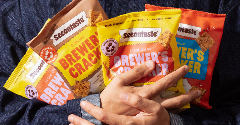
How Secon Taste is putting upcycled snacks on shelves
4 Aug 2026
Hungarian zero-waste startup Secon Taste is turning surplus food into upcycled snacks such as fibre-packed granola, instant porridge, and a circular coffee-tasting box.
Read more
Codex sets global thresholds for ‘may contain’ labels
3 Aug 2026
Codex Alimentarius has adopted its first global guidance on when to use “may contain” allergen warnings, setting thresholds intended to stop the label being used as blanket legal cover.
Read more