
Ingredients Categories
Finished Products
Finished Food Categories
- Bakery
- Beverages / Juices
- Cereal and grain products
- Confectionery
- Cooking Fats & Oils
- Dairy
- Egg products
- Fruits & Vegetables
- Infant & Baby food
- Meat, Poultry & Fish
- Nuts & Seeds products
- Other Finished Food Categories
- Pet Food
- Plant-based foods
- Prepared foods
- Sauces & Seasonings
- Sweet & Savoury Spreads
Specialised Finished Products
- Bee products
- Biotic products
- Dietary supplements
- Energy drinks
- Functional beverages
- Functional confectionery
- Functional food
- Functional powders
- Meal replacement products
- Nutricosmetics
- Other Specialised Finished Products
- Pet Dietary Supplements
- Pharma and OTC products
- Protein products
- Sugar replacers / Sweeteners
Health & Wellness Areas
Delivery Formats
Operations & Services
- 3D printing
- Analysis/ Testing
- Auditing & certifications
- Blending & mixing
- Bottling
- Certification
- Clinical trials
- Co-packing
- Coating
- Consulting
- Contract manufacturing
- Drying
- Electrospinning
- Encapsulating
- Enzymatic processing
- Extracting
- Extrusion
- Fat structuring
- Fermentation
- Filling
- Flavour development
- Freeze drying
- Granulating/ grinding/ milling / mixing
- High-pressure processing
- Labelling
- Other Operations & Services
- Packaging
- Packet filling
- Pasturising
- Quality assurance
- Saccharification
- Shear cell processing
- Spray drying
- Sterilisation
- Storage & Logistics
- Tabletting
- Toasting / roasting
- Ultra-high temperature processing
News
Nestlé launches infant formula with novel ingredient, myelin
21 Sep 2022
Nestlé has identified a nutrient blend of components found in breast milk, myelin, and will launch Nutrilearn Connect, an infant formula containing the novel ingredient, in Hong Kong before expanding to other markets.
The product comes after years of research examining the impact of nutrition on the brain and cognitive development in early life.

The nutrient blend comprises specific phospholipids, vitamins, fatty acids and minerals relevant for myelin to form. Myelin is a lipid-rich sheath which insulates and protects nerve fibres vital for cognitive and behavioural development.
“Breast milk contains important nutrients and bioactives that are relevant for brain development,” said Ryan Carvalho, global head of research and development (R&D) and chief medical officer at Nestlé Nutrition, in a press release. “With this new research, we have been able to discover a nutrient blend that can provide infants that cannot be breastfed with an alternative to support myelination,” added Carvalho.
Myelination: ‘An important brain developmental process’
The company's researchers have long been studying the effect of nutrition, including breast milk components, on early development. Ahead of its latest clinical study, Nestlé connected findings from different research fields.
"Myelination is an important brain developmental process associated with cognitive abilities that can be non-invasively assessed in a population where studying the effect of nutrition on cognition has been challenging," a Nestlé spokesperson said.
In this clinical study, Nestlé brought together research from breast milk analytics, infant nutrition, brain imaging and brain development. By applying this research, the company says it aims to advance understanding of infant nutrition for brain development.
Identifying novel approaches to infant formula production
Scientists from the food and drink processing company used analytical methods to identify and quantify specific nutrients in breast milk.
They also used myelin imaging, a non-invasive technique based on magnetic resonance, to investigate and visualise for the first time the impact of specific nutrients on the developing brain, says the Nestlé spokesperson.
“The scientific discovery around the role of nutrition on developmental myelination has been used to support product development,” the company's spokesperson adds.
“Brain imaging provided important insights into how these nutrients can impact brain development and allowed [us] to clinically prove the impact of a nutrient blend on myelination,” the Nestlé spokesperson continued.
Clinical study results
Nestlé collaborated with scientists and clinicians at Rhode Island Hospital and Pennington Biomedical Research Center in the US to assess the nutrient blend's efficacy in increasing levels of myelin. The results demonstrated that the company's novel ingredient does achieve this, the company confirms.
The study also shows the nutritional impact of its ingredient on brain structure development as early as three and six months of life, enabled by non-invasive analyses capturing myelin quantity in the brain.
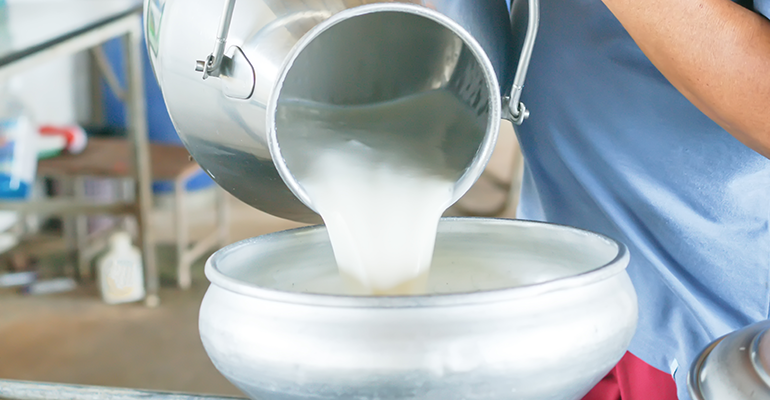
©AdobeStock/tonaquatic
New blend versus existing formulas
Following its study’s results, the company released its nutrient blend, Nutrilearn Connect, which has been clinically shown to increase myelination over the first months of life.
Nestlé's infant formula blend has been launched under the company's Wyeth S-26 Ultima brand, a scientifically formulated range to support a child's development and learning, the Nestlé spokesperson says.
The company will introduce its new infant formula with its novel ingredient to Hong Kong. The blend will be rolled out in other markets in the next few months.
Commenting on its launch in the market, the Nestlé spokesperson says: “Our commercial decisions on where to launch new innovations are based on several factors, including the market's acceptance for innovations, the brand's geographical reach or overall competitive environment.”
Broader applications in food and beverages
The food and beverage industry may now wonder about myelination's potential role and applications in the wider sector. “Myelination remains an important brain process across lifespan,” says the Nestlé spokesperson.
“At this point, we cannot speculate around future applications of the knowledge and expertise generated through this scientific discovery,” the spokesperson adds.

Get more of our news on Google
Set Ingredients Network as a 'Preferred Source' to get quicker access to the news you value.
Related news

Health and wellness engagement matures across Middle East and Africa
4 Sep 2026
Many consumers in the Middle East and Africa are now proactively engaged in health and wellness, looking to integrate better habits and products into their daily lives, say experts.
Read more
Kellogg accelerates work to remove artificial colours from all US cereals
3 Sep 2026
WK Kellogg has announced an accelerated timeline to eliminate all artificial colours and the chemical preservative, BHT, across its full US portfolio of cereals and cereal packaging.
Read more
Skimpflation: An ‘unfair’ and risky approach to keeping prices low
2 Sep 2026
Consumers see skimpflation – reducing the quality of ingredients due to rising costs – as more unfair than shrinkflation, making it a risky strategy according to recent research.
Read more
‘Urgent gaps’ in achieving 2030 food system goals
27 Aug 2026
Global food systems are failing to meet 2030 targets across indicators including health, environment, and resilience, according to a report co-authored by the Food and Agriculture Organisation (FAO).
Read more
China beverages: Is herbal innovation the future?
20 Aug 2026
Herbal and botanical innovation in China's drinks market continues to grow, with ingredients like astragalus root, ginger, and ginseng in the spotlight – and focus shifting far beyond refreshment.
Read more
Popular barbecue staples experience sharp price increases
19 Aug 2026
The typical cost of US shoppers’ barbecue baskets has risen by 12% over the past year – the fastest annual rise in a decade, figures from The Economist show.
Read more
Women’s hormonal health: Familiar ingredients beat novel actives
13 Aug 2026
Hormonal symptoms affect women across life stages, and FMCG Gurus says the ingredients best placed to support them are those with which they are already familiar.
Read more
Beyond 'nice to have': A spotlight on US functional beverages
12 Aug 2026
Functional beverage interest in the US is gaining important ground as consumers now expect function rather than see it as "nice to have", and there are clear market gaps for growth, according to Spate.
Read more
Savoury protein snacks shake up the on-the-go market
10 Aug 2026
Sweet flavours have dominated the high-protein snack category but savoury snacks, such as cheese bars and meat sticks, can appeal to health-conscious consumers.
Read more
Digital twin technology gains ground in food manufacturing
6 Aug 2026
Food and beverage companies are increasingly turning to digital twins to optimise and automate manufacturing processes, but opportunities stretch far beyond this, say experts.
Read more