
Ingredients Categories
Finished Products
Finished Food Categories
- Bakery
- Beverages / Juices
- Cereal and grain products
- Confectionery
- Cooking Fats & Oils
- Dairy
- Egg products
- Fruits & Vegetables
- Infant & Baby food
- Meat, Poultry & Fish
- Nuts & Seeds products
- Other Finished Food Categories
- Pet Food
- Plant-based foods
- Prepared foods
- Sauces & Seasonings
- Sweet & Savoury Spreads
Specialised Finished Products
- Bee products
- Biotic products
- Dietary supplements
- Energy drinks
- Functional beverages
- Functional confectionery
- Functional food
- Functional powders
- Meal replacement products
- Nutricosmetics
- Other Specialised Finished Products
- Pet Dietary Supplements
- Pharma and OTC products
- Protein products
- Sugar replacers / Sweeteners
Health & Wellness Areas
Delivery Formats
Operations & Services
- 3D printing
- Analysis/ Testing
- Auditing & certifications
- Blending & mixing
- Bottling
- Certification
- Clinical trials
- Co-packing
- Coating
- Consulting
- Contract manufacturing
- Drying
- Electrospinning
- Encapsulating
- Enzymatic processing
- Extracting
- Extrusion
- Fat structuring
- Fermentation
- Filling
- Flavour development
- Freeze drying
- Granulating/ grinding/ milling / mixing
- High-pressure processing
- Labelling
- Other Operations & Services
- Packaging
- Packet filling
- Pasturising
- Quality assurance
- Saccharification
- Shear cell processing
- Spray drying
- Sterilisation
- Storage & Logistics
- Tabletting
- Toasting / roasting
- Ultra-high temperature processing
News
PepsiCo announces plans to reduce global GHG emissions by 3M tons
Katja Knox, Editorial Account Manager 27 Apr 2021PepsiCo released its 2030 sustainability goals where it said it plans to eliminate at least 3 million tons of greenhouse gas emissions (GHG) by the end of the decade, improve the livelihoods of more than 250,000 people in its agricultural supply chain and sustainably source 100% of its key ingredients.
The multinational beverage corporation stated that it intends to achieve these goals in large part by spreading regenerative farming practices across 7 million acres of land. According to the company, this acreage is roughly the amount of land used globally to grow the ingredients used within the company’s portfolio.

By 2030, PepsiCo is striving to reduce its own GHG emissions by 40%. However, by 2040, the company is targeting net-zero emissions.
Already, PepsiCo has looked toward overhauling agriculture practices employed by its contract manufacturers as a solution for reducing GHG emissions, and the company has collaborated with farmers across 60 countries to adopt practices that build resilience and improve and restore ecosystems. In the U.S. specifically, PepsiCo encouraged farmers to plant cover crops on over 85,000 acres, resulting in a 38% net reduction in on-farm greenhouse gas emissions.
“By focusing on regenerative agriculture practices at the local level to improve soil health, we can build a stronger foundation for our products and help make the entire food system more sustainable," Jim Andrew, PepsiCo’s chief sustainability officer said in a statement.
While farmers using regenerative agricultural practices are already on this beverage giant’s radar, to achieve its 2030 sustainability goals, the company will expand regenerative agriculture programs to more than 500,000 acres of U.S. farmland by the end of 2021 as well as focus on supporting sustainable educational initiatives vulnerable global farming communities.
As consumers continually demand more sustainable products, many manufacturers are shifting supply chains to accommodate this growing demographic. PepsiCo is no different, and by the end of 2020, it succeeded in targeting its direct-sourced crop (potatoes, whole corn, oats, and oranges) supply chains to achieve sustainable sourcing for 87% of these ingredients. By 2030, the company is looking to source 100% of both its direct-sourced and key ingredients from sustainable sources.
PepsiCo is not the only company that is banking on regenerative agriculture as a way to increase overall environmental sustainability. General Mills, Hormel Food’s Applegate brand and Danone have all invested significantly in this farming approach, which has the advantage of not only bringing sustainable practices to individual farms, but it can boost a company’s bottom line as consumers have been shown to pay a premium for environmentally-conscious products. Many consumers will also switch brands to buy products that meet the environmental standards that they are looking to support, according to a 2018 study by Nielsen.
Increased interest from consumers in environmentally-friendly products as well as the growing importance that consumers have placed on health as a result of the pandemic is leading to a proliferation of sustainability initiatives from manufactures and building on the growth from previous years. Already between 2015 and 2019, products that were marketed as sustainable accounted for 54.7% of the total growth of CPG products although they made up only 16.1% of the total products available, research from IRI and New York University found.
It is unlikely that this trend will slow any time soon, and so PepsiCo committing to bolstering its efforts to be environmentally sensitive will help the company continue to capture consumer interest.

Get more of our news on Google
Set Ingredients Network as a 'Preferred Source' to get quicker access to the news you value.
Related news

Do the US dietary guidelines put UPFs under pressure?
10 Sep 2026
Will the US dietary guidelines change the way Americans eat, swapping ultra-processed foods for whole foods? We asked Dr Barry Popkin, renowned nutrition and obesity researcher.
Read more
Food fraud costs UK economy £2bn each year
9 Sep 2026
Food fraud is costing the UK economy up to £2 billion (€2.3 billion) every year although the food sector is more “resilient” than others, according to a recent study.
Read more
Health and wellness engagement matures across Middle East and Africa
4 Sep 2026
Many consumers in the Middle East and Africa are now proactively engaged in health and wellness, looking to integrate better habits and products into their daily lives, say experts.
Read more
Kellogg accelerates work to remove artificial colours from all US cereals
3 Sep 2026
WK Kellogg has announced an accelerated timeline to eliminate all artificial colours and the chemical preservative, BHT, across its full US portfolio of cereals and cereal packaging.
Read more
Skimpflation: An ‘unfair’ and risky approach to keeping prices low
2 Sep 2026
Consumers see skimpflation – reducing the quality of ingredients due to rising costs – as more unfair than shrinkflation, making it a risky strategy according to recent research.
Read more
‘Urgent gaps’ in achieving 2030 food system goals
27 Aug 2026
Global food systems are failing to meet 2030 targets across indicators including health, environment, and resilience, according to a report co-authored by the Food and Agriculture Organisation (FAO).
Read more
Global demand for instant noodles continues to rise
24 Aug 2026
Global demand for instant noodles reached 124.21 billion servings last year, representing a 0.7% year-on-year increase – or 900 million extra servings.
Read more
Savoury protein snacks shake up the on-the-go market
10 Aug 2026
Sweet flavours have dominated the high-protein snack category but savoury snacks, such as cheese bars and meat sticks, can appeal to health-conscious consumers.
Read more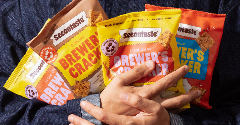
How Secon Taste is putting upcycled snacks on shelves
4 Aug 2026
Hungarian zero-waste startup Secon Taste is turning surplus food into upcycled snacks such as fibre-packed granola, instant porridge, and a circular coffee-tasting box.
Read more
EU sets maximum MOAH levels to protect human health
28 Jul 2026
The EU will adopt maximum levels for mineral oil aromatic hydrocarbons (MOAH) in food to protect human health. What do manufacturers need to know?
Read more