
Ingredients Categories
Finished Products
Finished Food Categories
- Bakery
- Beverages / Juices
- Cereal and grain products
- Confectionery
- Cooking Fats & Oils
- Dairy
- Egg products
- Fruits & Vegetables
- Infant & Baby food
- Meat, Poultry & Fish
- Nuts & Seeds products
- Other Finished Food Categories
- Pet Food
- Plant-based foods
- Prepared foods
- Sauces & Seasonings
- Sweet & Savoury Spreads
Specialised Finished Products
- Bee products
- Biotic products
- Dietary supplements
- Energy drinks
- Functional beverages
- Functional confectionery
- Functional food
- Functional powders
- Meal replacement products
- Nutricosmetics
- Other Specialised Finished Products
- Pet Dietary Supplements
- Pharma and OTC products
- Protein products
- Sugar replacers / Sweeteners
Health & Wellness Areas
Delivery Formats
Operations & Services
- 3D printing
- Analysis/ Testing
- Auditing & certifications
- Blending & mixing
- Bottling
- Certification
- Clinical trials
- Co-packing
- Coating
- Consulting
- Contract manufacturing
- Drying
- Electrospinning
- Encapsulating
- Enzymatic processing
- Extracting
- Extrusion
- Fat structuring
- Fermentation
- Filling
- Flavour development
- Freeze drying
- Granulating/ grinding/ milling / mixing
- High-pressure processing
- Labelling
- Other Operations & Services
- Packaging
- Packet filling
- Pasturising
- Quality assurance
- Saccharification
- Shear cell processing
- Spray drying
- Sterilisation
- Storage & Logistics
- Tabletting
- Toasting / roasting
- Ultra-high temperature processing
News
Plant-based and lactose-free drive liquid milk segment growth
Katja Knox, Editorial Account Manager 16 Feb 2022Liquid milk sales have been on a decade-long decline trajectory, but according to a new report from market research firm IRI, there may be a bright spot for the segment: lactose-reduced milk. Plant-based milk is another segment of the category that is continuing to grow, but the types of plant-based milks that are driving that growth are also changing, according to SPINS data.
Traditional milk enjoyed a brief moment in the sun last year when people were forced to once again make breakfast at home. In 2020, IRI data showed fluid milk volume grew 2%, reversing a negative five-year compound annual growth rate.
However, that blip in sales was not long-lived and for the 13 weeks ending Dec 26, 2021, whole milk, reduced fat, low fat and fat-free milk sales declined 3%, 7.3%, 12.2% and 12.8%, respectively. At the same time, value-added milk sales — a category that encompasses lactose-free, health enhanced and organic milk — rose 15.5% in 2021 as compared to 2019.
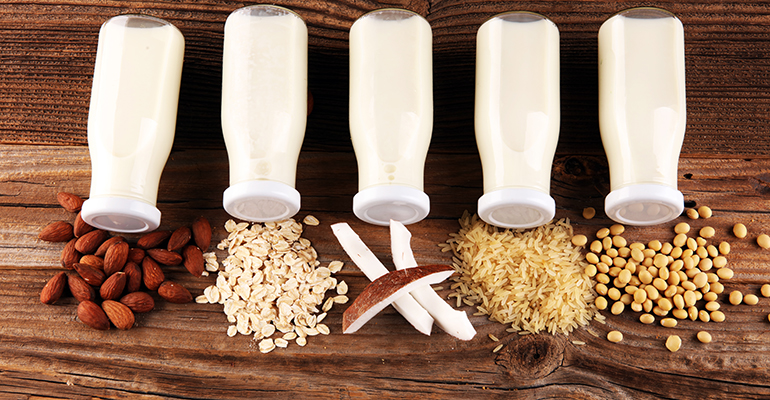
Meanwhile, the sales of plant-based milk are also evolving. Soy milk, which used to be the king of plant-based options, is now posting sales that put it in third place behind almond milk and oat milk. Still, soy milk sales are growing with a 1.2% rise in dollar sales for refrigerated soy milk in 2021 when compared to 2020. Although it is still one of the top-selling plant-based milk choices, almond milk sales declined 0.8% over the same period.
Newer alternative milks also suffered sales declines in 2021. Coconut, cashew and flax milks saw double-digit sales declines. To fill in the gap, pea milk stepped up and filled in with an 18.3% year-over-year sales growth. Despite such large growth, pea milk sales only totaled $52.8 million while almond milk sales netted $1.28 billion, per SPINS data.
These trends indicate that not only is demand for milk shifting toward alternatives that provide more than just calcium-enriched dairy, but these sales declines also offer an inkling that lifestyle changes are impacting the overall consumption of milk products.

Get more of our news on Google
Set Ingredients Network as a 'Preferred Source' to get quicker access to the news you value.
Related news

Do the US dietary guidelines put UPFs under pressure?
10 Sep 2026
Will the US dietary guidelines change the way Americans eat, swapping ultra-processed foods for whole foods? We asked Dr Barry Popkin, renowned nutrition and obesity researcher.
Read more
Food fraud costs UK economy £2bn each year
9 Sep 2026
Food fraud is costing the UK economy up to £2 billion (€2.3 billion) every year although the food sector is more “resilient” than others, according to a recent study.
Read more
Kellogg accelerates work to remove artificial colours from all US cereals
3 Sep 2026
WK Kellogg has announced an accelerated timeline to eliminate all artificial colours and the chemical preservative, BHT, across its full US portfolio of cereals and cereal packaging.
Read more
Skimpflation: An ‘unfair’ and risky approach to keeping prices low
2 Sep 2026
Consumers see skimpflation – reducing the quality of ingredients due to rising costs – as more unfair than shrinkflation, making it a risky strategy according to recent research.
Read more
‘Urgent gaps’ in achieving 2030 food system goals
27 Aug 2026
Global food systems are failing to meet 2030 targets across indicators including health, environment, and resilience, according to a report co-authored by the Food and Agriculture Organisation (FAO).
Read more
Seven-Eleven uses microbial testing tech to extend katsudon shelf life
26 Aug 2026
Japanese retail company Seven-Eleven has improved its factory’s microbial environment to keep comfort-food staple, katsudon, fresher for longer.
Read more
Global demand for instant noodles continues to rise
24 Aug 2026
Global demand for instant noodles reached 124.21 billion servings last year, representing a 0.7% year-on-year increase – or 900 million extra servings.
Read more
Popular barbecue staples experience sharp price increases
19 Aug 2026
The typical cost of US shoppers’ barbecue baskets has risen by 12% over the past year – the fastest annual rise in a decade, figures from The Economist show.
Read more
Hot NPD: Nissin launches first cold-water Cup Noodles
18 Aug 2026
Nissin is taking one of Japan’s most iconic instant meals in a completely new direction with the launch of the first cold water-only Cup Noodles in the brand’s 55-year history.
Read more
Savoury protein snacks shake up the on-the-go market
10 Aug 2026
Sweet flavours have dominated the high-protein snack category but savoury snacks, such as cheese bars and meat sticks, can appeal to health-conscious consumers.
Read more