
Ingredients Categories
Finished Products
Finished Food Categories
- Bakery
- Beverages / Juices
- Cereal and grain products
- Confectionery
- Cooking Fats & Oils
- Dairy
- Egg products
- Fruits & Vegetables
- Infant & Baby food
- Meat, Poultry & Fish
- Nuts & Seeds products
- Other Finished Food Categories
- Pet Food
- Plant-based foods
- Prepared foods
- Sauces & Seasonings
- Sweet & Savoury Spreads
Specialised Finished Products
- Bee products
- Biotic products
- Dietary supplements
- Energy drinks
- Functional beverages
- Functional confectionery
- Functional food
- Functional powders
- Meal replacement products
- Nutricosmetics
- Other Specialised Finished Products
- Pet Dietary Supplements
- Pharma and OTC products
- Protein products
- Sugar replacers / Sweeteners
Health & Wellness Areas
Delivery Formats
Operations & Services
- 3D printing
- Analysis/ Testing
- Auditing & certifications
- Blending & mixing
- Bottling
- Certification
- Clinical trials
- Co-packing
- Coating
- Consulting
- Contract manufacturing
- Drying
- Electrospinning
- Encapsulating
- Enzymatic processing
- Extracting
- Extrusion
- Fat structuring
- Fermentation
- Filling
- Flavour development
- Freeze drying
- Granulating/ grinding/ milling / mixing
- High-pressure processing
- Labelling
- Other Operations & Services
- Packaging
- Packet filling
- Pasturising
- Quality assurance
- Saccharification
- Shear cell processing
- Spray drying
- Sterilisation
- Storage & Logistics
- Tabletting
- Toasting / roasting
- Ultra-high temperature processing
News
Plant-based sales in Gulf countries are small but promising
5 Feb 2021Several new product launches and a high-profile vegan prince are creating a buzz around plant-based eating in the Gulf region.
Last month, United Arab Emirates-based halal food producer Al Islami Foods launched its first plant-based product in response to growing demand for healthier vegan alternatives in the country.

Made from a blend of sunflower, pea and fava bean protein with beet juice for colour, the preservative-free burger patty was under development for eight months, said Al Islami’s CEO, Shahid N. Khan.
Al Islami is one of the largest frozen food companies in the Gulf Cooperation Council (GCC), and adding a plant-based product to its portfolio was “the next logical step”, said Khan. The product will initially be available in the UAE before being rolled out in other GCC countries.
In a region where traditional food is heavily dominated by meat, some local players are opting for a hybrid approach to new product development. Healthy Farm, a brand launched by the consumer product division of UAE conglomerate Albatha Holding, makes a chicken, quinoa and kale burger. Targeted towards health-conscious eaters and meat-reducers rather than vegetarians or vegans, the burger contains 30% more protein and eight times less fat than a standard chicken burger, says Healthy Farm.
Sales of vegan and vegetarian-labelled products are starting from a small base. According to Euromonitor data, vegan and vegetarian claims on packaged food in the Middle East and Africa remain low compared to other countries. In 2019, just 0.7% of total stock keeping units in the region made a vegan claim and 1.3% made a vegetarian claim, compared to 6.9% and 6.4% in Western Europe, respectively.
However, the health and sustainability reasons that are driving plant-based food sales around the world also resonate with shoppers in the Middle East and the Gulf, and the COVID-19 pandemic, triggered by a strain of coronavirus believed to have zoonotic origins, should accelerate this further, according to Euromonitor analyst Maria Mascaraque.
The trend for plant-based eating has also been given a boost in the Gulf region thanks to Saudi Arabian Prince Khaled bin Alwaleed bin Talal Al Saud. Dubbed the Vegan Prince, bin Alwaleed regularly promotes an animal-free lifestyle and puts his money where his mouth is through his investment company, KBW Ventures, which focuses on sustainable firms.
KBW’s portfolio includes the plant-based brands Beyond Meat and Rebellyous Foods as well as cellular agriculture start-ups BlueNalu, Memphis Meats, TurtleTree Labs, Geltor, and Bond Pets Foods.
Foodservice and retailers cater to plant-based demand
Foodservice outlets are catering to their plant-based customers. Coffee chain Starbucks recently partnered with Beyond Meat to add two vegetarian sandwiches to its food range available in its 200-plus cafes across the UAE and Kuwait. The Beyond Meat Triple Cheese Wrap and Beyond Meatball Arabian Ciabatta are both meat-free but not vegan as they contain dairy cheese.
One retailer, UAE supermarket chain Spinneys, has also changed its product layout to cater to flexitarian shoppers. This month, Spinneys began stocking plant-based products together to make it easier for consumers to browse meat-free and dairy-free options. It also began sharing vegan recipes and advice on how to reduce food waste by using the whole vegetable from root to leaf.
The retailer’s plant-based range includes brands such as Linda McCartney, Meatless Farm, Quorn, Omnimeat, Violife and Beyond Meat. Its private label range has vegetarian versions of traditional dishes such as spicy koftas and stuffed peppers.
Tom Harvey, commercial manager at Spinneys Dubai, said: “With growing demand from conscious consumers for supermarkets to provide a broader variety of plant-based foods, Spinneys is committed to bringing quality, highly nutritious and good-value products from all over the world, as well as locally produced options such as our own SpinneysFOOD plant-based range of delicious, easy recipes for our customers to enjoy.”
Bright opportunities for health, natural and clean label
Investment bank Alpen Capital predicted in 2019 that demands for healthy, fresh, natural, organic and simple-to-understand ingredient lists would shape the sector in coming years.
“Changing demographics, increase in the number of working couples and growing influence of global culture is driving the demand of international cuisines, ready to eat meals and food delivery platforms,” its analysts wrote in a state of the industry report on the GCC region food industry.
“Further, due to rising incidence of lifestyle-related diseases such as obesity, diabetes and hypertension, people are becoming health-conscious and increasingly consuming nutritious and organic foods. The regional governments are also promoting healthy eating habits by introducing taxes on alcohol and sugary drinks.”

Get more of our news on Google
Set Ingredients Network as a 'Preferred Source' to get quicker access to the news you value.
Related news

Kellogg accelerates work to remove artificial colours from all US cereals
3 Sep 2026
WK Kellogg has announced an accelerated timeline to eliminate all artificial colours and the chemical preservative, BHT, across its full US portfolio of cereals and cereal packaging.
Read more
Skimpflation: An ‘unfair’ and risky approach to keeping prices low
2 Sep 2026
Consumers see skimpflation – reducing the quality of ingredients due to rising costs – as more unfair than shrinkflation, making it a risky strategy according to recent research.
Read more
‘Urgent gaps’ in achieving 2030 food system goals
27 Aug 2026
Global food systems are failing to meet 2030 targets across indicators including health, environment, and resilience, according to a report co-authored by the Food and Agriculture Organisation (FAO).
Read more
Seven-Eleven uses microbial testing tech to extend katsudon shelf life
26 Aug 2026
Japanese retail company Seven-Eleven has improved its factory’s microbial environment to keep comfort-food staple, katsudon, fresher for longer.
Read more
Global demand for instant noodles continues to rise
24 Aug 2026
Global demand for instant noodles reached 124.21 billion servings last year, representing a 0.7% year-on-year increase – or 900 million extra servings.
Read more
Popular barbecue staples experience sharp price increases
19 Aug 2026
The typical cost of US shoppers’ barbecue baskets has risen by 12% over the past year – the fastest annual rise in a decade, figures from The Economist show.
Read more
Hot NPD: Nissin launches first cold-water Cup Noodles
18 Aug 2026
Nissin is taking one of Japan’s most iconic instant meals in a completely new direction with the launch of the first cold water-only Cup Noodles in the brand’s 55-year history.
Read more
Savoury protein snacks shake up the on-the-go market
10 Aug 2026
Sweet flavours have dominated the high-protein snack category but savoury snacks, such as cheese bars and meat sticks, can appeal to health-conscious consumers.
Read more
Nestlé invests in regeneratively farmed wheat for KitKat
5 Aug 2026
Nestlé will pay a premium for Wildfarmed’s regeneratively farmed wheat but the CPG remains reticent to promote the move on packs of its KitKat bars.
Read more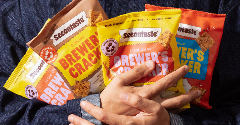
How Secon Taste is putting upcycled snacks on shelves
4 Aug 2026
Hungarian zero-waste startup Secon Taste is turning surplus food into upcycled snacks such as fibre-packed granola, instant porridge, and a circular coffee-tasting box.
Read more