
Ingredients Categories
Finished Products
Finished Food Categories
- Bakery
- Beverages / Juices
- Cereal and grain products
- Confectionery
- Cooking Fats & Oils
- Dairy
- Egg products
- Fruits & Vegetables
- Infant & Baby food
- Meat, Poultry & Fish
- Nuts & Seeds products
- Other Finished Food Categories
- Pet Food
- Plant-based foods
- Prepared foods
- Sauces & Seasonings
- Sweet & Savoury Spreads
Specialised Finished Products
- Bee products
- Biotic products
- Dietary supplements
- Energy drinks
- Functional beverages
- Functional confectionery
- Functional food
- Functional powders
- Meal replacement products
- Nutricosmetics
- Other Specialised Finished Products
- Pet Dietary Supplements
- Pharma and OTC products
- Protein products
- Sugar replacers / Sweeteners
Health & Wellness Areas
Delivery Formats
Operations & Services
- 3D printing
- Analysis/ Testing
- Auditing & certifications
- Blending & mixing
- Bottling
- Certification
- Clinical trials
- Co-packing
- Coating
- Consulting
- Contract manufacturing
- Drying
- Electrospinning
- Encapsulating
- Enzymatic processing
- Extracting
- Extrusion
- Fat structuring
- Fermentation
- Filling
- Flavour development
- Freeze drying
- Granulating/ grinding/ milling / mixing
- High-pressure processing
- Labelling
- Other Operations & Services
- Packaging
- Packet filling
- Pasturising
- Quality assurance
- Saccharification
- Shear cell processing
- Spray drying
- Sterilisation
- Storage & Logistics
- Tabletting
- Toasting / roasting
- Ultra-high temperature processing
News
Protein companies to improve human health though tackling animal disease
Katja Knox, Editorial Account Manager 30 Apr 2021Cargill, Ausvet, Heifer International and the International Poultry Council (IPC) have formed a consortium sponsored by the United States Agency for International Development (USAID) to improve livestock management and combat the threat of zoonotic diseases to both human and animal health.
In order to investigate how to best combat these diseases, consortium participants will study farming systems in Asia and Africa over the course of five years, using $33 million to enhance global health security and strengthen animal agriculture production. While the association of protein producers will prioritize their study of opportunities to reduce the risk of antimicrobial resistance in animals, they will also focus on reducing the spread of diseases from animals to humans such as foodborne pathogens and anthrax as well as Avian and swine influenza. Primarily, the group will channel their efforts to smallholder farmers in developing countries.

"Smallholder farmers produce the majority of the world's food. By equipping them with tools to improve animal management and biosecurity, we are supporting the production of safe, healthy food that improves nutrition, while preventing the spread of pathogens that threaten global human health," said Pierre Ferrari, President and CEO of Heifer International.
At the same time that smallholder farmers account for the majority of agricultural production worldwide, they are also the most vulnerable to transboundary animal diseases, such as foot-and-mouth disease and African swine fever. Scientists estimate that more than three out of five known infectious diseases in people can be spread from animals, and 75% of new or emerging infectious diseases in people come from animals, according to a press release from Cargill.
Chuck Warta, head of Cargill Health Technologies said the company is “confident that Cargill's global reach and research capabilities, combined with our partners' unique expertise and influence in animal agriculture, can minimize these massive threats to our global food system and to human health."
In addition to minimizing threats to human health through research, Cargill also said that, beginning next year, it plans to conduct nutrition and immune health trials on dairy, poultry, shrimp and swine operations in four countries throughout Asia and Africa to better understand and quantify the role holistic animal nutrition can play in reducing the threats of zoonotic diseases to human health.
Nutrition is not the only component of animal husbandry that interests this consortium. Ausvet will collect real-time data from farms in Indonesia and Vietnam to gain insight into disease occurrence, vaccination programs, and antibiotic usage to encourage data-driven decisions in animal health and its connection to human health. Heifer International will work with smallholder farmers in India and Kenya to improve biosecurity and animal management. IPC will put its efforts toward developing industry-wide policies and standards aimed at decreasing the antimicrobial resistance of animals within the poultry industry.
Foodborne illness and antibiotic resistance are two concerns within the animal protein industry that have been increasing in recent years. Tackling these issues will take a significant amount of research and funding from both public and private sources, but this consortium is an inaugural step into solving these ongoing issues.

Get more of our news on Google
Set Ingredients Network as a 'Preferred Source' to get quicker access to the news you value.
Related news

M&S launches own-brand pet food range
11 Sep 2026
UK retailer Marks & Spencer has launched its own-brand pet food line Paws & Pals – a well-timed and strategic move that will appeal to loyal shoppers, says a marketing expert.
Read more
Do the US dietary guidelines put UPFs under pressure?
10 Sep 2026
Will the US dietary guidelines change the way Americans eat, swapping ultra-processed foods for whole foods? We asked Dr Barry Popkin, renowned nutrition and obesity researcher.
Read more
Food fraud costs UK economy £2bn each year
9 Sep 2026
Food fraud is costing the UK economy up to £2 billion (€2.3 billion) every year although the food sector is more “resilient” than others, according to a recent study.
Read more
Kellogg accelerates work to remove artificial colours from all US cereals
3 Sep 2026
WK Kellogg has announced an accelerated timeline to eliminate all artificial colours and the chemical preservative, BHT, across its full US portfolio of cereals and cereal packaging.
Read more
‘Urgent gaps’ in achieving 2030 food system goals
27 Aug 2026
Global food systems are failing to meet 2030 targets across indicators including health, environment, and resilience, according to a report co-authored by the Food and Agriculture Organisation (FAO).
Read more
Chimac’s fusion sauces bring Korean flavours to Europe
25 Aug 2026
Irish sauce brand Chimac is tapping into Korea’s culinary traditions, bringing its flavours and products to European consumers who want a taste of K-food.
Read more
Savoury protein snacks shake up the on-the-go market
10 Aug 2026
Sweet flavours have dominated the high-protein snack category but savoury snacks, such as cheese bars and meat sticks, can appeal to health-conscious consumers.
Read more
Nestlé invests in regeneratively farmed wheat for KitKat
5 Aug 2026
Nestlé will pay a premium for Wildfarmed’s regeneratively farmed wheat but the CPG remains reticent to promote the move on packs of its KitKat bars.
Read more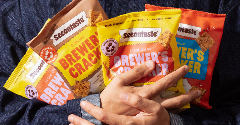
How Secon Taste is putting upcycled snacks on shelves
4 Aug 2026
Hungarian zero-waste startup Secon Taste is turning surplus food into upcycled snacks such as fibre-packed granola, instant porridge, and a circular coffee-tasting box.
Read more
Codex sets global thresholds for ‘may contain’ labels
3 Aug 2026
Codex Alimentarius has adopted its first global guidance on when to use “may contain” allergen warnings, setting thresholds intended to stop the label being used as blanket legal cover.
Read more