
Ingredients Categories
Finished Products
Finished Food Categories
- Bakery
- Beverages / Juices
- Cereal and grain products
- Confectionery
- Cooking Fats & Oils
- Dairy
- Egg products
- Fruits & Vegetables
- Infant & Baby food
- Meat, Poultry & Fish
- Nuts & Seeds products
- Other Finished Food Categories
- Pet Food
- Plant-based foods
- Prepared foods
- Sauces & Seasonings
- Sweet & Savoury Spreads
Specialised Finished Products
- Bee products
- Biotic products
- Dietary supplements
- Energy drinks
- Functional beverages
- Functional confectionery
- Functional food
- Functional powders
- Meal replacement products
- Nutricosmetics
- Other Specialised Finished Products
- Pet Dietary Supplements
- Pharma and OTC products
- Protein products
- Sugar replacers / Sweeteners
Health & Wellness Areas
Delivery Formats
Operations & Services
- 3D printing
- Analysis/ Testing
- Auditing & certifications
- Blending & mixing
- Bottling
- Certification
- Clinical trials
- Co-packing
- Coating
- Consulting
- Contract manufacturing
- Drying
- Electrospinning
- Encapsulating
- Enzymatic processing
- Extracting
- Extrusion
- Fat structuring
- Fermentation
- Filling
- Flavour development
- Freeze drying
- Granulating/ grinding/ milling / mixing
- High-pressure processing
- Labelling
- Other Operations & Services
- Packaging
- Packet filling
- Pasturising
- Quality assurance
- Saccharification
- Shear cell processing
- Spray drying
- Sterilisation
- Storage & Logistics
- Tabletting
- Toasting / roasting
- Ultra-high temperature processing
News
Singapore becomes first country to green-light carbon-captured protein
4 Nov 2022
Exciting times lie ahead for Solar Foods, as the Finnish-based startup announced its protein “made from air” has received regulatory approval from the Singapore Food Agency (SFA).
The firm announced that its microbial protein-rich powder, which essentially blends microbes, gases, and nutrients, will go into commercial production and sales in 2024.
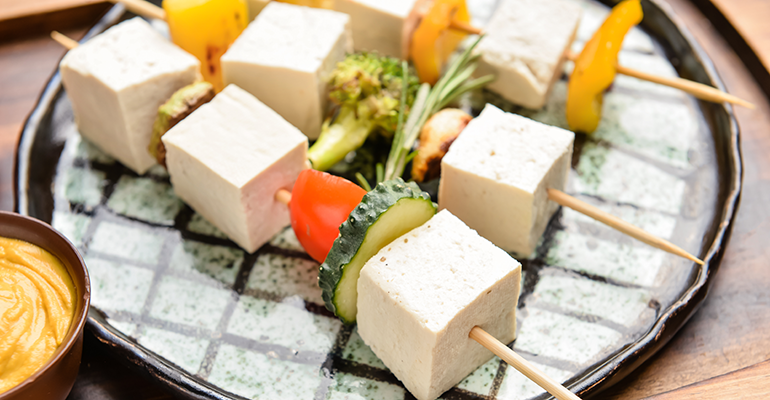
“I’d compare this to the discovery of the potato: we are introducing an entirely new ingredient to the world of food. It’s a watershed moment for how we think of what we eat,” said CEO Pasi Vainikka.
“This is also a huge day for us as a company. The food revolution we have been working towards for years has taken a major step forward and we are highly excited about the prospect of bringing Solein to the market in Singapore.”
Available in a fine, yellow powder, Solein contains around 65% protein, with an amino acid profile similar to soy; 20 to 35% carbohydrates; 5 to 10% fat; and is a source of vitamin A, B and iron.
Its neutral flavour profile, with hints of umami and no off-taste, trumps other plant-based proteins, such as pea, that can have strong secondary flavours, requiring masking agents, the company said.
“Solein is a versatile protein that has an enormous number of functions,” said Shilei Zhang, the firm’s chief commercial officer.
“You can use it as a structure-forming ingredient to produce many different textures and tastes that would have a protein component in them, in sauces, spreads, beverages, noodles or pasta, baked goods, or in foods to replace meat, dairy, or eggs.”
Singapore’s food culture is open to new tastes
In an interview with Fi Global Insights last year, Solar Foods said it was targeting the higher-value food market from the outset. Solein could also be used as an amino acid-rich growth medium for the cell-cultured meat industry.
Singapore has become something of a regulatory trailblazer, with the country also being the first to approve the cultivated meat, awarding the US startup Eat Just approval in 2020 for its cell-based chicken.
In response to the speed of the SFA’s approval, Vainikka commented on Twitter: “The Singapore application was a copy of the EU application. That is, the same data. The submission times are also the same.”
In November 2019, Singapore introduced new guidelines to assess the safety of novel foods, such as microbial foods, plant-based alternative proteins, and cultured or lab-grown meat.
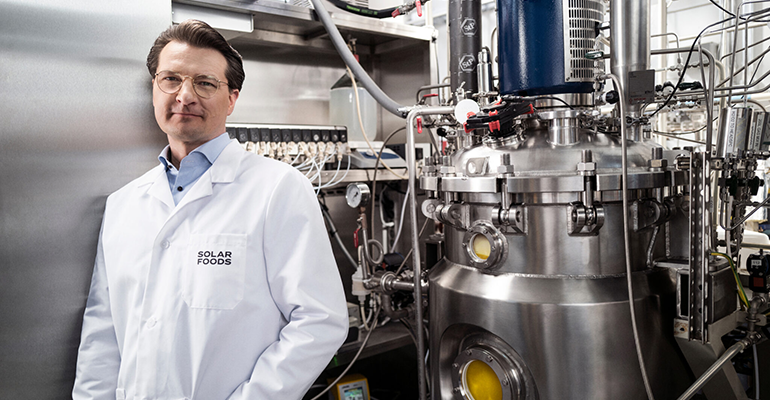 © Solar Foods | Pictured: Dr Pasi Vainikka, CEO, co-founder
The aim was to make the regulations more transparent and proactive to help companies introduce more sustainable, healthy, and functional novel foods to the Singaporean market.
Regulation clarity also coincided with tough new food production goals, with aims to produce 30% of the country’s food domestically by 2030, reducing its dependency on imported food.
Solar Foods, which submitted a novel food dossier to the SFA in September 2021, is in the process of seeking GRAS (Generally Recognised As Safe) approval in the US, and has novel food applications pending in the UK and EU.
Matching partners with future vision
The company’s first commercial-scale production facility, Factory 01, in Vantaa, Finland, will begin operations in 2024, with plans to expand its production network in the coming years.
“Demand already exceeds supply by a large margin,” said Zhang. “The factory will be ready by the end of next year and discussions are under way with many food producers on how we can go even further. We’re happy to speak to everyone ready to match the size of our vision.”
Further evidence of the company’s potential came earlier this year when the European Commission named Solar Foods an Important Project of Common European Interest (IPCEI) for its use of hydrogen as a resource.
The firm is set to receive a share of a €5.2 billion public funding pot provided by EU member states.
Microbial protein companies in this space include Brussels-based Paleo, which develops meat and fish proteins through precision fermentation. The patented process produces GMO-free heme proteins that are bioidentical with six animal proteins (chicken, beef, pork, lamb, tuna, and mammoth).
The company plans to launch the first GMO-free labelled alternative protein products in 2023.
Berlin- and Barcelona-based company Esencia Foods, founded in March 2022, adopts a solid state fermentation process, using fungal mycelium to create fish and seafood products.

Get more of our news on Google
Set Ingredients Network as a 'Preferred Source' to get quicker access to the news you value.
Related news

Health and wellness engagement matures across Middle East and Africa
4 Sep 2026
Many consumers in the Middle East and Africa are now proactively engaged in health and wellness, looking to integrate better habits and products into their daily lives, say experts.
Read more
Kellogg accelerates work to remove artificial colours from all US cereals
3 Sep 2026
WK Kellogg has announced an accelerated timeline to eliminate all artificial colours and the chemical preservative, BHT, across its full US portfolio of cereals and cereal packaging.
Read more
Skimpflation: An ‘unfair’ and risky approach to keeping prices low
2 Sep 2026
Consumers see skimpflation – reducing the quality of ingredients due to rising costs – as more unfair than shrinkflation, making it a risky strategy according to recent research.
Read more
‘Urgent gaps’ in achieving 2030 food system goals
27 Aug 2026
Global food systems are failing to meet 2030 targets across indicators including health, environment, and resilience, according to a report co-authored by the Food and Agriculture Organisation (FAO).
Read more
China beverages: Is herbal innovation the future?
20 Aug 2026
Herbal and botanical innovation in China's drinks market continues to grow, with ingredients like astragalus root, ginger, and ginseng in the spotlight – and focus shifting far beyond refreshment.
Read more
Popular barbecue staples experience sharp price increases
19 Aug 2026
The typical cost of US shoppers’ barbecue baskets has risen by 12% over the past year – the fastest annual rise in a decade, figures from The Economist show.
Read more
Women’s hormonal health: Familiar ingredients beat novel actives
13 Aug 2026
Hormonal symptoms affect women across life stages, and FMCG Gurus says the ingredients best placed to support them are those with which they are already familiar.
Read more
Beyond 'nice to have': A spotlight on US functional beverages
12 Aug 2026
Functional beverage interest in the US is gaining important ground as consumers now expect function rather than see it as "nice to have", and there are clear market gaps for growth, according to Spate.
Read more
Savoury protein snacks shake up the on-the-go market
10 Aug 2026
Sweet flavours have dominated the high-protein snack category but savoury snacks, such as cheese bars and meat sticks, can appeal to health-conscious consumers.
Read more
Digital twin technology gains ground in food manufacturing
6 Aug 2026
Food and beverage companies are increasingly turning to digital twins to optimise and automate manufacturing processes, but opportunities stretch far beyond this, say experts.
Read more