
Ingredients Categories
Finished Products
Finished Food Categories
- Bakery
- Beverages / Juices
- Cereal and grain products
- Confectionery
- Cooking Fats & Oils
- Dairy
- Egg products
- Fruits & Vegetables
- Infant & Baby food
- Meat, Poultry & Fish
- Nuts & Seeds products
- Other Finished Food Categories
- Pet Food
- Plant-based foods
- Prepared foods
- Sauces & Seasonings
- Sweet & Savoury Spreads
Specialised Finished Products
- Bee products
- Biotic products
- Dietary supplements
- Energy drinks
- Functional beverages
- Functional confectionery
- Functional food
- Functional powders
- Meal replacement products
- Nutricosmetics
- Other Specialised Finished Products
- Pet Dietary Supplements
- Pharma and OTC products
- Protein products
- Sugar replacers / Sweeteners
Health & Wellness Areas
Delivery Formats
Operations & Services
- 3D printing
- Analysis/ Testing
- Auditing & certifications
- Blending & mixing
- Bottling
- Certification
- Clinical trials
- Co-packing
- Coating
- Consulting
- Contract manufacturing
- Drying
- Electrospinning
- Encapsulating
- Enzymatic processing
- Extracting
- Extrusion
- Fat structuring
- Fermentation
- Filling
- Flavour development
- Freeze drying
- Granulating/ grinding/ milling / mixing
- High-pressure processing
- Labelling
- Other Operations & Services
- Packaging
- Packet filling
- Pasturising
- Quality assurance
- Saccharification
- Shear cell processing
- Spray drying
- Sterilisation
- Storage & Logistics
- Tabletting
- Toasting / roasting
- Ultra-high temperature processing
News
South Korean ‘use-by’ dates enter into force
17 Jan 2023
New guidelines replacing a product’s ‘sell-by' date with a ‘use-by’ date have entered into force in South Korea as the government tries to extend product shelf life and cut food waste.
The new policy, passed by lawmakers in August of 2021, will apply to around 2,000 food and beverage items between 2022 and 2025, in the first major shake-up of its food labelling and advertising regulations for almost 40 years.

“We hope that the new labelling system, launching next year, will help achieve carbon neutrality by decreasing food waste,” said minister of food and drug safety Oh Yu-kyoung.
The regulations will provisionally apply to 80 items in 23 food categories that include edible oils, snacks, juices, tofu, bread, ready-to-eat (RTE) foods, fish cake, bacon, and sausage.
The Ministry of Food and Drug Safety is already in the process of setting the dates for a further 430 items within 50 food categories that include highly consumed foods like hams, snacks, food for babies and children as well as bakery products.
Previous practices that used 'best before' dates required retailers to remove products from shelves, within 60% to 70% of the timeframe that food is thought safe for consumption.
The new use-by dates extend the timeframe to within 80% to 90% of the period the food is considered safe for consumption.
Milk safe for consumption 50 days after production date
Tests conducted on milk by the Korea Consumer Agency confirmed that while its sell-by date is fixed from 9 to 14 days from the production date, it is safe for consumption for up to 50 days from the date of production, when refrigerated at the correct temperature.
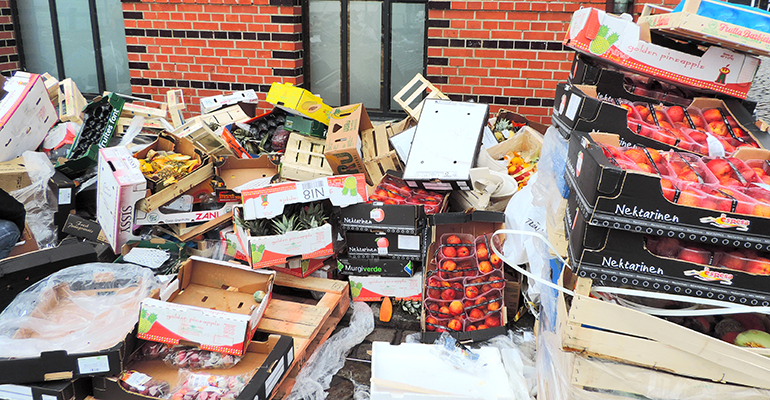
The MFDS expects the new approach to minimise the amount of food disposed by consumers based on the extended date range printed on pack.
The European Union (EU) has begun using the use-by date labelling system, and Codex has also recommended this approach.
In recent times, the domestic food industry in South Korea has pushed for use-by date labelling as developments in food manufacturing technology and refrigerated distribution systems have made it possible to extend a food’s life.
Food waste continues to be a hot topic in South Korea, with the country’s National Food Safety Information Service, estimating that 5.48 million tons of food is disposed of annually.
According to the organisation, the cost of services to handle this food disposal tops 1.96 trillion won (€1.5tn) annually. Adoption of the new use-by-date is expected to save 886 billion won (€645bn) annually, over the next decade.
New labelling system may lower quality of food
While the plans have been welcomed by environmental groups, food producers and retailers have expressed concerns over a risk of lowered food quality.
Speaking to The Korea Herald, one food distributor said food products differed greatly in characteristics, and the quality of some packaged foods can be lowered very quickly the longer they were kept.
"Careful designation of use-by dates for different food categories would need to be made, after analysing each food product's characteristics," he added.
While the MFDS offers guidance, it is the responsibility of small and mid-sized food firms to revise use-by dates on each product after reviewing its safety, adding to the cost and burden.
The ministry has put in place a grace period, designed to iron out expected teething problems as firms adapt to the new labelling system.
 © iStock/Eivaisla
Grace period allows improvements to distribution methods
However, according to South Korean law firm Kim and Chang, for items such as milk, which is likely to deteriorate during the distribution process, a grace period of eight years has been put in place.
This is to allow the industry the time to improve the distribution environment, such as distribution standards for refrigerated food items.
In addition, the ministry has permitted the practice of placing both use-by and sell-by dates on the product during the grace period.
"It will be difficult to change the food date labelling system that has lasted for 38 years all at once, but the new system will reduce food waste and provide clear information to consumers,” a ministry official told The Korea Herald.

Get more of our news on Google
Set Ingredients Network as a 'Preferred Source' to get quicker access to the news you value.
Related news

Kellogg accelerates work to remove artificial colours from all US cereals
3 Sep 2026
WK Kellogg has announced an accelerated timeline to eliminate all artificial colours and the chemical preservative, BHT, across its full US portfolio of cereals and cereal packaging.
Read more
Skimpflation: An ‘unfair’ and risky approach to keeping prices low
2 Sep 2026
Consumers see skimpflation – reducing the quality of ingredients due to rising costs – as more unfair than shrinkflation, making it a risky strategy according to recent research.
Read more
‘Urgent gaps’ in achieving 2030 food system goals
27 Aug 2026
Global food systems are failing to meet 2030 targets across indicators including health, environment, and resilience, according to a report co-authored by the Food and Agriculture Organisation (FAO).
Read more
Popular barbecue staples experience sharp price increases
19 Aug 2026
The typical cost of US shoppers’ barbecue baskets has risen by 12% over the past year – the fastest annual rise in a decade, figures from The Economist show.
Read more
Savoury protein snacks shake up the on-the-go market
10 Aug 2026
Sweet flavours have dominated the high-protein snack category but savoury snacks, such as cheese bars and meat sticks, can appeal to health-conscious consumers.
Read more
Digital twin technology gains ground in food manufacturing
6 Aug 2026
Food and beverage companies are increasingly turning to digital twins to optimise and automate manufacturing processes, but opportunities stretch far beyond this, say experts.
Read more
Nestlé invests in regeneratively farmed wheat for KitKat
5 Aug 2026
Nestlé will pay a premium for Wildfarmed’s regeneratively farmed wheat but the CPG remains reticent to promote the move on packs of its KitKat bars.
Read more
Codex sets global thresholds for ‘may contain’ labels
3 Aug 2026
Codex Alimentarius has adopted its first global guidance on when to use “may contain” allergen warnings, setting thresholds intended to stop the label being used as blanket legal cover.
Read more
EU sets maximum MOAH levels to protect human health
28 Jul 2026
The EU will adopt maximum levels for mineral oil aromatic hydrocarbons (MOAH) in food to protect human health. What do manufacturers need to know?
Read more
UK publishes guidance on SPS food trade agreement with EU
27 Jul 2026
The UK government has shared guidance on how food businesses can prepare for its upcoming Sanitary and Phytosanitary (SPS) agreement with the EU.
Read more