
Ingredients Categories
Finished Products
Finished Food Categories
- Bakery
- Beverages / Juices
- Cereal and grain products
- Confectionery
- Cooking Fats & Oils
- Dairy
- Egg products
- Fruits & Vegetables
- Infant & Baby food
- Meat, Poultry & Fish
- Nuts & Seeds products
- Other Finished Food Categories
- Pet Food
- Plant-based foods
- Prepared foods
- Sauces & Seasonings
- Sweet & Savoury Spreads
Specialised Finished Products
- Bee products
- Biotic products
- Dietary supplements
- Energy drinks
- Functional beverages
- Functional confectionery
- Functional food
- Functional powders
- Meal replacement products
- Nutricosmetics
- Other Specialised Finished Products
- Pet Dietary Supplements
- Pharma and OTC products
- Protein products
- Sugar replacers / Sweeteners
Health & Wellness Areas
Delivery Formats
Operations & Services
- 3D printing
- Analysis/ Testing
- Auditing & certifications
- Blending & mixing
- Bottling
- Certification
- Clinical trials
- Co-packing
- Coating
- Consulting
- Contract manufacturing
- Drying
- Electrospinning
- Encapsulating
- Enzymatic processing
- Extracting
- Extrusion
- Fat structuring
- Fermentation
- Filling
- Flavour development
- Freeze drying
- Granulating/ grinding/ milling / mixing
- High-pressure processing
- Labelling
- Other Operations & Services
- Packaging
- Packet filling
- Pasturising
- Quality assurance
- Saccharification
- Shear cell processing
- Spray drying
- Sterilisation
- Storage & Logistics
- Tabletting
- Toasting / roasting
- Ultra-high temperature processing
News
The European natural products retail market still holds plenty of growth potential
Simon Pitman, Freelance Journalist 22 Mar 2024With the European retail landscape for natural products divided up among many players, market intelligence provider Kantar shares some insights on how different countries in the region compare and where the opportunities lie.
The retail of natural products in the region is characterised by what is going on in the UK market, where Holland & Barrett has a dominant position, in comparison to the rest of Europe where pharmacies and smaller natural product retailers prevail, explains Andriana Bantra, senior insights analyst for EMEA health and beauty at Kantar.
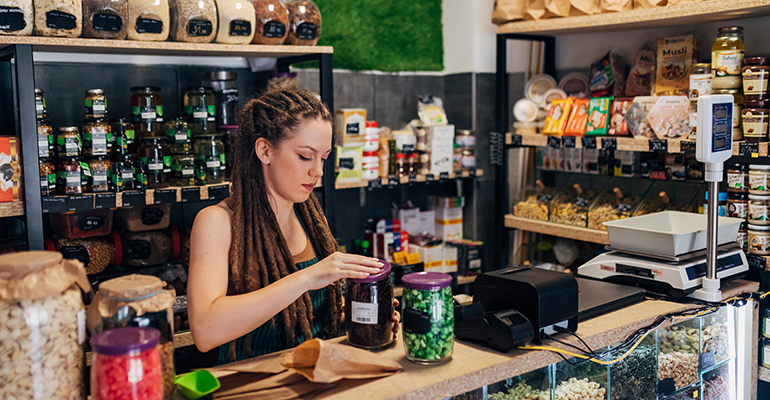
“It has been interesting to watch the UK market because Holland & Barratt has switched its focus from food to supplements and is now starting to sell more food brands once again,” explained Bantra. “Likewise, it is also seeing significant competition from Planet Organic and Whole Foods Market stores in London, which both focus on a broad range of natural products.”
Bantra also pointed to the supplements space in the UK, where Boots and Superdrug are supporting the trend for personalised supplements, with newer brands like Athletic Greens and Ritual.
Competition heats up for healthier foods
Kantar’s research also demonstrates how, on the food side, supermarket chains such as Waitrose are expanding into organic foods, as well as health claims like free-from, which is creating a lot more competition in the UK food space.
Elsewhere in Europe, the retail landscape looks quite different, with major markets like France, Italy, and Germany typically dominated by smaller chain retailers as well as pharmacies.
“In France, health products and supplements are more commonly associated with pharmacies,” Bantra said. “Then there are specific retailers for organic and healthier foods, with a good example being the chain Bio c’Bon.”
France and Germany have a similar picture
With the market for natural and health products in France generally much more specialised, Bantra went on to explain how the picture is quite similar in Germany, particularly when it comes to pharmacies.
“In Germany, pharmacies, known as apothekes, are where consumers go to buy supplements and health-related products, while for natural and organic food products there are a number of health food chains that operate throughout the country, the biggest and most high profile being Reformhaus and Alnatura,” Bantra said.
“Germany is also home to one of the largest drug chains in Europe, DM-Drogerie Markt, as well as another very big player, Rossmann. Both are big in health and beauty, but they are expanding their ranges into organic food products.”
Grocery chains answer demands for organic
Kantar’s research also points to the fact that grocery chains are starting to meet the demand for organic and health foods, with noted efforts from discount retailers like Edeka and Lidl.
In particular, German discount retailers have started to stock an increasing choice of organic fresh produce and food brands, a trend that has been seen throughout Europe, with Carrefour being one of the biggest players.
Likewise, in Italy, Kantar’s research shows that organic and health food retailer NaturaSi has grown through acquisitions in recent years to reach a position on dominance in the country, while a number of pharmacy chains dominate the market for health and beauty products and supermarkets are expanding organic food offerings.
“In Europe there is a tremendous variation in food cultures, and this has a particular bearing on the landscape of the natural product retailers across the region,” Bantra said. “In southern Europe the culture is much more focused on the importance of food nutrition thanks to the Mediterranean diet, with less emphasis on supplementation. In other parts of Europe, the food culture means supplements are more important.”
The European natural products market will continue to grow
Despite these differences, Kantar’s research still points to growth for the European natural products market, across all markets.
“Post-pandemic, we have seen a big spike in people taking their health and lifestyle choices more seriously, which points to further demand for healthy and natural products and further expansion for retailers,” said Bantra. “In particular, our research points to growth in demand for organic products and health-related products over the next few years.”
Looking to the future Bantra believes that smaller challenger brands will be a considerable driving force behind growth, fighting for shelf space in specific areas of the natural products market.
“Retailers across Europe will step up to this demand, with dedicated retailers like Holland & Barrett in the UK, and leading supermarket and pharmacy chains right across the region best positioned to take advantage of this.”

Get more of our news on Google
Set Ingredients Network as a 'Preferred Source' to get quicker access to the news you value.
Related news

M&S launches own-brand pet food range
11 Sep 2026
UK retailer Marks & Spencer has launched its own-brand pet food line Paws & Pals – a well-timed and strategic move that will appeal to loyal shoppers, says a marketing expert.
Read more
Do the US dietary guidelines put UPFs under pressure?
10 Sep 2026
Will the US dietary guidelines change the way Americans eat, swapping ultra-processed foods for whole foods? We asked Dr Barry Popkin, renowned nutrition and obesity researcher.
Read more
Food fraud costs UK economy £2bn each year
9 Sep 2026
Food fraud is costing the UK economy up to £2 billion (€2.3 billion) every year although the food sector is more “resilient” than others, according to a recent study.
Read more
EU's ban on Brazilian meat expected to raise prices
7 Sep 2026
Around 25% of the EU’s imported chicken and beef comes from Brazil. From September, products that fail to meet the EU antimicrobial resistance rules will be banned.
Read more
Skimpflation: An ‘unfair’ and risky approach to keeping prices low
2 Sep 2026
Consumers see skimpflation – reducing the quality of ingredients due to rising costs – as more unfair than shrinkflation, making it a risky strategy according to recent research.
Read more
NielsenIQ’s EU barometer shows Britain leading in grocery inflation
31 Aug 2026
Britain was the only country to record grocery inflation above 2%, according to NielsenIQ data that compared Europe’s five biggest grocery markets from February to May 2026.
Read more
‘Urgent gaps’ in achieving 2030 food system goals
27 Aug 2026
Global food systems are failing to meet 2030 targets across indicators including health, environment, and resilience, according to a report co-authored by the Food and Agriculture Organisation (FAO).
Read more
Seven-Eleven uses microbial testing tech to extend katsudon shelf life
26 Aug 2026
Japanese retail company Seven-Eleven has improved its factory’s microbial environment to keep comfort-food staple, katsudon, fresher for longer.
Read more
Chimac’s fusion sauces bring Korean flavours to Europe
25 Aug 2026
Irish sauce brand Chimac is tapping into Korea’s culinary traditions, bringing its flavours and products to European consumers who want a taste of K-food.
Read more
Global demand for instant noodles continues to rise
24 Aug 2026
Global demand for instant noodles reached 124.21 billion servings last year, representing a 0.7% year-on-year increase – or 900 million extra servings.
Read more