
Ingredients Categories
Finished Products
Finished Food Categories
- Bakery
- Beverages / Juices
- Cereal and grain products
- Confectionery
- Cooking Fats & Oils
- Dairy
- Egg products
- Fruits & Vegetables
- Infant & Baby food
- Meat, Poultry & Fish
- Nuts & Seeds products
- Other Finished Food Categories
- Pet Food
- Plant-based foods
- Prepared foods
- Sauces & Seasonings
- Sweet & Savoury Spreads
Specialised Finished Products
- Bee products
- Biotic products
- Dietary supplements
- Energy drinks
- Functional beverages
- Functional confectionery
- Functional food
- Functional powders
- Meal replacement products
- Nutricosmetics
- Other Specialised Finished Products
- Pet Dietary Supplements
- Pharma and OTC products
- Protein products
- Sugar replacers / Sweeteners
Health & Wellness Areas
Delivery Formats
Operations & Services
- 3D printing
- Analysis/ Testing
- Auditing & certifications
- Blending & mixing
- Bottling
- Certification
- Clinical trials
- Co-packing
- Coating
- Consulting
- Contract manufacturing
- Drying
- Electrospinning
- Encapsulating
- Enzymatic processing
- Extracting
- Extrusion
- Fat structuring
- Fermentation
- Filling
- Flavour development
- Freeze drying
- Granulating/ grinding/ milling / mixing
- High-pressure processing
- Labelling
- Other Operations & Services
- Packaging
- Packet filling
- Pasturising
- Quality assurance
- Saccharification
- Shear cell processing
- Spray drying
- Sterilisation
- Storage & Logistics
- Tabletting
- Toasting / roasting
- Ultra-high temperature processing
News
The rise of baby food delivery
30 Jan 2022Direct-to-consumer baby food companies promise to deliver nutritious, clean label food products that are tailored to babies’ developmental needs straight to busy mums’ doors, and investors are eyeing the category with interest.
In April 2020, the baby meal category grew by 153% at the height of the COVID-19 pandemic as parents, fearing indefinite lockdowns, stocked up on infant nutrition products, according to ResearchandMarkets.
“There has also been rising demand for organic baby foods as consumers are more concerned about ensuring their children have access to healthy foods that can help boost their personal immunity,” says the research company. “All of this has led to a rising interest in baby meal delivery services like Yumi and Little Spoon which provide a weekly menu of freshly prepared meals suitable for babies and toddlers.”
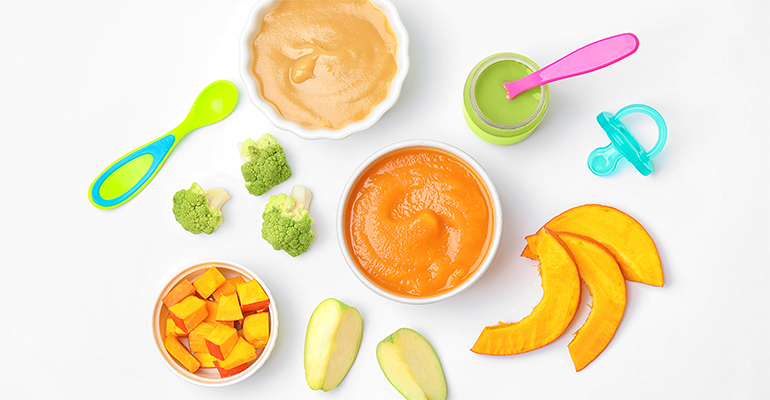
Yumi raised $67 million in a Series B round in December last year while Little Spoon, which delivered one million meals in the US in its first year in business, closed $44 million in a Series B round in 2021.
Conventional products were ‘high in fruit sugar & low in nutrition’
Many players in the space started out as small companies founded by new mothers who struggled to find in supermarkets the clean label, healthy products they wanted to feed their babies, while finding themselves too time-strapped to cook from scratch.
US brand Yumi was co-founded by former private equity executive Angela Sutherland and former Wall Street Journal reporter Evelyn Rusli. When Sutherland became pregnant with her first child, she began to research infant nutrition and learnt about the impact of specific nutrients, such as iron, calcium, and healthy fats, on a child’s neural, physical, and future metabolic health.
However, packaged baby food available at the supermarket was dominated by “shelf-stable options with years-long expiration dates that were high in fruit sugars and low in nutrition”, says Yumi.
UK brand Mamamade, whose fresh frozen meals were created by nutritionists and include raspberry, coconut & spirulina porridge or sweet potato, blueberry & white bean puree, was also founded by new mother, Sophie Baron.
“[The company] came to life when I started introducing solids to my daughter Liba,” Baron says. “I wanted her to have the very best - everything home-cooked, organic, plant-based, flavourful and healthy - but the reality was that I struggled to keep up with the pace of mealtimes on top of milk feeds. I was desperate for help that didn't include breaking open the seal of a store-bought puree.”
Tailored nutrition for each developmental stage
To reassure new parents about the nutrition quality of the products, many D2C baby food start-ups team up with registered nutritionists and even medical professionals to determine babies’ nutritional needs at each growing stage and identify the foods that can provide the required nutrients.
According to Rick Miller, food and drink associate director for specialised nutrition at Mintel, all areas of specialised nutrition have enjoyed a rise in growth in recent years, including infant nutrition for early life as consumers look to food to improve their holistic health and wellbeing in the wake of COVID-19.
Yumi, whose board of advisors includes Josette Sheeran, former executive director of the United Nations World Food Programme, and Dr Anthony Porto, associate chief of paediatric gastroenterology at Yale University and co-author of The Pediatrician's Guide to Feeding Babies and Toddlers, creates meals and snacks for the various stages of the first 1,000 days of a baby’s life.
For instance, it says that babies are born with stores of iron, essential for growth and development but these naturally deplete at around six months. It therefore adds whole food ingredients that are naturally rich in iron in its range of products aimed at six-month olds.
Clean label ingredient list a must
Clean label ingredient lists and specialised nutrition are key attributes for products in this category with common claims including organic, free from added sugar, free from major allergens and preservative-free.
New York company Little Spoon, which manufactures and delivers chilled fresh organic baby food, says its products are free from preservatives or extreme heat.
Yumi tells its consumers that they may find natural variations in the texture, flavour, and appearance of the products they receive. Since it tries to retain as much fibre as possible, consumers may be able to see white fibre from mango or cranberry skins, while its purees also tend to be thicker than other CPG baby foods, it says.
Click here to read an interview with Rick Miller on the growth of specialised nutrition.

Get more of our news on Google
Set Ingredients Network as a 'Preferred Source' to get quicker access to the news you value.
Related news

Health and wellness engagement matures across Middle East and Africa
4 Sep 2026
Many consumers in the Middle East and Africa are now proactively engaged in health and wellness, looking to integrate better habits and products into their daily lives, say experts.
Read more
Kellogg accelerates work to remove artificial colours from all US cereals
3 Sep 2026
WK Kellogg has announced an accelerated timeline to eliminate all artificial colours and the chemical preservative, BHT, across its full US portfolio of cereals and cereal packaging.
Read more
Skimpflation: An ‘unfair’ and risky approach to keeping prices low
2 Sep 2026
Consumers see skimpflation – reducing the quality of ingredients due to rising costs – as more unfair than shrinkflation, making it a risky strategy according to recent research.
Read more
‘Urgent gaps’ in achieving 2030 food system goals
27 Aug 2026
Global food systems are failing to meet 2030 targets across indicators including health, environment, and resilience, according to a report co-authored by the Food and Agriculture Organisation (FAO).
Read more
China beverages: Is herbal innovation the future?
20 Aug 2026
Herbal and botanical innovation in China's drinks market continues to grow, with ingredients like astragalus root, ginger, and ginseng in the spotlight – and focus shifting far beyond refreshment.
Read more
Popular barbecue staples experience sharp price increases
19 Aug 2026
The typical cost of US shoppers’ barbecue baskets has risen by 12% over the past year – the fastest annual rise in a decade, figures from The Economist show.
Read more
Women’s hormonal health: Familiar ingredients beat novel actives
13 Aug 2026
Hormonal symptoms affect women across life stages, and FMCG Gurus says the ingredients best placed to support them are those with which they are already familiar.
Read more
Beyond 'nice to have': A spotlight on US functional beverages
12 Aug 2026
Functional beverage interest in the US is gaining important ground as consumers now expect function rather than see it as "nice to have", and there are clear market gaps for growth, according to Spate.
Read more
Savoury protein snacks shake up the on-the-go market
10 Aug 2026
Sweet flavours have dominated the high-protein snack category but savoury snacks, such as cheese bars and meat sticks, can appeal to health-conscious consumers.
Read more
Digital twin technology gains ground in food manufacturing
6 Aug 2026
Food and beverage companies are increasingly turning to digital twins to optimise and automate manufacturing processes, but opportunities stretch far beyond this, say experts.
Read more