
Ingredients Categories
Finished Products
Finished Food Categories
- Bakery
- Beverages / Juices
- Cereal and grain products
- Confectionery
- Cooking Fats & Oils
- Dairy
- Egg products
- Fruits & Vegetables
- Infant & Baby food
- Meat, Poultry & Fish
- Nuts & Seeds products
- Other Finished Food Categories
- Pet Food
- Plant-based foods
- Prepared foods
- Sauces & Seasonings
- Sweet & Savoury Spreads
Specialised Finished Products
- Bee products
- Biotic products
- Dietary supplements
- Energy drinks
- Functional beverages
- Functional confectionery
- Functional food
- Functional powders
- Meal replacement products
- Nutricosmetics
- Other Specialised Finished Products
- Pet Dietary Supplements
- Pharma and OTC products
- Protein products
- Sugar replacers / Sweeteners
Health & Wellness Areas
Delivery Formats
Operations & Services
- 3D printing
- Analysis/ Testing
- Auditing & certifications
- Blending & mixing
- Bottling
- Certification
- Clinical trials
- Co-packing
- Coating
- Consulting
- Contract manufacturing
- Drying
- Electrospinning
- Encapsulating
- Enzymatic processing
- Extracting
- Extrusion
- Fat structuring
- Fermentation
- Filling
- Flavour development
- Freeze drying
- Granulating/ grinding/ milling / mixing
- High-pressure processing
- Labelling
- Other Operations & Services
- Packaging
- Packet filling
- Pasturising
- Quality assurance
- Saccharification
- Shear cell processing
- Spray drying
- Sterilisation
- Storage & Logistics
- Tabletting
- Toasting / roasting
- Ultra-high temperature processing
News
To grow, meal kit companies should get cooking on e-commerce strategies
Katja Knox, Editorial Account Manager 21 Apr 2022After demand for meal kits boiled over during the pandemic, Mintel is advising meal kit companies to need to expand their offerings through e-commerce channels.
The market research firm noted that, in addition to seeking out meal kits more frequently, the pandemic resulted in nearly a third of consumers shopping online for their groceries.
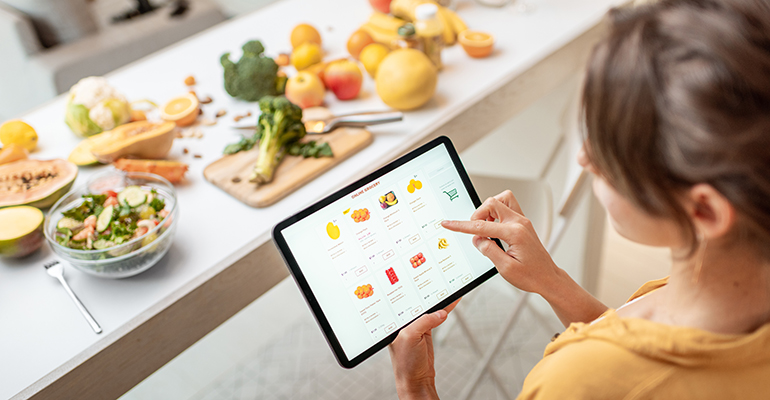
If meal kit companies reposition themselves as online marketplaces by offering add-ons or product marketplaces, they could leverage the growing popularity of online grocery and expand their number of subscribers. This strategy is particularly effective when highlighting smaller, regional brands as well as specialty products, Mintel said.
Prior to the onset of the pandemic, meal kit companies were struggling to find growth and retain their customer share. However, that all changed when people went from cooking at home an average of four times per week to all seven days of the week, according to HelloFresh and Piper Sandler’s 2H20 outlook report.
With more time spent in the kitchen, meal kit revenue nearly doubled year-over-year, said The Wall Street Journal.
As a result, online meal kits companies caught the attention of some of the world’s largest food companies. In 2020, Nestlé acquired US meal kit company Freshly for $1.5 billion and took a majority stake in UK meal kit company Mindful Chef.
Mintel: Diversification will retain customers
This trend changed yet again as the world began reopening and people once again ate outside of the home. A report from Coresight Research found that the growth rate in this sector will step back from the almost 70% growth in 2020 to 18.2% in 2021. Mintel noted in its report that part of this drop in market share is due to stringent subscription requirements that dissuade consumers from using these services. The market research firm pointed to the diversification of offerings as a solution to continue growth.
Already, meal kit companies such as Hello Fresh and Blue Apron have stepped into the sphere of online marketplaces.Customers are seeking flexibility in their meal preparation, so offering additional options outside of subscriptions removes one of the major adoption barriers that Mintel uncovered in its research.
Companies like Germany-based Just Spices continue to attract attention due to their continued alignment with consumer trends. Just Spices offers spice blends and salad dressings in addition to its meal kit service, and the Kraft Heinz company recently took a majority stake in its business.
If other meal kit companies pivot their business model to align with ecommerce grocery trends, there is a possibility that they will continue increasing their customer share in the marketplace.

Get more of our news on Google
Set Ingredients Network as a 'Preferred Source' to get quicker access to the news you value.
Related news

Do the US dietary guidelines put UPFs under pressure?
10 Sep 2026
Will the US dietary guidelines change the way Americans eat, swapping ultra-processed foods for whole foods? We asked Dr Barry Popkin, renowned nutrition and obesity researcher.
Read more
Food fraud costs UK economy £2bn each year
9 Sep 2026
Food fraud is costing the UK economy up to £2 billion (€2.3 billion) every year although the food sector is more “resilient” than others, according to a recent study.
Read more
Kellogg accelerates work to remove artificial colours from all US cereals
3 Sep 2026
WK Kellogg has announced an accelerated timeline to eliminate all artificial colours and the chemical preservative, BHT, across its full US portfolio of cereals and cereal packaging.
Read more
Skimpflation: An ‘unfair’ and risky approach to keeping prices low
2 Sep 2026
Consumers see skimpflation – reducing the quality of ingredients due to rising costs – as more unfair than shrinkflation, making it a risky strategy according to recent research.
Read more
‘Urgent gaps’ in achieving 2030 food system goals
27 Aug 2026
Global food systems are failing to meet 2030 targets across indicators including health, environment, and resilience, according to a report co-authored by the Food and Agriculture Organisation (FAO).
Read more
Seven-Eleven uses microbial testing tech to extend katsudon shelf life
26 Aug 2026
Japanese retail company Seven-Eleven has improved its factory’s microbial environment to keep comfort-food staple, katsudon, fresher for longer.
Read more
Chimac’s fusion sauces bring Korean flavours to Europe
25 Aug 2026
Irish sauce brand Chimac is tapping into Korea’s culinary traditions, bringing its flavours and products to European consumers who want a taste of K-food.
Read more
Global demand for instant noodles continues to rise
24 Aug 2026
Global demand for instant noodles reached 124.21 billion servings last year, representing a 0.7% year-on-year increase – or 900 million extra servings.
Read more
China beverages: Is herbal innovation the future?
20 Aug 2026
Herbal and botanical innovation in China's drinks market continues to grow, with ingredients like astragalus root, ginger, and ginseng in the spotlight – and focus shifting far beyond refreshment.
Read more
Popular barbecue staples experience sharp price increases
19 Aug 2026
The typical cost of US shoppers’ barbecue baskets has risen by 12% over the past year – the fastest annual rise in a decade, figures from The Economist show.
Read more