
Ingredients Categories
Finished Products
Finished Food Categories
- Bakery
- Beverages / Juices
- Cereal and grain products
- Confectionery
- Cooking Fats & Oils
- Dairy
- Egg products
- Fruits & Vegetables
- Infant & Baby food
- Meat, Poultry & Fish
- Nuts & Seeds products
- Other Finished Food Categories
- Pet Food
- Plant-based foods
- Prepared foods
- Sauces & Seasonings
- Sweet & Savoury Spreads
Specialised Finished Products
- Bee products
- Biotic products
- Dietary supplements
- Energy drinks
- Functional beverages
- Functional confectionery
- Functional food
- Functional powders
- Meal replacement products
- Nutricosmetics
- Other Specialised Finished Products
- Pet Dietary Supplements
- Pharma and OTC products
- Protein products
- Sugar replacers / Sweeteners
Health & Wellness Areas
Delivery Formats
Operations & Services
- 3D printing
- Analysis/ Testing
- Auditing & certifications
- Blending & mixing
- Bottling
- Certification
- Clinical trials
- Co-packing
- Coating
- Consulting
- Contract manufacturing
- Drying
- Electrospinning
- Encapsulating
- Enzymatic processing
- Extracting
- Extrusion
- Fat structuring
- Fermentation
- Filling
- Flavour development
- Freeze drying
- Granulating/ grinding/ milling / mixing
- High-pressure processing
- Labelling
- Other Operations & Services
- Packaging
- Packet filling
- Pasturising
- Quality assurance
- Saccharification
- Shear cell processing
- Spray drying
- Sterilisation
- Storage & Logistics
- Tabletting
- Toasting / roasting
- Ultra-high temperature processing
News
Using fibre-based packaging to replace plastic
21 Feb 2023
The EU project, R3PACK, is developing sustainable, fibre-based alternatives to plastic packaging that should prevent harmful chemicals from coming into contact with food.
With a budget of €95.5 billion, R3PACK is part of Horizon Europe's seven-year project, an ambitious European Union (EU) research and innovation framework programme.
"The R3PACK project aims at developing sustainable fibre-based and plastic-free technologies and fostering reuse schemes," says Carla Valeiras Álvarez, EU policy officer at Safe Food Advocacy Europe (SAFE).
Assessments into pathways to stop plastic pollution indicate substituting plastic with paper and compostable materials can replace one-sixth of the projected global plastic waste generation by 2040, Valeiras Álvarez says. Further, elimination, reuse and new delivery models, such as those that R3PACK promotes, will contribute to avoiding nearly twice as much plastic waste.
Reviewing the current packaging dilemma
The public consultation on revising EU food contact materials (FCMs) rules to modernise them with today's needs closed in January 2023 after more than two years of deliberation. The European Commission (EC) launched the revision in December 2020 to encourage safe, reusable, and recyclable solutions that help lower the food industry's environmental impact.
"The revision of EU rules on food contact materials presents a great opportunity to establish an EU harmonised approach to food contact materials such as paper and cardboard, glass and metal," says Valeiras Álvarez.
"However, legal certainty is needed from EU legislation to continue incentivising innovation," Valeiras Álvarez details. R3PACK says legislators must update the law to encourage alternative sustainable food packaging and prevent harmful chemicals from coming into contact with food. Legislation is also vital for reuse schemes as its uptake is crucial to reduce packaging waste at the source.
The EC is contemplating several policy options to address the plastic pollution problem, including introducing specific rules to ensure that FCMs are manufactured from less traditional and potentially more sustainable production sources and methods.
Reasons to reduce, reuse and rethink packaging
"Reuse and substitution are two complementary strategies for reducing single-use plastic, since depending on the products, one or the other solution will be more suitable for technical, economic and environmental reasons," says Valeiras Álvarez.
 © AdobeStock/Aryfahmed
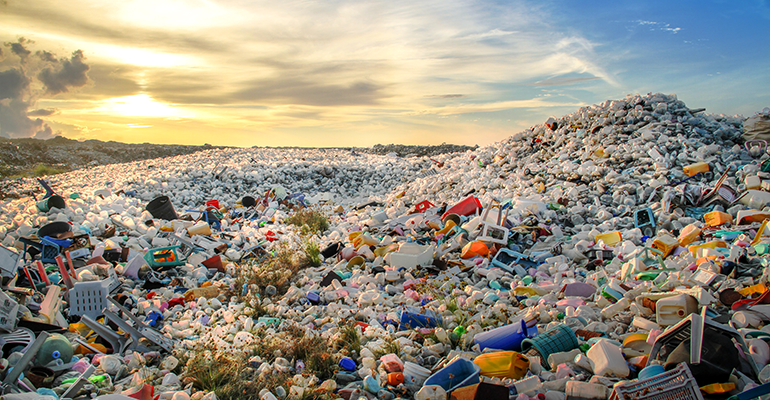
R3PACK is developing business-to-consumer (B2C) industrial reuse schemes, which see the consumer return the packaging to the sales point. The substitution of single-use plastic packaging with a fibre-based solution drastically reduces the need for virgin plastic, as commercialised solutions can reach high levels of more than 90% fibre content.
"If radically less plastic is produced, then less plastic becomes waste; if industrial reuse schemes uptake effectively, then there will be less demand for virgin plastic, and overall production will decrease," Valeiras Álvarez continues.
Fibre-based materials
R3PACK recognises that fibre-based packaging can substitute complex multilayer plastic packaging, entirely replacing plastic linings with bio-based barrier coatings and additives, and should, therefore, be promoted as a substitute.
"R3PACK specifically targets multilayer plastic packaging due to their current low-recycling rate," says Valeiras Álvarez. The complexity of their composition makes it technically and economically challenging to separate and valorise each layer. "Whereas fibre-based packaging is recyclable with the current available infrastructures but requires a high fibre content to ensure recycling efficiency," adds Valeiras Álvarez.
"The biggest challenge remains how to reach the required performance of plastic packaging with fibre-based materials," says Valeiras Álvarez. Food manufacturers will need to reach similar barriers in terms of oxygen, humidity and grease levels and obtain similar production cadency, maintain shelf life and organoleptic properties.
 © AdobeStock/littlewolf1989
Paper and coated paper are also cited as two of the most relevant and prominent materials available to replace problematic and complex plastic films and multilayer flexibles.
Food contact materials progress pulling plastic pollution
The R3PACK framework focuses on proposing the right packaging for the right products with the right washing and return logistics strategies adapted to the local context. Widespread awareness and adoption are essential, too, with the project creating a model for collaboration between players.
In its roadmap, the EC announced it would expand rules to prioritise and support all safe reuse and recycling forms. "It remains to be seen how these will take form and how requirements and procedures are clearly defined," says Valeiras Álvarez. R3PACK outcomes, with real-life cases and data, will be a relevant tool for policy and decision-makers when drafting sound and effective rules.

Get more of our news on Google
Set Ingredients Network as a 'Preferred Source' to get quicker access to the news you value.
Related news

Kellogg accelerates work to remove artificial colours from all US cereals
3 Sep 2026
WK Kellogg has announced an accelerated timeline to eliminate all artificial colours and the chemical preservative, BHT, across its full US portfolio of cereals and cereal packaging.
Read more
‘Urgent gaps’ in achieving 2030 food system goals
27 Aug 2026
Global food systems are failing to meet 2030 targets across indicators including health, environment, and resilience, according to a report co-authored by the Food and Agriculture Organisation (FAO).
Read more
Chimac’s fusion sauces bring Korean flavours to Europe
25 Aug 2026
Irish sauce brand Chimac is tapping into Korea’s culinary traditions, bringing its flavours and products to European consumers who want a taste of K-food.
Read more
Savoury protein snacks shake up the on-the-go market
10 Aug 2026
Sweet flavours have dominated the high-protein snack category but savoury snacks, such as cheese bars and meat sticks, can appeal to health-conscious consumers.
Read more
Nestlé invests in regeneratively farmed wheat for KitKat
5 Aug 2026
Nestlé will pay a premium for Wildfarmed’s regeneratively farmed wheat but the CPG remains reticent to promote the move on packs of its KitKat bars.
Read more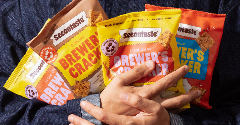
How Secon Taste is putting upcycled snacks on shelves
4 Aug 2026
Hungarian zero-waste startup Secon Taste is turning surplus food into upcycled snacks such as fibre-packed granola, instant porridge, and a circular coffee-tasting box.
Read more
Codex sets global thresholds for ‘may contain’ labels
3 Aug 2026
Codex Alimentarius has adopted its first global guidance on when to use “may contain” allergen warnings, setting thresholds intended to stop the label being used as blanket legal cover.
Read more
EU sets maximum MOAH levels to protect human health
28 Jul 2026
The EU will adopt maximum levels for mineral oil aromatic hydrocarbons (MOAH) in food to protect human health. What do manufacturers need to know?
Read more
UK publishes guidance on SPS food trade agreement with EU
27 Jul 2026
The UK government has shared guidance on how food businesses can prepare for its upcoming Sanitary and Phytosanitary (SPS) agreement with the EU.
Read more
Industry hits back at UK’s proposed healthy food rules
24 Jul 2026
Food brands, including Haribo, have hit out against the UK’s proposed nutrient profiling model, which places a new focus on free sugars that are added during manufacturing.
Read more