
Ingredients Categories
Finished Products
Finished Food Categories
- Bakery
- Beverages / Juices
- Cereal and grain products
- Confectionery
- Cooking Fats & Oils
- Dairy
- Egg products
- Fruits & Vegetables
- Infant & Baby food
- Meat, Poultry & Fish
- Nuts & Seeds products
- Other Finished Food Categories
- Pet Food
- Plant-based foods
- Prepared foods
- Sauces & Seasonings
- Sweet & Savoury Spreads
Specialised Finished Products
- Bee products
- Biotic products
- Dietary supplements
- Energy drinks
- Functional beverages
- Functional confectionery
- Functional food
- Functional powders
- Meal replacement products
- Nutricosmetics
- Other Specialised Finished Products
- Pet Dietary Supplements
- Pharma and OTC products
- Protein products
- Sugar replacers / Sweeteners
Health & Wellness Areas
Delivery Formats
Operations & Services
- 3D printing
- Analysis/ Testing
- Auditing & certifications
- Blending & mixing
- Bottling
- Certification
- Clinical trials
- Co-packing
- Coating
- Consulting
- Contract manufacturing
- Drying
- Electrospinning
- Encapsulating
- Enzymatic processing
- Extracting
- Extrusion
- Fat structuring
- Fermentation
- Filling
- Flavour development
- Freeze drying
- Granulating/ grinding/ milling / mixing
- High-pressure processing
- Labelling
- Other Operations & Services
- Packaging
- Packet filling
- Pasturising
- Quality assurance
- Saccharification
- Shear cell processing
- Spray drying
- Sterilisation
- Storage & Logistics
- Tabletting
- Toasting / roasting
- Ultra-high temperature processing
News
Using mycelium as a healthy and sustainable meat alternative
27 Oct 2022
Biomass fermentation uses mycelium, a fibrous protein-rich fungi which mimics the texture and nutritional profile of traditional meat. Quorn and Meati are just two manufacturers using this ingredient for their meat alternatives.
Through this process, the high-protein and rapid growth microorganisms in the mycelium are cultured at scale to produce animal-free meat analogues. The naturally occurring structure of the fungi means that minimal processing is required to achieve a similar texture to that of traditional meat.
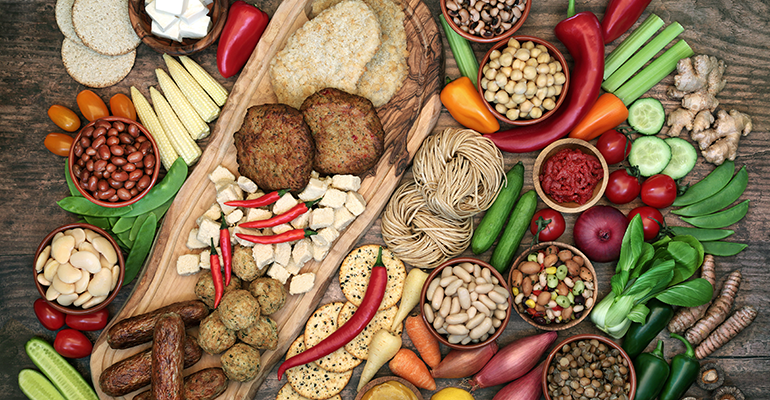
Arguably the most well-known mycelium-based product, Quorn’s mycoprotein is derived from Fusarium venenatum, an ascomycete, which is a type of fungus that naturally occurs in soil. Not only is mycoprotein high in dietary fibre, low in fat, and full of mineral such as phosphorus, zinc, and choline, but it is also a means to sustainable protein production.
A study published in Nature journal shows that if consumers were to replace just one fifth of their red meat consumption with microbial proteins derived from fungi or algae, deforestation could be reduced by a staggering 56% come 2050.
In May this year, Colorado-based alternative meat producer Meati, launched its whole-cut steak fillet, made via mycelium bioprocessing, to market. Containing 14g of protein, micronutrients such as riboflavin, niacin, folate and B12, and zero cholesterol, each 4-ounce steak serving can be prepared at home and offers consumers the same umami flavour as real beef. The company also produce two mycelium-based chicken products, breaded, crispy and grilled chicken cutlets, made from 95% mushroom root.
Consumers are hungry for plant-based alternatives
In the past two years, the proportion of flexitarian consumers has risen by a noteworthy 9%. Meanwhile the number of vegetarian and vegan consumers is also on the up, accounting for 10% and 3% of the total population, respectively. But as data from NPD group shows, it is not only vegans and veggies driving the plant-based trend, as almost one in nine of those who opt for meat and dairy alternatives do not consider themselves as part of this group.
With data from FMCG Gurus showing that in the coming months 62% of regular meat-eaters plan to reduce their meat intake even more, the opportunities for manufacturers of plant-based products are immense.
The results of a recent EU barometer show that when making food purchasing decisions, consumers’ top considerations are cost (54%) and taste (51%). It is no surprise then that these same two qualities are often the main barriers to plant-based adoption. To get ahead, manufacturers must keep their finger on the pulse when it comes to the processing technologies offering to make up for limitations in the plant-based market.

Get more of our news on Google
Set Ingredients Network as a 'Preferred Source' to get quicker access to the news you value.
Related news

Health and wellness engagement matures across Middle East and Africa
4 Sep 2026
Many consumers in the Middle East and Africa are now proactively engaged in health and wellness, looking to integrate better habits and products into their daily lives, say experts.
Read more
Kellogg accelerates work to remove artificial colours from all US cereals
3 Sep 2026
WK Kellogg has announced an accelerated timeline to eliminate all artificial colours and the chemical preservative, BHT, across its full US portfolio of cereals and cereal packaging.
Read more
Skimpflation: An ‘unfair’ and risky approach to keeping prices low
2 Sep 2026
Consumers see skimpflation – reducing the quality of ingredients due to rising costs – as more unfair than shrinkflation, making it a risky strategy according to recent research.
Read more
‘Urgent gaps’ in achieving 2030 food system goals
27 Aug 2026
Global food systems are failing to meet 2030 targets across indicators including health, environment, and resilience, according to a report co-authored by the Food and Agriculture Organisation (FAO).
Read more
China beverages: Is herbal innovation the future?
20 Aug 2026
Herbal and botanical innovation in China's drinks market continues to grow, with ingredients like astragalus root, ginger, and ginseng in the spotlight – and focus shifting far beyond refreshment.
Read more
Popular barbecue staples experience sharp price increases
19 Aug 2026
The typical cost of US shoppers’ barbecue baskets has risen by 12% over the past year – the fastest annual rise in a decade, figures from The Economist show.
Read more
Women’s hormonal health: Familiar ingredients beat novel actives
13 Aug 2026
Hormonal symptoms affect women across life stages, and FMCG Gurus says the ingredients best placed to support them are those with which they are already familiar.
Read more
Beyond 'nice to have': A spotlight on US functional beverages
12 Aug 2026
Functional beverage interest in the US is gaining important ground as consumers now expect function rather than see it as "nice to have", and there are clear market gaps for growth, according to Spate.
Read more
Savoury protein snacks shake up the on-the-go market
10 Aug 2026
Sweet flavours have dominated the high-protein snack category but savoury snacks, such as cheese bars and meat sticks, can appeal to health-conscious consumers.
Read more
Digital twin technology gains ground in food manufacturing
6 Aug 2026
Food and beverage companies are increasingly turning to digital twins to optimise and automate manufacturing processes, but opportunities stretch far beyond this, say experts.
Read more