
Ingredients Categories
Finished Products
Finished Food Categories
- Bakery
- Beverages / Juices
- Cereal and grain products
- Confectionery
- Cooking Fats & Oils
- Dairy
- Egg products
- Fruits & Vegetables
- Infant & Baby food
- Meat, Poultry & Fish
- Nuts & Seeds products
- Other Finished Food Categories
- Pet Food
- Plant-based foods
- Prepared foods
- Sauces & Seasonings
- Sweet & Savoury Spreads
Specialised Finished Products
- Bee products
- Biotic products
- Dietary supplements
- Energy drinks
- Functional beverages
- Functional confectionery
- Functional food
- Functional powders
- Meal replacement products
- Nutricosmetics
- Other Specialised Finished Products
- Pet Dietary Supplements
- Pharma and OTC products
- Protein products
- Sugar replacers / Sweeteners
Health & Wellness Areas
Delivery Formats
Operations & Services
- 3D printing
- Analysis/ Testing
- Auditing & certifications
- Blending & mixing
- Bottling
- Certification
- Clinical trials
- Co-packing
- Coating
- Consulting
- Contract manufacturing
- Drying
- Electrospinning
- Encapsulating
- Enzymatic processing
- Extracting
- Extrusion
- Fat structuring
- Fermentation
- Filling
- Flavour development
- Freeze drying
- Granulating/ grinding/ milling / mixing
- High-pressure processing
- Labelling
- Other Operations & Services
- Packaging
- Packet filling
- Pasturising
- Quality assurance
- Saccharification
- Shear cell processing
- Spray drying
- Sterilisation
- Storage & Logistics
- Tabletting
- Toasting / roasting
- Ultra-high temperature processing
News
Animal-free dairy company raises $120M for commercialization
Katja Knox, Editorial Account Manager 18 Jan 2022Israeli animal-free dairy company Remilk raised $120 million in a Series B funding round led by Hanaco Ventures with participation from a number of other investors, including Impossible Foods backer CPT Capital, plant-based protein company Just, Yofix, Precision Capital and Rage Capital. This funding round expands the startup's funding by 10 fold and is the largest investment in a cow-free dairy company to date, according to The Times of Israel.
Funds from this investment round will be used to scale its production of animal-free dairy as an ingredients provider. The startup said in a statement that it intends to have its proteins in commercial products at some point this year.
Already Remilk has production facilities in Europe and the United States where it is working with dozens of food and beverage companies to position itself as an ingredient provider of animal-free dairy proteins for their products. However, the Israeli startup is still collaborating with regulators to approve its dairy proteins for sale.
Despite continued regulatory hurdles for dairy made without animals, the category is gaining steam as more and more companies receive funding to develop proteins that are not reliant on ruminant or traditional farm creatures to produce the milk, cheese and yogurt that consumers crave. In Israel alone, there are two other major startups that are leading the charge in this area: Imagindairy and BioMilk. The former raised $13 million last November to expand its production while the latter, which uses cell culturing technology, went public on the Tel Aviv Stock Exchange in April of 2021.
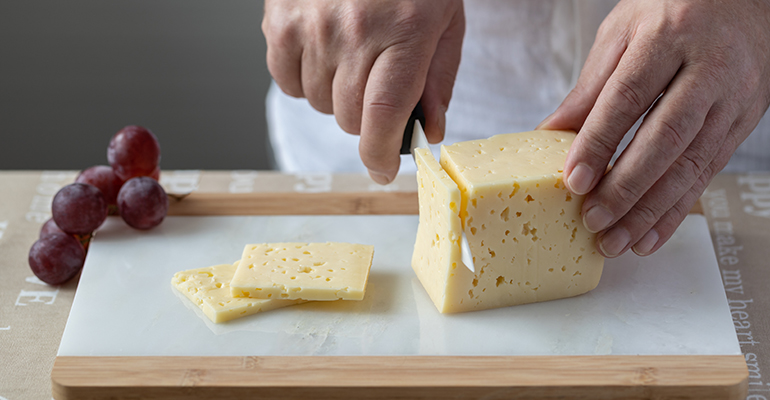
Remilk is taking its own approach to creating animal-free dairy by manipulating animal protein genetics, extracting the necessary dairy protein genes and inserting them into a single-cell microbe that can multiply and scale. These cells are then transformed into a dried powder product to which food manufacturers can add water for their cheese, yogurt and ice cream applications. Remilk itself is equipped to offer ready-made hard cheese, yogurt and cream cheese products.
According to the company and reported by the Times of Israel, its model is “100 times more land-efficient than the existing dairy system, 25 times more feedstock-efficient, 20 times more time-efficient, and 10 times more water-efficient.”
While consumers are still waiting for products sporting animal-free dairy labels to appear on shelves, the movement and funding within the industry is indicative of its imminent arrival. Already, the milk alternative market — which is separate from the plant-based milk category — was valued at $22.25 billion in 2021. With the emergence of cultured dairy options in commercial products, that figure is expected to jump to $53.97 billion in 2028, according to research firm Fortune Business Insights.

Get more of our news on Google
Set Ingredients Network as a 'Preferred Source' to get quicker access to the news you value.
Related news

Do the US dietary guidelines put UPFs under pressure?
10 Sep 2026
Will the US dietary guidelines change the way Americans eat, swapping ultra-processed foods for whole foods? We asked Dr Barry Popkin, renowned nutrition and obesity researcher.
Read more
Food fraud costs UK economy £2bn each year
9 Sep 2026
Food fraud is costing the UK economy up to £2 billion (€2.3 billion) every year although the food sector is more “resilient” than others, according to a recent study.
Read more
Kellogg accelerates work to remove artificial colours from all US cereals
3 Sep 2026
WK Kellogg has announced an accelerated timeline to eliminate all artificial colours and the chemical preservative, BHT, across its full US portfolio of cereals and cereal packaging.
Read more
Skimpflation: An ‘unfair’ and risky approach to keeping prices low
2 Sep 2026
Consumers see skimpflation – reducing the quality of ingredients due to rising costs – as more unfair than shrinkflation, making it a risky strategy according to recent research.
Read more
‘Urgent gaps’ in achieving 2030 food system goals
27 Aug 2026
Global food systems are failing to meet 2030 targets across indicators including health, environment, and resilience, according to a report co-authored by the Food and Agriculture Organisation (FAO).
Read more
Popular barbecue staples experience sharp price increases
19 Aug 2026
The typical cost of US shoppers’ barbecue baskets has risen by 12% over the past year – the fastest annual rise in a decade, figures from The Economist show.
Read more
Savoury protein snacks shake up the on-the-go market
10 Aug 2026
Sweet flavours have dominated the high-protein snack category but savoury snacks, such as cheese bars and meat sticks, can appeal to health-conscious consumers.
Read more
Digital twin technology gains ground in food manufacturing
6 Aug 2026
Food and beverage companies are increasingly turning to digital twins to optimise and automate manufacturing processes, but opportunities stretch far beyond this, say experts.
Read more
Nestlé invests in regeneratively farmed wheat for KitKat
5 Aug 2026
Nestlé will pay a premium for Wildfarmed’s regeneratively farmed wheat but the CPG remains reticent to promote the move on packs of its KitKat bars.
Read more
Codex sets global thresholds for ‘may contain’ labels
3 Aug 2026
Codex Alimentarius has adopted its first global guidance on when to use “may contain” allergen warnings, setting thresholds intended to stop the label being used as blanket legal cover.
Read more