
Ingredients Categories
Finished Products
Finished Food Categories
- Bakery
- Beverages / Juices
- Cereal and grain products
- Confectionery
- Cooking Fats & Oils
- Dairy
- Egg products
- Fruits & Vegetables
- Infant & Baby food
- Meat, Poultry & Fish
- Nuts & Seeds products
- Other Finished Food Categories
- Pet Food
- Plant-based foods
- Prepared foods
- Sauces & Seasonings
- Sweet & Savoury Spreads
Specialised Finished Products
- Bee products
- Biotic products
- Dietary supplements
- Energy drinks
- Functional beverages
- Functional confectionery
- Functional food
- Functional powders
- Meal replacement products
- Nutricosmetics
- Other Specialised Finished Products
- Pet Dietary Supplements
- Pharma and OTC products
- Protein products
- Sugar replacers / Sweeteners
Health & Wellness Areas
Delivery Formats
Operations & Services
- 3D printing
- Analysis/ Testing
- Auditing & certifications
- Blending & mixing
- Bottling
- Certification
- Clinical trials
- Co-packing
- Coating
- Consulting
- Contract manufacturing
- Drying
- Electrospinning
- Encapsulating
- Enzymatic processing
- Extracting
- Extrusion
- Fat structuring
- Fermentation
- Filling
- Flavour development
- Freeze drying
- Granulating/ grinding/ milling / mixing
- High-pressure processing
- Labelling
- Other Operations & Services
- Packaging
- Packet filling
- Pasturising
- Quality assurance
- Saccharification
- Shear cell processing
- Spray drying
- Sterilisation
- Storage & Logistics
- Tabletting
- Toasting / roasting
- Ultra-high temperature processing
News
Botulism and bacterial toxins: The latest in infant formula recalls
Tessa Wiles, Content Editor - Food 23 Jan 2026Recalls of ByHeart and Nestlé infant formula products over concerns of botulism and bacterial toxins have put food safety back in the spotlight.
While the two recalls stem from different causes, both underline the risks associated with microbial contamination in powdered products and the role of preventative controls across sourcing, processing, and distribution.
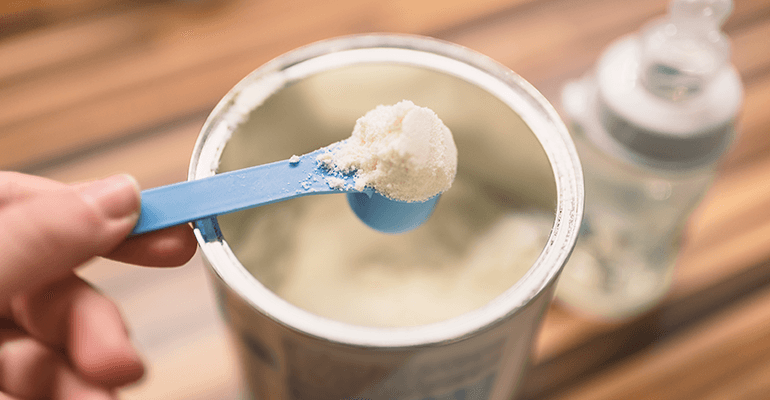
ByHealth: Botulism in infant formula may be rare, but it poses a serious risk
In November 2025, ByHeart voluntarily recalled all infant formula products across the US within its Whole Nutrition range, after public health authorities linked a multi-state infant botulism outbreak to the product, according to the US Centers for Disease Control and Prevention (CDC).
The CDC said exposure to ByHeart’s Whole Nutrition powdered infant formula was associated with 51 suspected or confirmed cases of infant botulism across 19 states. All infants were hospitalised and treated, and as of January 2026, no deaths have been reported.
What is infant botulism?
Infant botulism is a neurological condition caused by the ingestion of Clostridium botulinum spores. Because the infant gut is still developing, spores can germinate and produce botulinum toxin in vivo, meaning the toxin is generated inside the body, rather than pre-formed in food. Symptoms may take days or weeks after ingestion to appear and range from constipation and poor feeding to muscle weakness and respiratory distress.
Unlike many foodborne illnesses, infant botulism is not typically linked to improper preparation or handling by caregivers. Instead, it is associated with resilient bacterial spores that can survive throughout the supply chain, from ingredient handling to packaging.
ByHeart’s investigation continues while production pauses
In a statement shared with Ingredients Network, a spokesperson for ByHeart said: “The root cause investigation remains ongoing and includes a rigorous audit of every step of our supply chain.”
The spokesperson said the company continued to share findings with the Food and Drug Administration (FDA) and was “working closely with regulators to identify the source of contamination”.
ByHeart has paused production and is undertaking additional testing “across ingredients, manufacturing processes, and handling procedures to support our root cause investigation”, the spokesperson added.
Regulatory scrutiny has extended beyond the manufacturer. In December, the FDA issued warning letters to four major US retailers for failing to remove the recalled products from their store shelves.
Nestlé recall linked to third-party-supplied arachidonic acid oil
Separately, on January 6, 2026, Nestlé initiated a voluntary recall of certain infant and follow-on formula batches across 49 countries, due to the detection of Bacillus cereus or its heat-stable toxin, cereulide.
Nestlé traced the contamination back to arachidonic acid oil, a long-chain polyunsaturated fatty acid, supplied to the company by a third-party ingredient manufacturer. The oil is commonly added to infant formulas to mimic breast milk's arachidonic acid, which supports cognitive function, visual acuity, and immune system development in non-breastfed babies.
Bacillus cereus is a spore-forming bacterium commonly found in the environment and is a known risk in relation to the production of dried foods. Heat treatment can inactivate the bacterium; however, cereulide is resistant to heat and many processing steps, making prevention at the ingredient level essential.
Symptom onset depends on whether the illness is caused by the bacterium (6 to 24 hours) or the toxin (30 minutes to 6 hours). Symptoms include vomiting, diarrhoea, and abdominal discomfort.
No illnesses confirmed in connection to Nestlé recall
A spokesperson for Nestlé said the company had tested all arachidonic acid oil and corresponding oil mixes used in the production of potentially impacted infant nutrition products and that no illnesses had been confirmed in connection with the products involved to date.
The spokesperson said that Nestlé has been in contact with UK authorities and, as a precautionary measure, was recalling specific batches of its SMA-branded infant formula and follow-on formula.
Broader scrutiny of infant nutrition safety
The ByHeart and Nestlé recalls are occurring amid growing scrutiny of infant nutrition safety and regulatory oversight.
In March 2025, US consumer advocacy group Consumer Reports tested 41 types of powdered formula for contaminants, including arsenic and lead, finding that around half of the tested samples contained potentially harmful levels of at least one substance.
Following the ByHeart recall, an open letter on behalf of the Safe Food Coalition was sent to the FDA, the Centers for Disease Control and Prevention (CDC) acting director Jim O’Neill, and the US health secretary Robert F. Kennedy, Jr., calling for stronger federal action and urging regulators to tighten infant formula oversight.
Beyond safety concerns, the recalls have had financial implications. Nestlé shares fell by more than 4%, and analysts told the Financial Times that the recall could cost an estimated €1.29 billion.

Get more of our news on Google
Set Ingredients Network as a 'Preferred Source' to get quicker access to the news you value.
Related news

Do the US dietary guidelines put UPFs under pressure?
10 Sep 2026
Will the US dietary guidelines change the way Americans eat, swapping ultra-processed foods for whole foods? We asked Dr Barry Popkin, renowned nutrition and obesity researcher.
Read more
Food fraud costs UK economy £2bn each year
9 Sep 2026
Food fraud is costing the UK economy up to £2 billion (€2.3 billion) every year although the food sector is more “resilient” than others, according to a recent study.
Read more
Kellogg accelerates work to remove artificial colours from all US cereals
3 Sep 2026
WK Kellogg has announced an accelerated timeline to eliminate all artificial colours and the chemical preservative, BHT, across its full US portfolio of cereals and cereal packaging.
Read more
Skimpflation: An ‘unfair’ and risky approach to keeping prices low
2 Sep 2026
Consumers see skimpflation – reducing the quality of ingredients due to rising costs – as more unfair than shrinkflation, making it a risky strategy according to recent research.
Read more
‘Urgent gaps’ in achieving 2030 food system goals
27 Aug 2026
Global food systems are failing to meet 2030 targets across indicators including health, environment, and resilience, according to a report co-authored by the Food and Agriculture Organisation (FAO).
Read more
Popular barbecue staples experience sharp price increases
19 Aug 2026
The typical cost of US shoppers’ barbecue baskets has risen by 12% over the past year – the fastest annual rise in a decade, figures from The Economist show.
Read more
Savoury protein snacks shake up the on-the-go market
10 Aug 2026
Sweet flavours have dominated the high-protein snack category but savoury snacks, such as cheese bars and meat sticks, can appeal to health-conscious consumers.
Read more
Digital twin technology gains ground in food manufacturing
6 Aug 2026
Food and beverage companies are increasingly turning to digital twins to optimise and automate manufacturing processes, but opportunities stretch far beyond this, say experts.
Read more
Nestlé invests in regeneratively farmed wheat for KitKat
5 Aug 2026
Nestlé will pay a premium for Wildfarmed’s regeneratively farmed wheat but the CPG remains reticent to promote the move on packs of its KitKat bars.
Read more
Codex sets global thresholds for ‘may contain’ labels
3 Aug 2026
Codex Alimentarius has adopted its first global guidance on when to use “may contain” allergen warnings, setting thresholds intended to stop the label being used as blanket legal cover.
Read more