
Ingredients Categories
Finished Products
Finished Food Categories
- Bakery
- Beverages / Juices
- Cereal and grain products
- Confectionery
- Cooking Fats & Oils
- Dairy
- Egg products
- Fruits & Vegetables
- Infant & Baby food
- Meat, Poultry & Fish
- Nuts & Seeds products
- Other Finished Food Categories
- Pet Food
- Plant-based foods
- Prepared foods
- Sauces & Seasonings
- Sweet & Savoury Spreads
Specialised Finished Products
- Bee products
- Biotic products
- Dietary supplements
- Energy drinks
- Functional beverages
- Functional confectionery
- Functional food
- Functional powders
- Meal replacement products
- Nutricosmetics
- Other Specialised Finished Products
- Pet Dietary Supplements
- Pharma and OTC products
- Protein products
- Sugar replacers / Sweeteners
Health & Wellness Areas
Delivery Formats
Operations & Services
- 3D printing
- Analysis/ Testing
- Auditing & certifications
- Blending & mixing
- Bottling
- Certification
- Clinical trials
- Co-packing
- Coating
- Consulting
- Contract manufacturing
- Drying
- Electrospinning
- Encapsulating
- Enzymatic processing
- Extracting
- Extrusion
- Fat structuring
- Fermentation
- Filling
- Flavour development
- Freeze drying
- Granulating/ grinding/ milling / mixing
- High-pressure processing
- Labelling
- Other Operations & Services
- Packaging
- Packet filling
- Pasturising
- Quality assurance
- Saccharification
- Shear cell processing
- Spray drying
- Sterilisation
- Storage & Logistics
- Tabletting
- Toasting / roasting
- Ultra-high temperature processing
News
Nestlé removes chocolate from popular products amid cocoa crisis
Natasha Spencer-Jolliffe, Freelance Journalist 7 Jan 2026Nestlé has reduced the cocoa content of its Toffee Crisp and Blue Riband recipes, meaning they can no longer be called “chocolate”.
The ongoing cocoa crisis and soaring costs have led the global confectioner to update the formulations for its Toffee Crisp range and Blue Riband.
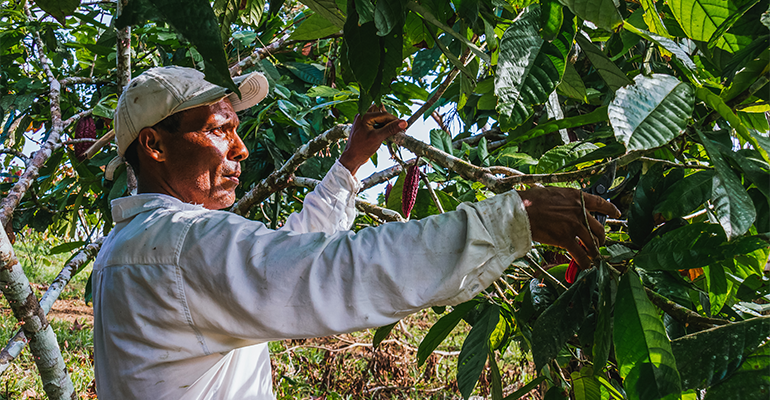
“These changes have been carefully developed and sensory-tested with taste and quality being our top priority at all times,” a Nestlé spokesperson told Ingredients Network.
Despite the changes, the company said it was leaning into ingredient transparency and brand loyalty to retain consumer appeal.
“As always, we keep our ingredients up to date and clearly labelled on pack, so confectionery fans can continue to enjoy our products with confidence,” the spokesperson added.
Reducing chocolate to cope with cocoa crisis
Nestlé is not alone in reducing the chocolate content of some of its products.
In October 2025, McVities announced that its Penguin and Club bars would no longer be classified as chocolate. Driven by rising cocoa prices and restricted supply, the Pladis-owned brands switched out cocoa for cheaper alternative ingredients, including chocolate flavouring.
Cocoa processing turns cocoa beans into cocoa liquor, which contains 50% cocoa solids and cocoa butter. EU regulations stipulate that for a product to be classified as chocolate, it must contain at least 25% cocoa solids. In the UK, that figure is around 20%.
Confectionery companies that reformulate their recipes to include fewer than 25% cocoa solids in the EU, and 20% in the UK, therefore need to rename products.
Nestlé increased the vegetable oil content of both its Toffee Crisp range and Blue Riband, meaning they can no longer be called “chocolate”. It now describes the treats as being "encased in a smooth milk chocolate flavour coating" rather than being covered in milk chocolate.
Cocoa crisis turns confectioners away from chocolate
Climate-related risks, persistent crop diseases, and ageing cocoa trees have created a complex and challenging cocoa production landscape.
In its latest cocoa market report, the International Cocoa Organization (ICCO) revealed that the sector’s prices were displaying a continued trend, with only modest increases.
Regulatory developments regarding the European Union Deforestation Regulation (EUDR) and reciprocal tariffs under US trade policy improved the outlook. However, shrinking cocoa demand fails to improve pricing projections, which continue to raise concerns about consumption.
Chocolate manufacturers are responding with formulations that contain less chocolate than their conventional products.
“Like every manufacturer, we’ve seen significant increases in the cost of cocoa over the past years, making it much more expensive to manufacture our products,” said Nestlé’s spokesperson. “We continue to be more efficient and absorb increasing costs where possible.”
In November 2025, the ICCO revised its estimates for global cocoa production, grindings, and stocks in the 2023/24 and 2024/25 seasons.
Confirming the supply issues the cocoa industry faces, the ICCO’s quarterly bulletin stated that the 2023/24 cocoa season closed with a significant deficit of 489,000 tonnes. In comparison, the 2024/25 season was anticipated to have a surplus of 49,000 tonnes.
The 2025/26 cocoa season is also expected to have a global production surplus. However, this projection is not based solely on increased cocoa output.
Better weather conditions in West Africa, higher farm-gate prices, and diversified supply chains, such as Latin America and Asia becoming rising cocoa production hubs, are fuelling this surplus prediction.
Not the end for chocolate enjoyment
Despite elevated cocoa costs in recent years, expectations of a recovery within the cocoa sector are expected. Farmers’ reinvestment into agricultural operations, enhanced cultivation techniques, and expanded production capacity are driving this renewed promise.
“To continue to offer shoppers great value and enjoyment, it is sometimes necessary to adjust the recipes of some of our products,” said the Nestlé spokesperson.
The company confirmed that retail pricing is at the discretion of individual retailers and may therefore vary depending on each retailer’s pricing model.
“This update is specific to our Toffee Crisp range and Blue Riband, and there are no plans to make the same change across our other chocolate products,” it added.

Get more of our news on Google
Set Ingredients Network as a 'Preferred Source' to get quicker access to the news you value.
Related news

Do the US dietary guidelines put UPFs under pressure?
10 Sep 2026
Will the US dietary guidelines change the way Americans eat, swapping ultra-processed foods for whole foods? We asked Dr Barry Popkin, renowned nutrition and obesity researcher.
Read more
Health and wellness engagement matures across Middle East and Africa
4 Sep 2026
Many consumers in the Middle East and Africa are now proactively engaged in health and wellness, looking to integrate better habits and products into their daily lives, say experts.
Read more
Skimpflation: An ‘unfair’ and risky approach to keeping prices low
2 Sep 2026
Consumers see skimpflation – reducing the quality of ingredients due to rising costs – as more unfair than shrinkflation, making it a risky strategy according to recent research.
Read more
‘Urgent gaps’ in achieving 2030 food system goals
27 Aug 2026
Global food systems are failing to meet 2030 targets across indicators including health, environment, and resilience, according to a report co-authored by the Food and Agriculture Organisation (FAO).
Read more
Seven-Eleven uses microbial testing tech to extend katsudon shelf life
26 Aug 2026
Japanese retail company Seven-Eleven has improved its factory’s microbial environment to keep comfort-food staple, katsudon, fresher for longer.
Read more
Chimac’s fusion sauces bring Korean flavours to Europe
25 Aug 2026
Irish sauce brand Chimac is tapping into Korea’s culinary traditions, bringing its flavours and products to European consumers who want a taste of K-food.
Read more
Global demand for instant noodles continues to rise
24 Aug 2026
Global demand for instant noodles reached 124.21 billion servings last year, representing a 0.7% year-on-year increase – or 900 million extra servings.
Read more
Popular barbecue staples experience sharp price increases
19 Aug 2026
The typical cost of US shoppers’ barbecue baskets has risen by 12% over the past year – the fastest annual rise in a decade, figures from The Economist show.
Read more
Hot NPD: Nissin launches first cold-water Cup Noodles
18 Aug 2026
Nissin is taking one of Japan’s most iconic instant meals in a completely new direction with the launch of the first cold water-only Cup Noodles in the brand’s 55-year history.
Read more
Manam Chocolate aims to bring premium Indian cacao to 'the world stage'
11 Aug 2026
Craft chocolate brand Manam Chocolate is investing in local expansion and supply chain innovation throughout India as it works to build out the premium reputation of its locally produced cacao products.
Read more