
Ingredients Categories
Finished Products
Finished Food Categories
- Bakery
- Beverages / Juices
- Cereal and grain products
- Confectionery
- Cooking Fats & Oils
- Dairy
- Egg products
- Fruits & Vegetables
- Infant & Baby food
- Meat, Poultry & Fish
- Nuts & Seeds products
- Other Finished Food Categories
- Pet Food
- Plant-based foods
- Prepared foods
- Sauces & Seasonings
- Sweet & Savoury Spreads
Specialised Finished Products
- Bee products
- Biotic products
- Dietary supplements
- Energy drinks
- Functional beverages
- Functional confectionery
- Functional food
- Functional powders
- Meal replacement products
- Nutricosmetics
- Other Specialised Finished Products
- Pet Dietary Supplements
- Pharma and OTC products
- Protein products
- Sugar replacers / Sweeteners
Health & Wellness Areas
Delivery Formats
Operations & Services
- 3D printing
- Analysis/ Testing
- Auditing & certifications
- Blending & mixing
- Bottling
- Certification
- Clinical trials
- Co-packing
- Coating
- Consulting
- Contract manufacturing
- Drying
- Electrospinning
- Encapsulating
- Enzymatic processing
- Extracting
- Extrusion
- Fat structuring
- Fermentation
- Filling
- Flavour development
- Freeze drying
- Granulating/ grinding/ milling / mixing
- High-pressure processing
- Labelling
- Other Operations & Services
- Packaging
- Packet filling
- Pasturising
- Quality assurance
- Saccharification
- Shear cell processing
- Spray drying
- Sterilisation
- Storage & Logistics
- Tabletting
- Toasting / roasting
- Ultra-high temperature processing
News
Can online shopping incentives bolster food security?
Natasha Spencer-Jolliffe, Freelance Journalist 18 Sep 2025Digital programmes providing financial support for consumers on low incomes can increase healthy food purchases and strengthen food security, according to US researchers.
Offering incentives to consumers online shopping for food can break down barriers to healthy food accessibility for, particularly for households in more rural areas where access to supermarkets is limited, a study published in the Journal of Nutrition Education and Behavior suggests.
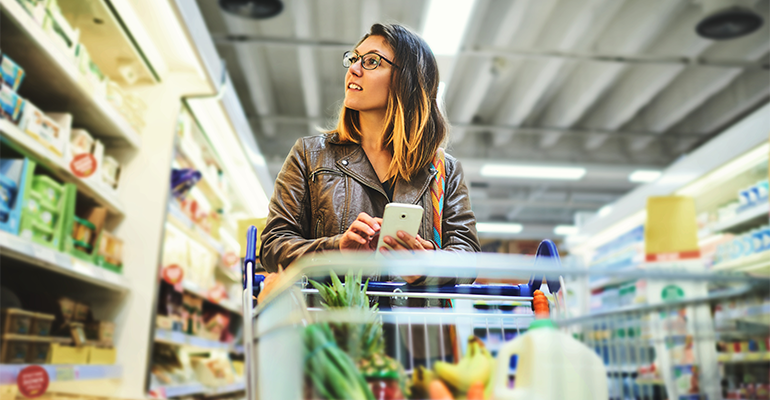
New York University researchers identified how one food programme in the city’s Bronx borough has been a valuable tool for young children’s caregivers.
They conducted a pilot study to assess the feasibility of an online grocery intervention designed to increase fruit and vegetable purchases and enhance food security among adults with children eligible for the US Supplemental Nutrition Assistance Program (SNAP) programme.
SNAP provides financial assistance to US consumers on low incomes, offering them food benefits that enable access to nutritious produce that supports their health and wellbeing.
Tackling food insecurity
Achieving affordability and food security is a significant issue for households, particularly those on low incomes, as budgets become increasingly stretched.
“Healthy foods often cost more, leaving families little choice but cheaper, ultra-processed options,” Angela Trude, assistant professor of nutrition at New York University’s Department of Nutrition and Food Studies, told Ingredients Network.
Extending the SNAP programme to include online food purchases has helped US consumers find and purchase from various food markets, she said, adding: “Online SNAP expands access to healthier products at competitive prices.”
The study was designed to address barriers to purchasing healthy foods online, including a lack of awareness of SNAP benefits, high online delivery fees, and a lack of trust in consumers to choose high-quality products.
“Families embraced SNAP online, but delivery fees, mistrust in produce selection, and clunky search functions held them back. Our programme directly tackles these pain points,” said Trude.
Online incentives shape purchasing habits
“We wanted to launch a pilot programme to test whether different incentives would encourage families living in urban, low-income communities to make healthier purchases with their SNAP dollars,” Trude explained.
Offering caregivers of young children online shopping incentives led to a rise in healthy food purchases within households and a decrease in food insecurity, the research showed. Almost half (47%) of participants set up an online grocery account after participating in the programme.
Before the interventions detailed in the study, households participating in the food programme spent about one-fifth (20.2%) of their grocery budget on fruits, vegetables, and legumes. After the programme, this rose to an average of 21.6%.
Furthermore, using a United States Department of Agriculture (USDA) assessment tool, participants found a decrease of 0.6 points relating to household food insecurity.
Expanding research to prove effectiveness
The findings support widespread positive attitudes towards the intervention programme. The researchers reported that nearly all (90%) of participants found the programme’s video tutorial for creating an online account and placing an order useful.
In addition, more than four in five (82%) found text messages that provided intervention materials and information on the process to be useful. Participants also said that receiving grocery lists and waivers for delivery fees was helpful.
The pilot study analysed data from a small sample of 59 participants, all of whom were from the Bronx. Due to its small sample size, further research is needed to clarify the broader potential impact of providing households and individual consumers with incentives to shop online.
“Even in this small pilot, seeing families gain more reliable access to healthy foods is deeply encouraging, and drives us to expand this work,” said Trude.
Following the initial study and after receiving new funding from the National Institutes of Health, the researchers plan to continue assessing the effectiveness of a full intervention by working with families, community organisations, retailers and policymakers.
“We want to identify the most effective combination of strategies to improve food and nutrition security, as well as approaches that are affordable and scalable through policy and programmes,” Trude said.

Get more of our news on Google
Set Ingredients Network as a 'Preferred Source' to get quicker access to the news you value.
Related news

M&S launches own-brand pet food range
11 Sep 2026
UK retailer Marks & Spencer has launched its own-brand pet food line Paws & Pals – a well-timed and strategic move that will appeal to loyal shoppers, says a marketing expert.
Read more
Do the US dietary guidelines put UPFs under pressure?
10 Sep 2026
Will the US dietary guidelines change the way Americans eat, swapping ultra-processed foods for whole foods? We asked Dr Barry Popkin, renowned nutrition and obesity researcher.
Read more
Food fraud costs UK economy £2bn each year
9 Sep 2026
Food fraud is costing the UK economy up to £2 billion (€2.3 billion) every year although the food sector is more “resilient” than others, according to a recent study.
Read more
Health and wellness engagement matures across Middle East and Africa
4 Sep 2026
Many consumers in the Middle East and Africa are now proactively engaged in health and wellness, looking to integrate better habits and products into their daily lives, say experts.
Read more
Kellogg accelerates work to remove artificial colours from all US cereals
3 Sep 2026
WK Kellogg has announced an accelerated timeline to eliminate all artificial colours and the chemical preservative, BHT, across its full US portfolio of cereals and cereal packaging.
Read more
Skimpflation: An ‘unfair’ and risky approach to keeping prices low
2 Sep 2026
Consumers see skimpflation – reducing the quality of ingredients due to rising costs – as more unfair than shrinkflation, making it a risky strategy according to recent research.
Read more
Royal Canin launches ‘freshly-cooked’ therapeutic dog food
1 Sep 2026
Mars-owned Royal Canin has moved into the therapeutic diet sector with the launch of its Fresh Veterinary Diets range for dogs with health conditions. We asked a veterinary nutritionist for her opinion.
Read more
NielsenIQ’s EU barometer shows Britain leading in grocery inflation
31 Aug 2026
Britain was the only country to record grocery inflation above 2%, according to NielsenIQ data that compared Europe’s five biggest grocery markets from February to May 2026.
Read more
‘Urgent gaps’ in achieving 2030 food system goals
27 Aug 2026
Global food systems are failing to meet 2030 targets across indicators including health, environment, and resilience, according to a report co-authored by the Food and Agriculture Organisation (FAO).
Read more
Seven-Eleven uses microbial testing tech to extend katsudon shelf life
26 Aug 2026
Japanese retail company Seven-Eleven has improved its factory’s microbial environment to keep comfort-food staple, katsudon, fresher for longer.
Read more