
Ingredients Categories
Finished Products
Finished Food Categories
- Bakery
- Beverages / Juices
- Cereal and grain products
- Confectionery
- Cooking Fats & Oils
- Dairy
- Egg products
- Fruits & Vegetables
- Infant & Baby food
- Meat, Poultry & Fish
- Nuts & Seeds products
- Other Finished Food Categories
- Pet Food
- Plant-based foods
- Prepared foods
- Sauces & Seasonings
- Sweet & Savoury Spreads
Specialised Finished Products
- Bee products
- Biotic products
- Dietary supplements
- Energy drinks
- Functional beverages
- Functional confectionery
- Functional food
- Functional powders
- Meal replacement products
- Nutricosmetics
- Other Specialised Finished Products
- Pet Dietary Supplements
- Pharma and OTC products
- Protein products
- Sugar replacers / Sweeteners
Health & Wellness Areas
Delivery Formats
Operations & Services
- 3D printing
- Analysis/ Testing
- Auditing & certifications
- Blending & mixing
- Bottling
- Certification
- Clinical trials
- Co-packing
- Coating
- Consulting
- Contract manufacturing
- Drying
- Electrospinning
- Encapsulating
- Enzymatic processing
- Extracting
- Extrusion
- Fat structuring
- Fermentation
- Filling
- Flavour development
- Freeze drying
- Granulating/ grinding/ milling / mixing
- High-pressure processing
- Labelling
- Other Operations & Services
- Packaging
- Packet filling
- Pasturising
- Quality assurance
- Saccharification
- Shear cell processing
- Spray drying
- Sterilisation
- Storage & Logistics
- Tabletting
- Toasting / roasting
- Ultra-high temperature processing
News
Concerns arise over Europe’s Common Agricultural Policy change
Natasha Spencer-Jolliffe, Freelance Journalist 14 Aug 2025The European Commission positions its budget as “fit for a new era”, but sustainability advocates question whether it will support the entire value chain.
Europe’s food sector could look very different over the next decade, as the European Commission proposes cuts to its Common Agricultural Policy (CAP), along with wider reforms in food, climate, and nature systems.

On 16 July 2025, the European Commission (EC) announced its plans for the next long-term European Union (EU) budget, which will shape its 27 member states and broader global industries between 2028 and 2034. The EC’s suggested multi-year framework is worth €1.8 trillion and will be distributed over the seven years.
A shift in green spending targets
Under the EC’s proposed budget, it would devise “a broader climate and environmental” approach, accounting for 35% of the EC’s total financial provisions. The budget allowance is a contrast to the current framework, which has set aside 30% for climate mitigation and adaptation. In 2024 and 2025, 7.5% went to protecting and restoring biodiversity and ecosystems, which is expected to rise to 10% in 2026 and 2027.
Rather than the EC apportioning the budget to specific food, climate, and nature sectors, the broader approach would reach all six of the EU’s environmental objectives, which also incorporates protecting and using water and marine resources sustainably, transitioning to a circular economy, and preventing and controlling pollution.
An investment slowdown?
Following the EU’s proposed budget reshuffle, several charities and organisations have voiced concern over what the new approach means in reality for agricultural investment.
Describing how the Commission’s budget “delivers blow” to climate and nature, non-profit World Wide Fund (WWF) for Nature raises its concerns that the EC’s ambition is lower than in its previous budget. Housing agricultural, climate, and nature budgetary figures under one broad umbrella figure risks PR washing, with green investments posing as such but lacking genuine intent or outcome.
“The 35% global target for environmental priorities risks becoming little more than a PR exercise by the European Commission if it is not backed by robust and transparent tracking methodologies, along with clear guarantees that Member States will use their new national envelopes to invest in nature and climate,” said Ester Asin, director of the European Policy Office at WWF.
The worry is that the proposed CAP change dilutes existing plans and goals, and a slowdown in Europe’s ability to meet them. The EU’s current 2030 climate targets require €842 billion annually throughout the European economy. According to the non-profit research organisation, The Institute for Climate Economics (I4CE), and its 2025 report, State of Europe Climate Investment, “we are far off that pace”. Furthermore, the EC’s latest budget announcement doesn’t indicate a turnaround. “These latest EU budget proposals do not demonstrate a clear commitment to targeting public money to catch up,” the I4CE said.
Achieving a just and sustainable food industry
The EC highlights that communication and collaboration are at the core of the CAP. Within the EU’s value chain and across the globe, its vision for agriculture and food centres on fostering trust and dialogue.
“Sustainable agri-food systems integrate social, environmental, and economic aspects to ensure fairness and ecological responsibility,” Francesco Proscia, interim head of public affairs at EIT Food, told Ingredients Network.
Setting out the main features of an effective sustainable food and agriculture system, EIT Food said that the inclusion of all across the value chain in a framework that promotes sustainability and resilience, along with reducing environmental impact and biodiversity loss, is critical.
Support for farmers is one of these crucial elements. Enabling farmers to adopt sustainable agricultural practices along with better financial access, particularly in vulnerable regions, is vital. Opening up knowledge-sharing and financial provisions is also crucial to ensure that farmers and food players can pursue new developments. Strengthening capacity building through advice, technical support, and access to a mix of grants, loans, and guarantees can better position the value chain to adopt new practices.
“A food chain that values people, sustainable agricultural and farming practices, reduces food waste, and addresses social concerns like affordability and nutrition is the EIT Food priority,” Flavio Antonelli, public affairs manager at EIT Food, told Ingredients Network.
In today’s evolving food environment, the focus needs to be on aligning food production with Europe’s climate, nature and resilience goals. Strong leadership that indicates what this consists of is a key element of achieving sustainability in the food sector. “Designing robust governance that balances subsidiarity with EU-wide environmental coherence, ensuring accountability and environmental authority involvement,” said Proscia.
Collaboration throughout the food chain and ensuring long-term contracts to stabilise markets and sustainability investments. EIT Food also recommends that the sector move to an incentive-and-reward-based approach that effectively encourages the adoption of sustainable agricultural practices and systemic transformation. Recognising that farmers are at the centre of this, it suggests that farmers with adequate knowledge, investment capacity, and fair income can benefit from policies, including a generational renewal strategy.

Get more of our news on Google
Set Ingredients Network as a 'Preferred Source' to get quicker access to the news you value.
Related news

Do the US dietary guidelines put UPFs under pressure?
10 Sep 2026
Will the US dietary guidelines change the way Americans eat, swapping ultra-processed foods for whole foods? We asked Dr Barry Popkin, renowned nutrition and obesity researcher.
Read more
Food fraud costs UK economy £2bn each year
9 Sep 2026
Food fraud is costing the UK economy up to £2 billion (€2.3 billion) every year although the food sector is more “resilient” than others, according to a recent study.
Read more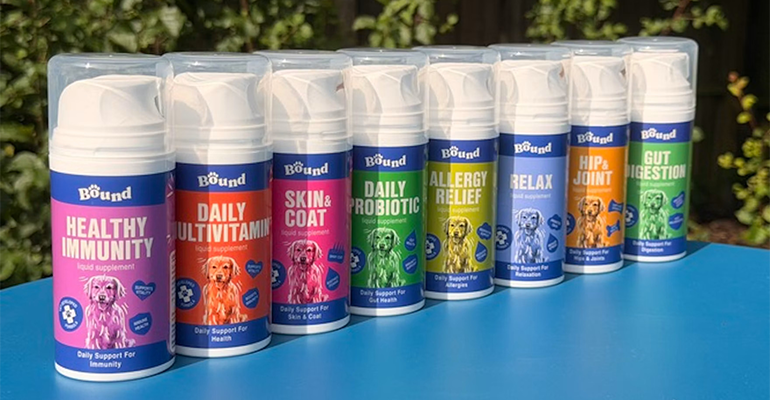
Pump-based liquid pet supplement focuses on health and convenience
8 Sep 2026
Prefera Pet Food uses a plastic pump-based packaging to make administering its liquid supplements for cats and dogs easier, healthier, and more accurate.
Read more
Health and wellness engagement matures across Middle East and Africa
4 Sep 2026
Many consumers in the Middle East and Africa are now proactively engaged in health and wellness, looking to integrate better habits and products into their daily lives, say experts.
Read more
Kellogg accelerates work to remove artificial colours from all US cereals
3 Sep 2026
WK Kellogg has announced an accelerated timeline to eliminate all artificial colours and the chemical preservative, BHT, across its full US portfolio of cereals and cereal packaging.
Read more
Royal Canin launches ‘freshly-cooked’ therapeutic dog food
1 Sep 2026
Mars-owned Royal Canin has moved into the therapeutic diet sector with the launch of its Fresh Veterinary Diets range for dogs with health conditions. We asked a veterinary nutritionist for her opinion.
Read more
‘Urgent gaps’ in achieving 2030 food system goals
27 Aug 2026
Global food systems are failing to meet 2030 targets across indicators including health, environment, and resilience, according to a report co-authored by the Food and Agriculture Organisation (FAO).
Read more
Seven-Eleven uses microbial testing tech to extend katsudon shelf life
26 Aug 2026
Japanese retail company Seven-Eleven has improved its factory’s microbial environment to keep comfort-food staple, katsudon, fresher for longer.
Read more
Chimac’s fusion sauces bring Korean flavours to Europe
25 Aug 2026
Irish sauce brand Chimac is tapping into Korea’s culinary traditions, bringing its flavours and products to European consumers who want a taste of K-food.
Read more
China beverages: Is herbal innovation the future?
20 Aug 2026
Herbal and botanical innovation in China's drinks market continues to grow, with ingredients like astragalus root, ginger, and ginseng in the spotlight – and focus shifting far beyond refreshment.
Read more