
Ingredients Categories
Finished Products
Finished Food Categories
- Bakery
- Beverages / Juices
- Cereal and grain products
- Confectionery
- Cooking Fats & Oils
- Dairy
- Egg products
- Fruits & Vegetables
- Infant & Baby food
- Meat, Poultry & Fish
- Nuts & Seeds products
- Other Finished Food Categories
- Pet Food
- Plant-based foods
- Prepared foods
- Sauces & Seasonings
- Sweet & Savoury Spreads
Specialised Finished Products
- Bee products
- Biotic products
- Dietary supplements
- Energy drinks
- Functional beverages
- Functional confectionery
- Functional food
- Functional powders
- Meal replacement products
- Nutricosmetics
- Other Specialised Finished Products
- Pet Dietary Supplements
- Pharma and OTC products
- Protein products
- Sugar replacers / Sweeteners
Health & Wellness Areas
Delivery Formats
Operations & Services
- 3D printing
- Analysis/ Testing
- Auditing & certifications
- Blending & mixing
- Bottling
- Certification
- Clinical trials
- Co-packing
- Coating
- Consulting
- Contract manufacturing
- Drying
- Electrospinning
- Encapsulating
- Enzymatic processing
- Extracting
- Extrusion
- Fat structuring
- Fermentation
- Filling
- Flavour development
- Freeze drying
- Granulating/ grinding/ milling / mixing
- High-pressure processing
- Labelling
- Other Operations & Services
- Packaging
- Packet filling
- Pasturising
- Quality assurance
- Saccharification
- Shear cell processing
- Spray drying
- Sterilisation
- Storage & Logistics
- Tabletting
- Toasting / roasting
- Ultra-high temperature processing
News
Crop failures threaten Nigeria’s ginger industry
Rik Moors 28 Feb 2025A sharp drop in Nigerian ginger production is affecting global supply chains, with exports falling by 74% due to a severe outbreak of ginger blight.
Nigeria, one of the world’s largest ginger producers, has been a key supplier to international markets, particularly in Europe and North America.
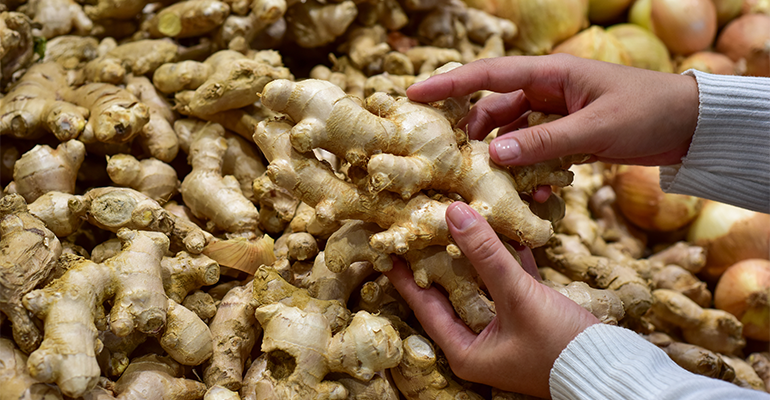
The decline comes as demand for ginger continues to grow, particularly in Europe, where it is used in functional foods, beverages, and botanical extracts.
The Netherlands, Germany, and the UK are among the largest importers, traditionally sourcing from developing countries. With Nigerian supply shrinking, buyers may need to rely more heavily on China, India, or Peru – the dominant suppliers to the region.
Disease and high production costs drive Nigeria’s ginger decline
The Nigerian ginger industry is struggling with two major challenges: fungal disease outbreaks and high production costs. Farmers across the country have reported losses of up to 90% due to ginger blight, including rhizome rot and bacterial wilt, severely limiting exports.
The Nigerian government has allocated N1.6 billion ($1 million) in support, but farmers argue that this is not enough to prevent further decline.
Beyond disease, rising production costs have made Nigerian ginger uncompetitive in global markets. While the global cost of production ranges between $2,000 and $3,000 per metric ton, Nigerian farmers are facing costs exceeding $10,000.
Seed prices have surged, reaching over N300,000 ($200) per bag, with a single hectare requiring up to 30 bags. These rising costs have pushed many farmers out of production, accelerating the country’s loss of market share.
Nigeria’s long-term role in global ginger trade
Despite these challenges, Nigeria has historically been a key supplier due to the high oil and oleoresin content of its ginger, which makes it particularly desirable for food, beverage, and nutraceutical applications.
Compared to ginger from other major producers such as China and India, Nigerian ginger is known for its stronger aroma and more intense flavour, making it a preferred choice for flavouring extracts, essential oils, and medicinal formulations. The high concentration of bioactive compounds, including gingerol and shogaol, enhances its appeal in the health and wellness sector, where ginger is used for its anti-inflammatory and digestive benefit.
Nigeria has played an important role in supplying fresh ginger to Europe, where demand has remained steady. The European market for ginger grew at an annual rate of 0.9% from 2019 to 2023, with total imports reaching 168,000 tons in 2023.
While overall imports have declined slightly from their 2021 peak, long-term demand remains strong, driven by its use in cooking, beverages, and health-focused products.
The Netherlands serves as Europe’s primary entry point for fresh ginger, accounting for 39% of all imports. Most ginger entering the Dutch market is re-exported to other European countries.
Germany, the continent’s largest consumer market for ginger, is also a major importer, with demand peaking in winter months due to its perceived health benefits.
The UK, another key market, has seen stable imports, with ginger playing a central role in Asian cuisine, which remains popular among British consumers.
Ginger: Other global suppliers
China remains the world’s largest supplier of ginger, accounting for a significant share of European imports, while Peru and Brazil have steadily increased exports in recent years.
In 2023, Peru supplied 25% of the ginger imported into the Netherlands, while Brazil accounted for 21%. Both countries have benefited from strong production growth and increasing demand for organic-certified ginger, a segment where Nigeria has struggled to establish a foothold.
With European buyers increasingly focused on organic and sustainably sourced ginger, Nigeria’s ability to regain market share will depend on improving production efficiency and meeting international quality standards.
The Centre for the Promotion of Imports (CBI) has been working with Nigerian suppliers through the Ginger Nigeria project to align with European buyer expectations. However, unless Nigeria can address disease outbreaks and rising costs, importers may continue shifting purchases to more stable suppliers.

Get more of our news on Google
Set Ingredients Network as a 'Preferred Source' to get quicker access to the news you value.
Related news

Do the US dietary guidelines put UPFs under pressure?
10 Sep 2026
Will the US dietary guidelines change the way Americans eat, swapping ultra-processed foods for whole foods? We asked Dr Barry Popkin, renowned nutrition and obesity researcher.
Read more
Health and wellness engagement matures across Middle East and Africa
4 Sep 2026
Many consumers in the Middle East and Africa are now proactively engaged in health and wellness, looking to integrate better habits and products into their daily lives, say experts.
Read more
Skimpflation: An ‘unfair’ and risky approach to keeping prices low
2 Sep 2026
Consumers see skimpflation – reducing the quality of ingredients due to rising costs – as more unfair than shrinkflation, making it a risky strategy according to recent research.
Read more
‘Urgent gaps’ in achieving 2030 food system goals
27 Aug 2026
Global food systems are failing to meet 2030 targets across indicators including health, environment, and resilience, according to a report co-authored by the Food and Agriculture Organisation (FAO).
Read more
Seven-Eleven uses microbial testing tech to extend katsudon shelf life
26 Aug 2026
Japanese retail company Seven-Eleven has improved its factory’s microbial environment to keep comfort-food staple, katsudon, fresher for longer.
Read more
Chimac’s fusion sauces bring Korean flavours to Europe
25 Aug 2026
Irish sauce brand Chimac is tapping into Korea’s culinary traditions, bringing its flavours and products to European consumers who want a taste of K-food.
Read more
Global demand for instant noodles continues to rise
24 Aug 2026
Global demand for instant noodles reached 124.21 billion servings last year, representing a 0.7% year-on-year increase – or 900 million extra servings.
Read more
Popular barbecue staples experience sharp price increases
19 Aug 2026
The typical cost of US shoppers’ barbecue baskets has risen by 12% over the past year – the fastest annual rise in a decade, figures from The Economist show.
Read more
Hot NPD: Nissin launches first cold-water Cup Noodles
18 Aug 2026
Nissin is taking one of Japan’s most iconic instant meals in a completely new direction with the launch of the first cold water-only Cup Noodles in the brand’s 55-year history.
Read more
Manam Chocolate aims to bring premium Indian cacao to 'the world stage'
11 Aug 2026
Craft chocolate brand Manam Chocolate is investing in local expansion and supply chain innovation throughout India as it works to build out the premium reputation of its locally produced cacao products.
Read more