
Ingredients Categories
Finished Products
Finished Food Categories
- Bakery
- Beverages / Juices
- Cereal and grain products
- Confectionery
- Cooking Fats & Oils
- Dairy
- Egg products
- Fruits & Vegetables
- Infant & Baby food
- Meat, Poultry & Fish
- Nuts & Seeds products
- Other Finished Food Categories
- Pet Food
- Plant-based foods
- Prepared foods
- Sauces & Seasonings
- Sweet & Savoury Spreads
Specialised Finished Products
- Bee products
- Biotic products
- Dietary supplements
- Energy drinks
- Functional beverages
- Functional confectionery
- Functional food
- Functional powders
- Meal replacement products
- Nutricosmetics
- Other Specialised Finished Products
- Pet Dietary Supplements
- Pharma and OTC products
- Protein products
- Sugar replacers / Sweeteners
Health & Wellness Areas
Delivery Formats
Operations & Services
- 3D printing
- Analysis/ Testing
- Auditing & certifications
- Blending & mixing
- Bottling
- Certification
- Clinical trials
- Co-packing
- Coating
- Consulting
- Contract manufacturing
- Drying
- Electrospinning
- Encapsulating
- Enzymatic processing
- Extracting
- Extrusion
- Fat structuring
- Fermentation
- Filling
- Flavour development
- Freeze drying
- Granulating/ grinding/ milling / mixing
- High-pressure processing
- Labelling
- Other Operations & Services
- Packaging
- Packet filling
- Pasturising
- Quality assurance
- Saccharification
- Shear cell processing
- Spray drying
- Sterilisation
- Storage & Logistics
- Tabletting
- Toasting / roasting
- Ultra-high temperature processing
News
‘Dark stores’ on the rise: What does this mean for F&B suppliers?
Simon Pitman, Freelance Journalist 19 Aug 2025While dark stores – closed retail facilities used exclusively for online order fulfilment – started in the UK, the concept has also taken root in the US grocery sector.
Unlike traditional stores designed for in-person shopping, dark stores are built or retrofitted specifically to optimise picking, packing, and shipping. These environments prioritise speed and efficiency, often using robotics, digital tracking, and high-frequency inventory layouts.
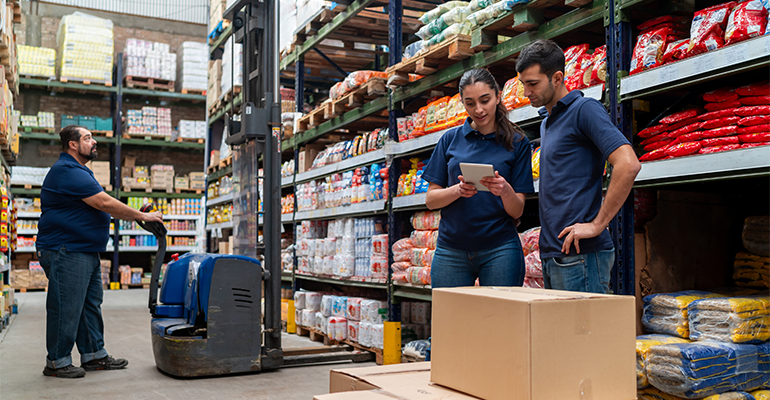
“A dark store is designed solely for online order fulfilment… unlike traditional stores that intend to attract walk-in consumers,” according to retail technology specialist Magestore.
First introduced by Tesco in Croydon in 2009, dark stores have since gained traction in Europe and are now expanding rapidly across North America. Tesco, a pioneer in this model, has converted many physical stores into “digi-hubs” to cater to growing demand.
The global dark store market is projected to grow from $22.84 billion in 2024 to $802.5 billion by 2034, according to Spherical Insights. This represents a compound annual growth rate of 38.2%, driven by consumer demand for fast, convenient delivery.
A 2023 survey of online shoppers around the world conducted by Censuswide for the Future Shopper Report found that nearly two in three (64%) online grocery shoppers expect their orders to be fulfilled within 24 hours, with two in five expecting their food and drink to be delivered in under two hours.
US leaders: Walmart and Kroger
USA Today reported in July this year that Walmart is trialling dark stores in Dallas, Texas and Bentonville, Arkansas. The retailer is expanding online commerce, with apparent success.
In Q1 2025, Walmart reported its first profitable US e-commerce quarter and a 91% year-on-year rise in three-hour delivery volumes.
Kroger is similarly investing in fulfilment, leveraging its partnership with logistics company Ocado to build automated centres that serve as regional dark store hubs. These facilities combine robotics and AI-driven planning to centralise e-grocery logistics.
At the same time, quick-commerce firms like Gopuff and Getir have pushed ultra-fast delivery models using small urban fulfilment hubs. However, startups in this segment have had mixed success in the US market; in mid-2022, instant delivery firm Jokr shut down US operations in favour of expanding its Latin American presence, while competing startup Buyk filed for bankruptcy in 2022 after just one year of operation in New York and Chicago.
What this means for suppliers
According to an analysis by US consultancy, dark stores can cut pick-and-pack costs by up to 50%. However, this efficiency often translates to greater expectations on suppliers, including stricter service-level agreements and penalties for errors or delays.
Dark stores are designed for speed, which favours fast-turning, high-demand products. This leaves slower-moving SKUs or oversized goods at risk of being dropped in favour of products that can move quickly through automated systems.
Packaging is also affected. With no in-store merchandising and minimal human handling, factors like barcode clarity, pack durability, and automation compatibility become key priorities.
Retailers increasingly demand digital integration with their suppliers. Accurate product data, real-time inventory visibility and just-in-time delivery are now baseline requirements. In practice, this means servicing more fulfilment hubs, more frequently, with tighter delivery windows.
Adopting this model comes with logistical and operational challenges. Suppliers must meet higher fulfilment standards, often across decentralised networks, and may need to increase regional warehousing or partner with third-party logistics firms.

Get more of our news on Google
Set Ingredients Network as a 'Preferred Source' to get quicker access to the news you value.
Related news

M&S launches own-brand pet food range
11 Sep 2026
UK retailer Marks & Spencer has launched its own-brand pet food line Paws & Pals – a well-timed and strategic move that will appeal to loyal shoppers, says a marketing expert.
Read more
Do the US dietary guidelines put UPFs under pressure?
10 Sep 2026
Will the US dietary guidelines change the way Americans eat, swapping ultra-processed foods for whole foods? We asked Dr Barry Popkin, renowned nutrition and obesity researcher.
Read more
Food fraud costs UK economy £2bn each year
9 Sep 2026
Food fraud is costing the UK economy up to £2 billion (€2.3 billion) every year although the food sector is more “resilient” than others, according to a recent study.
Read more
Health and wellness engagement matures across Middle East and Africa
4 Sep 2026
Many consumers in the Middle East and Africa are now proactively engaged in health and wellness, looking to integrate better habits and products into their daily lives, say experts.
Read more
Kellogg accelerates work to remove artificial colours from all US cereals
3 Sep 2026
WK Kellogg has announced an accelerated timeline to eliminate all artificial colours and the chemical preservative, BHT, across its full US portfolio of cereals and cereal packaging.
Read more
Skimpflation: An ‘unfair’ and risky approach to keeping prices low
2 Sep 2026
Consumers see skimpflation – reducing the quality of ingredients due to rising costs – as more unfair than shrinkflation, making it a risky strategy according to recent research.
Read more
Royal Canin launches ‘freshly-cooked’ therapeutic dog food
1 Sep 2026
Mars-owned Royal Canin has moved into the therapeutic diet sector with the launch of its Fresh Veterinary Diets range for dogs with health conditions. We asked a veterinary nutritionist for her opinion.
Read more
NielsenIQ’s EU barometer shows Britain leading in grocery inflation
31 Aug 2026
Britain was the only country to record grocery inflation above 2%, according to NielsenIQ data that compared Europe’s five biggest grocery markets from February to May 2026.
Read more
‘Urgent gaps’ in achieving 2030 food system goals
27 Aug 2026
Global food systems are failing to meet 2030 targets across indicators including health, environment, and resilience, according to a report co-authored by the Food and Agriculture Organisation (FAO).
Read more
Seven-Eleven uses microbial testing tech to extend katsudon shelf life
26 Aug 2026
Japanese retail company Seven-Eleven has improved its factory’s microbial environment to keep comfort-food staple, katsudon, fresher for longer.
Read more