
Ingredients Categories
Finished Products
Finished Food Categories
- Bakery
- Beverages / Juices
- Cereal and grain products
- Confectionery
- Cooking Fats & Oils
- Dairy
- Egg products
- Fruits & Vegetables
- Infant & Baby food
- Meat, Poultry & Fish
- Nuts & Seeds products
- Other Finished Food Categories
- Pet Food
- Plant-based foods
- Prepared foods
- Sauces & Seasonings
- Sweet & Savoury Spreads
Specialised Finished Products
- Bee products
- Biotic products
- Dietary supplements
- Energy drinks
- Functional beverages
- Functional confectionery
- Functional food
- Functional powders
- Meal replacement products
- Nutricosmetics
- Other Specialised Finished Products
- Pet Dietary Supplements
- Pharma and OTC products
- Protein products
- Sugar replacers / Sweeteners
Health & Wellness Areas
Delivery Formats
Operations & Services
- 3D printing
- Analysis/ Testing
- Auditing & certifications
- Blending & mixing
- Bottling
- Certification
- Clinical trials
- Co-packing
- Coating
- Consulting
- Contract manufacturing
- Drying
- Electrospinning
- Encapsulating
- Enzymatic processing
- Extracting
- Extrusion
- Fat structuring
- Fermentation
- Filling
- Flavour development
- Freeze drying
- Granulating/ grinding/ milling / mixing
- High-pressure processing
- Labelling
- Other Operations & Services
- Packaging
- Packet filling
- Pasturising
- Quality assurance
- Saccharification
- Shear cell processing
- Spray drying
- Sterilisation
- Storage & Logistics
- Tabletting
- Toasting / roasting
- Ultra-high temperature processing
News
Europe’s new strategies pave the way for alternative protein growth
12 Dec 2024European countries such as Lithuania and the Netherlands are adopting strategic approaches to accelerate the development of alternative proteins, balancing innovation with food safety to drive sustainable food systems.
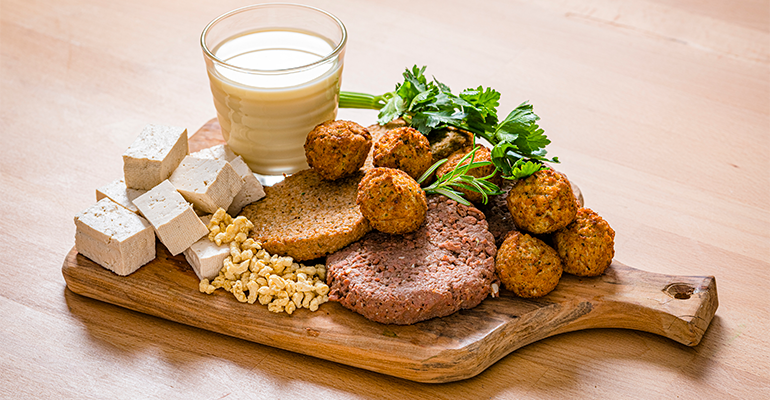
At the Future of Protein Production Conference in Amsterdam, policymakers, investors, and industry leaders discussed these evolving strategies, highlighting how national agendas are shaping the sector’s growth. With plant-based, cultivated, and microbial proteins gaining momentum, countries like Lithuania and the Netherlands are playing key roles in positioning Europe as a leader in alternative protein innovation.
Lithuania champions biotechnology and regulatory innovation
Lithuania has rapidly positioned itself as a key player in the biotechnology and alternative protein markets. Speaking at the conference, Ieva Valeškaitė, deputy minister of economics and innovation of Lithuania, outlined the country’s regulatory ambitions.
The biotechnology sector has experienced significant growth, with over 500 companies operating in the small Baltic country. This expansion has provided fertile ground for the development of alternative proteins, with the Lithuanian government taking steps to create a regulatory framework that encourages innovation.
Valeškaitė explained that the government has set up a dedicated working group to address regulatory issues specific to alternative proteins. This group, which draws inspiration from frontrunners like Singapore and the Netherlands, is working towards finalising regulations by next year. One of the key priorities is ensuring that novel food technologies are not overregulated compared to traditional sectors, allowing companies to bring products to market without unnecessary delays. “We cannot regulate new and innovative technologies more harshly than we regulate older ones,” Valeskaite noted, stressing the importance of fairness in the regulatory landscape.
Lithuania’s ambition extends beyond regulatory reform. The government is planning to launch a specialised accelerator programme in 2024, aimed at supporting startups working on cultivated meat, plant-based alternatives, and other novel protein innovations. Valeškaitė sees this initiative as a way to further enhance Lithuania’s biotechnology credentials, providing the infrastructure and resources needed to scale alternative protein technologies. Valeškaitė also highlighted Lithuania’s success in collaborating with global partners, citing the involvement of Lithuanian startups in the EU Climate-KIC accelerator programme, and the increasing interest from international biotech companies in the Lithuanian market.
The Netherlands: Leading with investment and collaboration
The Netherlands, a well-established leader in food technology, continues to innovate within the alternative protein sector. Ronald Visschers, director of Cellular Agriculture Netherlands, detailed the country’s long-standing commitment to cellular agriculture, supported by strategic government investments through the National Growth Fund. The fund is part of the Netherlands' broader mission to maintain its leadership in food and agricultural innovation. In addition to funding cellular agricultural initiatives, it has financially supported projects in regenerative agriculture, climate-resistant land and water use, and “extra-resilient” crops.
Visschers explained that the Dutch government’s support for cellular agriculture extends beyond financial investment. The country has fostered an environment where public-private partnerships thrive, creating an ecosystem that encourages collaboration between government bodies, academia, and industry. However, aligning the interests of the traditional agricultural sector with emerging food technologies has been one of the key challenges faced by the Dutch government. To address these challenges, the Netherlands is engaging with both traditional and emerging sectors to promote the economic benefits of alternative proteins.
Visschers also highlighted a critical challenge for the Netherlands in the coming years: the country is expected to face a significant labour shortage, with a projected one million vacancies by 2030 in small settlements alone. This scarcity of labour raises important questions for the alternative protein sector, particularly regarding workforce availability. Visschers emphasised the need to go beyond just the technical development of alternative proteins, calling for a more inclusive approach that considers the types of jobs the sector will create and whether there will be enough people to fill them. He also stressed the importance of addressing these workforce challenges in the context of broader sustainability goals and geopolitical factors.
Regulatory and market challenges for microbial fermentation, aquaculture, and insects
While plant-based and cultivated proteins dominate headlines, microbial fermentation and aquaculture also offer promising opportunities for alternative protein production. However, as Francesco Montanari, food law expert and director at the consultancy, Arcadia International, highlighted in his presentation Alternative Proteins – Market, Policy and Regulatory Challenges: Today and Tomorrow, Europe faces several hurdles in these areas.
Microbial fermentation is seen as a promising technology, but the sector requires significant investment in food-grade equipment to scale effectively. Europe currently lags behind in this area, as producers face high capital costs for making fermentation processes suitable for food production. Addressing this gap could unlock the potential of microbial proteins as a key alternative protein source.
Similarly, the aquaculture sector, while benefitting from more mature technologies such as algae, remains underfunded and less competitive. Algae are considered a sustainable protein source, but safety concerns related to heavy metals and iodine levels present ongoing challenges. The EU Algae Initiative aims to address these issues, offering a roadmap for further investment in this sector.
Montanari also noted that insects represent a significant opportunity, particularly as functional food ingredients. While four insect species are approved for food use and seven for feed in the EU, improving the sustainability of insect farming – specifically water and energy efficiency – will be critical for the sector’s long-term viability.
The upcoming EU Action Plan on Alternative Proteins, expected by 2026, will be the first comprehensive policy of its kind in Europe. It aims to provide a cohesive strategy for the entire alternative protein sector, from plant-based to microbial and cultivated proteins. While this action plan is still in development, individual countries like Lithuania and the Netherlands are already taking significant steps to establish their regulatory frameworks and support innovation in alternative proteins.

Get more of our news on Google
Set Ingredients Network as a 'Preferred Source' to get quicker access to the news you value.
Related news

Health and wellness engagement matures across Middle East and Africa
4 Sep 2026
Many consumers in the Middle East and Africa are now proactively engaged in health and wellness, looking to integrate better habits and products into their daily lives, say experts.
Read more
Kellogg accelerates work to remove artificial colours from all US cereals
3 Sep 2026
WK Kellogg has announced an accelerated timeline to eliminate all artificial colours and the chemical preservative, BHT, across its full US portfolio of cereals and cereal packaging.
Read more
Royal Canin launches ‘freshly-cooked’ therapeutic dog food
1 Sep 2026
Mars-owned Royal Canin has moved into the therapeutic diet sector with the launch of its Fresh Veterinary Diets range for dogs with health conditions. We asked a veterinary nutritionist for her opinion.
Read more
‘Urgent gaps’ in achieving 2030 food system goals
27 Aug 2026
Global food systems are failing to meet 2030 targets across indicators including health, environment, and resilience, according to a report co-authored by the Food and Agriculture Organisation (FAO).
Read more
Seven-Eleven uses microbial testing tech to extend katsudon shelf life
26 Aug 2026
Japanese retail company Seven-Eleven has improved its factory’s microbial environment to keep comfort-food staple, katsudon, fresher for longer.
Read more
Chimac’s fusion sauces bring Korean flavours to Europe
25 Aug 2026
Irish sauce brand Chimac is tapping into Korea’s culinary traditions, bringing its flavours and products to European consumers who want a taste of K-food.
Read more
China beverages: Is herbal innovation the future?
20 Aug 2026
Herbal and botanical innovation in China's drinks market continues to grow, with ingredients like astragalus root, ginger, and ginseng in the spotlight – and focus shifting far beyond refreshment.
Read more
Popular barbecue staples experience sharp price increases
19 Aug 2026
The typical cost of US shoppers’ barbecue baskets has risen by 12% over the past year – the fastest annual rise in a decade, figures from The Economist show.
Read more
Hot NPD: Nissin launches first cold-water Cup Noodles
18 Aug 2026
Nissin is taking one of Japan’s most iconic instant meals in a completely new direction with the launch of the first cold water-only Cup Noodles in the brand’s 55-year history.
Read more
Women’s hormonal health: Familiar ingredients beat novel actives
13 Aug 2026
Hormonal symptoms affect women across life stages, and FMCG Gurus says the ingredients best placed to support them are those with which they are already familiar.
Read more