
Ingredients Categories
Finished Products
Finished Food Categories
- Bakery
- Beverages / Juices
- Cereal and grain products
- Confectionery
- Cooking Fats & Oils
- Dairy
- Egg products
- Fruits & Vegetables
- Infant & Baby food
- Meat, Poultry & Fish
- Nuts & Seeds products
- Other Finished Food Categories
- Pet Food
- Plant-based foods
- Prepared foods
- Sauces & Seasonings
- Sweet & Savoury Spreads
Specialised Finished Products
- Bee products
- Biotic products
- Dietary supplements
- Energy drinks
- Functional beverages
- Functional confectionery
- Functional food
- Functional powders
- Meal replacement products
- Nutricosmetics
- Other Specialised Finished Products
- Pet Dietary Supplements
- Pharma and OTC products
- Protein products
- Sugar replacers / Sweeteners
Health & Wellness Areas
Delivery Formats
Operations & Services
- 3D printing
- Analysis/ Testing
- Auditing & certifications
- Blending & mixing
- Bottling
- Certification
- Clinical trials
- Co-packing
- Coating
- Consulting
- Contract manufacturing
- Drying
- Electrospinning
- Encapsulating
- Enzymatic processing
- Extracting
- Extrusion
- Fat structuring
- Fermentation
- Filling
- Flavour development
- Freeze drying
- Granulating/ grinding/ milling / mixing
- High-pressure processing
- Labelling
- Other Operations & Services
- Packaging
- Packet filling
- Pasturising
- Quality assurance
- Saccharification
- Shear cell processing
- Spray drying
- Sterilisation
- Storage & Logistics
- Tabletting
- Toasting / roasting
- Ultra-high temperature processing
News
European Commission proposes one-year delay to EUDR deforestation regulation
Rik Moors 7 Oct 2024The European Commission has proposed a 12-month extension for the implementation of the EU Deforestation Regulation (EUDR), which – if approved – would push back the deadline by one year.
The extension aims to give stakeholders, particularly those outside the EU, more time to prepare for the regulation’s requirements, the Commission said.

If approved by the European Parliament and the Council, the extension would see the regulation applied to large companies by 30 December 2025, and to micro and small enterprises by 30 June 2026.
The EUDR, passed in 2023, seeks to ensure that commodities such as cattle, cocoa, coffee, palm oil, rubber, soya, and wood imported into the EU are deforestation-free. Companies will need to implement due diligence processes to trace the supply chain of these products and provide evidence of compliance. The regulation aims to combat deforestation and forest degradation, both of which are major drivers of climate change and biodiversity loss. The Food and Agriculture Organization (FAO) estimates that between 1990 and 2020, 420 million hectares of forest were lost to deforestation—an area larger than the entire European Union.
Despite the proposed extension, submitted by the Commission on 2 October, the EUDR’s objectives thus far remain unchanged. However, concerns remain about the practical challenges of gathering geolocation information, ensuring traceability, and producing the required documentation. The Commission’s proposal for a 12-month delay may ease immediate concerns for some stakeholders, but the broader debate over the EUDR’s implementation continues. Governments and industries in major producing countries like Indonesia and Brazil remain vocal in their opposition, while civil society and businesses that support the regulation are calling for immediate action to ensure that the EUDR is applied effectively.
As the proposal moves to the European Parliament and the Council for approval, stakeholders across the globe will be watching closely to see how the EU balances its environmental objectives with the practical concerns raised by international trade partners.
Some businesses and countries demand further adjustments
The proposal for an extension follows mounting pressure from various stakeholders, both within the EU and abroad. In April 2024, Austria’s agriculture and economy ministers urged European Commission president Ursula von der Leyen to delay the implementation of the EUDR, citing the burdens on businesses.
German chancellor Olaf Scholz echoed these concerns in September, responding to a German publishers’ lobby that criticised the regulation for imposing "impractical requirements" and creating a "drastic bureaucratic burden." The lobby called on the Commission to "mitigate the risks, sanctions, and burdens" created by the law.
Global trading partners have also expressed opposition. Brazil, Indonesia, and Malaysia have argued that the regulation creates trade barriers and risks harming their smallholder farmers. Some of the most significant challenges facing businesses in complying with the EUDR include gathering geolocation information for the land where commodities are produced and implementing traceability systems across complex supply chains. The Commission has acknowledged these difficulties and has been working on guidance documents to help stakeholders navigate the regulatory landscape.
Indonesia’s coordinating minister of the economy, Airlangga Hartarto, told Reuters on Thursday that while the proposed delay is a positive step, the key issue lies in the implementing regulations. He called for a two-year postponement instead of 12 months and criticised the EU’s country risk classification system, which will categorise nations based on their compliance with deforestation regulations.
The World Trade Organization (WTO) has also weighed in on the debate. Ngozi Okonjo-Iweala, the head of the WTO, urged the EU to reconsider the EUDR’s impact on global trade, according to a report in the Financial Times.
Civil society organisations and chocolate companies speak out against further changes
While many governments and industries have called for delays and changed to the regulation, civil society organisations and some businesses have loudly opposed any changes to the EUDR's substance since news of the proposed postponement.
In September, Brazilian civil society groups sent a letter to von der Leyen denouncing Brazil’s efforts to delay the regulation on behalf of agribusiness. Dinamam Tuxá, executive coordinator of the Articulation of Indigenous Peoples of Brazil (Apib), stated: “As most of Brazilian territory is affected by smoke from fires in nearly all biomes, it is regrettable that the EUDR implementation is being delayed.” He emphasised that the regulation is essential to reducing deforestation and fulfilling commitments under the Paris Agreement.
Mariana Lyrio, international policy advisor at the Climate Observatory, expressed concerns that the delay could be used to undermine the regulation’s effectiveness. “There is an ongoing attempt to use the delay to gut the EUDR. EU member states and the European Parliament must not let this happen,” Lyrio said. She added that the EU’s credibility and climate action are at stake.
Brazilian civil society groups are not alone in their concerns. Companies in the cocoa and chocolate sectors, including Ferrero, Mars Wrigley, Mondelēz International, and Nestlé, have called for the immediate release of the Commission’s long-awaited guidance documents. These companies, along with civil society organisations like Fairtrade International and the Rainforest Alliance, have also urged the Commission not to reopen negotiations on the substance of the EUDR, arguing that it would only increase uncertainty and harm the significant investments businesses have already made.

Get more of our news on Google
Set Ingredients Network as a 'Preferred Source' to get quicker access to the news you value.
Related news

M&S launches own-brand pet food range
11 Sep 2026
UK retailer Marks & Spencer has launched its own-brand pet food line Paws & Pals – a well-timed and strategic move that will appeal to loyal shoppers, says a marketing expert.
Read more
Do the US dietary guidelines put UPFs under pressure?
10 Sep 2026
Will the US dietary guidelines change the way Americans eat, swapping ultra-processed foods for whole foods? We asked Dr Barry Popkin, renowned nutrition and obesity researcher.
Read more
Food fraud costs UK economy £2bn each year
9 Sep 2026
Food fraud is costing the UK economy up to £2 billion (€2.3 billion) every year although the food sector is more “resilient” than others, according to a recent study.
Read more
Kellogg accelerates work to remove artificial colours from all US cereals
3 Sep 2026
WK Kellogg has announced an accelerated timeline to eliminate all artificial colours and the chemical preservative, BHT, across its full US portfolio of cereals and cereal packaging.
Read more
‘Urgent gaps’ in achieving 2030 food system goals
27 Aug 2026
Global food systems are failing to meet 2030 targets across indicators including health, environment, and resilience, according to a report co-authored by the Food and Agriculture Organisation (FAO).
Read more
Chimac’s fusion sauces bring Korean flavours to Europe
25 Aug 2026
Irish sauce brand Chimac is tapping into Korea’s culinary traditions, bringing its flavours and products to European consumers who want a taste of K-food.
Read more
Savoury protein snacks shake up the on-the-go market
10 Aug 2026
Sweet flavours have dominated the high-protein snack category but savoury snacks, such as cheese bars and meat sticks, can appeal to health-conscious consumers.
Read more
Nestlé invests in regeneratively farmed wheat for KitKat
5 Aug 2026
Nestlé will pay a premium for Wildfarmed’s regeneratively farmed wheat but the CPG remains reticent to promote the move on packs of its KitKat bars.
Read more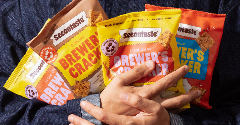
How Secon Taste is putting upcycled snacks on shelves
4 Aug 2026
Hungarian zero-waste startup Secon Taste is turning surplus food into upcycled snacks such as fibre-packed granola, instant porridge, and a circular coffee-tasting box.
Read more
Codex sets global thresholds for ‘may contain’ labels
3 Aug 2026
Codex Alimentarius has adopted its first global guidance on when to use “may contain” allergen warnings, setting thresholds intended to stop the label being used as blanket legal cover.
Read more