
Ingredients Categories
Finished Products
Finished Food Categories
- Bakery
- Beverages / Juices
- Cereal and grain products
- Confectionery
- Cooking Fats & Oils
- Dairy
- Egg products
- Fruits & Vegetables
- Infant & Baby food
- Meat, Poultry & Fish
- Nuts & Seeds products
- Other Finished Food Categories
- Pet Food
- Plant-based foods
- Prepared foods
- Sauces & Seasonings
- Sweet & Savoury Spreads
Specialised Finished Products
- Bee products
- Biotic products
- Dietary supplements
- Energy drinks
- Functional beverages
- Functional confectionery
- Functional food
- Functional powders
- Meal replacement products
- Nutricosmetics
- Other Specialised Finished Products
- Pet Dietary Supplements
- Pharma and OTC products
- Protein products
- Sugar replacers / Sweeteners
Health & Wellness Areas
Delivery Formats
Operations & Services
- 3D printing
- Analysis/ Testing
- Auditing & certifications
- Blending & mixing
- Bottling
- Certification
- Clinical trials
- Co-packing
- Coating
- Consulting
- Contract manufacturing
- Drying
- Electrospinning
- Encapsulating
- Enzymatic processing
- Extracting
- Extrusion
- Fat structuring
- Fermentation
- Filling
- Flavour development
- Freeze drying
- Granulating/ grinding/ milling / mixing
- High-pressure processing
- Labelling
- Other Operations & Services
- Packaging
- Packet filling
- Pasturising
- Quality assurance
- Saccharification
- Shear cell processing
- Spray drying
- Sterilisation
- Storage & Logistics
- Tabletting
- Toasting / roasting
- Ultra-high temperature processing
News
FDA scrutinizes milk pasteurisation over HPAI risk
Simon Pitman, Freelance Journalist 28 May 2024The US Food and Drug Administration (FDA) is undertaking additional scientific research work to ensure that approved pasteurization processes are rigorous enough after retailer milk tests showed contamination from Highly Pathogenic Avian Influenza (HPAI).
The move follows tests conducted by the FDA at the end of April showing that one in five samples of commercial milk collected from retailers country-wide as part of a national survey had tested positive for viral fragments.
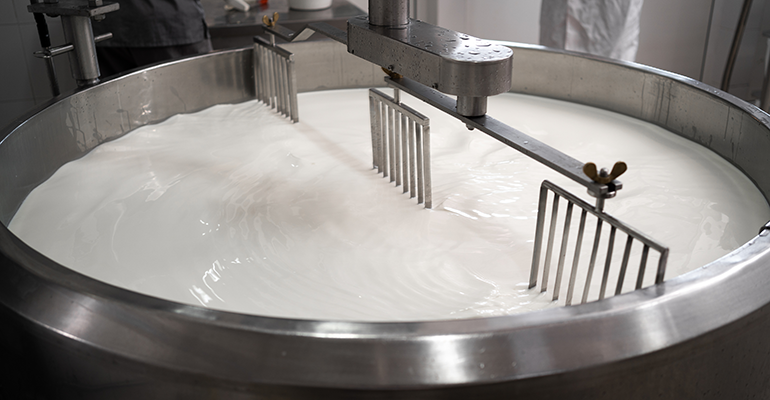
The tests were carried out after dairy cattle in several states had tested positive for the Highly Pathogenic Avian Influenza (HPAI) H5N1 virus. The study saw the FDA take samples from a broad selection of dairy herds across the country, including the herds that had already tested positive for the virus. At the time the FDA confirmed that there was a higher incidence of positive milk tests among the infected herds.
FDA tests to determine the efficacy of pasteurisation equipment
Ingredients Network reached out to the US FDA for comment about pasteurisation testing but did not receive a reply.
“While our retail sampling test results to date are clear about the safety of the commercial milk supply and representative of real-world scenarios, additional scientific work is being undertaken to validate the criteria for pasteurisation relative to the HPAI H5N1 virus and will include tests using pasteurisation equipment typically used by milk processors,” the FDA stated in an update on May 10th.
Concerns over HPAI H5N1 have been elevated since reports of a human infection was reported in the US at the beginning of April, evidently from contact with an infected animal, the first such recorded transmission in the country. The individual reportedly suffered mild symptoms and was not hospitalised, but the World Health Organization (WHO) put out an alert about the case as a warning.
While bird flu can be transmitted from wild birds to poultry, the spread of it to cattle and to humans is thought to be highly unusual, which is why the FDA is conducting such extensive testing and research into the current outbreak. The goal is to determine if a specific strain of the virus is responsible and what measures dairy farmers can take to avoid outbreaks and to prevent it from entering the milk supply chain.
FDA continues to test milk in store shelves across the US
Testing of milk is currently ongoing in stores across the country, together with tests to determine if there is any potential risk of contamination to other types of milk products, including cream and whole milk.
While no specific precautions have been issued for commercially available pasteurised milk, the FDA has issued renewed warnings against drinking raw milk
“The FDA and USDA are working closely to collect and evaluate additional data and information specific to H5N1 in dairy cattle and to support state counterparts as this emerging disease in dairy cattle is managed. These important efforts are ongoing, and we are committed to sharing results as soon as possible. In the meantime, the FDA and USDA continue to indicate that based on the information we currently have, our commercial milk supply is safe,” the FDA stated.
Reports that animal feed can spread the virus are denied
A number of media reports have pointed to a possible link between the inclusion of dried poultry litter that is contained in feed for dairy cows to a possible source for the spread of the HPAI virus.
The allegations have been strongly refuted by the feed industry, with the Association of American Feed Control Officials (AAFCO) insisting that sufficient protocols are in place to ensure that this type of virus cannot be transmitted. The organisation reiterated that its members abide by strict FDA veterinary regulations to ensure that all feed meets food safety standards.
“Dried Poultry Litter or Waste has been approved as a commercial feed ingredient by AAFCO since 1982, and while it’s not widely used, poultry litter can be a great alternative for cattle to promote sustainability while still gaining a nutritional benefit for the animals,” said Austin Therrell, executive director AAFCO.

Get more of our news on Google
Set Ingredients Network as a 'Preferred Source' to get quicker access to the news you value.
Related news

Do the US dietary guidelines put UPFs under pressure?
10 Sep 2026
Will the US dietary guidelines change the way Americans eat, swapping ultra-processed foods for whole foods? We asked Dr Barry Popkin, renowned nutrition and obesity researcher.
Read more
Food fraud costs UK economy £2bn each year
9 Sep 2026
Food fraud is costing the UK economy up to £2 billion (€2.3 billion) every year although the food sector is more “resilient” than others, according to a recent study.
Read more
Kellogg accelerates work to remove artificial colours from all US cereals
3 Sep 2026
WK Kellogg has announced an accelerated timeline to eliminate all artificial colours and the chemical preservative, BHT, across its full US portfolio of cereals and cereal packaging.
Read more
Skimpflation: An ‘unfair’ and risky approach to keeping prices low
2 Sep 2026
Consumers see skimpflation – reducing the quality of ingredients due to rising costs – as more unfair than shrinkflation, making it a risky strategy according to recent research.
Read more
‘Urgent gaps’ in achieving 2030 food system goals
27 Aug 2026
Global food systems are failing to meet 2030 targets across indicators including health, environment, and resilience, according to a report co-authored by the Food and Agriculture Organisation (FAO).
Read more
Popular barbecue staples experience sharp price increases
19 Aug 2026
The typical cost of US shoppers’ barbecue baskets has risen by 12% over the past year – the fastest annual rise in a decade, figures from The Economist show.
Read more
Savoury protein snacks shake up the on-the-go market
10 Aug 2026
Sweet flavours have dominated the high-protein snack category but savoury snacks, such as cheese bars and meat sticks, can appeal to health-conscious consumers.
Read more
Digital twin technology gains ground in food manufacturing
6 Aug 2026
Food and beverage companies are increasingly turning to digital twins to optimise and automate manufacturing processes, but opportunities stretch far beyond this, say experts.
Read more
Nestlé invests in regeneratively farmed wheat for KitKat
5 Aug 2026
Nestlé will pay a premium for Wildfarmed’s regeneratively farmed wheat but the CPG remains reticent to promote the move on packs of its KitKat bars.
Read more
Codex sets global thresholds for ‘may contain’ labels
3 Aug 2026
Codex Alimentarius has adopted its first global guidance on when to use “may contain” allergen warnings, setting thresholds intended to stop the label being used as blanket legal cover.
Read more