
Ingredients Categories
Finished Products
Finished Food Categories
- Bakery
- Beverages / Juices
- Cereal and grain products
- Confectionery
- Cooking Fats & Oils
- Dairy
- Egg products
- Fruits & Vegetables
- Infant & Baby food
- Meat, Poultry & Fish
- Nuts & Seeds products
- Other Finished Food Categories
- Pet Food
- Plant-based foods
- Prepared foods
- Sauces & Seasonings
- Sweet & Savoury Spreads
Specialised Finished Products
- Bee products
- Biotic products
- Dietary supplements
- Energy drinks
- Functional beverages
- Functional confectionery
- Functional food
- Functional powders
- Meal replacement products
- Nutricosmetics
- Other Specialised Finished Products
- Pet Dietary Supplements
- Pharma and OTC products
- Protein products
- Sugar replacers / Sweeteners
Health & Wellness Areas
Delivery Formats
Operations & Services
- 3D printing
- Analysis/ Testing
- Auditing & certifications
- Blending & mixing
- Bottling
- Certification
- Clinical trials
- Co-packing
- Coating
- Consulting
- Contract manufacturing
- Drying
- Electrospinning
- Encapsulating
- Enzymatic processing
- Extracting
- Extrusion
- Fat structuring
- Fermentation
- Filling
- Flavour development
- Freeze drying
- Granulating/ grinding/ milling / mixing
- High-pressure processing
- Labelling
- Other Operations & Services
- Packaging
- Packet filling
- Pasturising
- Quality assurance
- Saccharification
- Shear cell processing
- Spray drying
- Sterilisation
- Storage & Logistics
- Tabletting
- Toasting / roasting
- Ultra-high temperature processing
Sponsored Content
India’s protein boom has a quality problem – and trust is becoming the differentiator
29 Jan 2026
As the market grows, so too does scrutiny. With more brands entering the space and product availability expanding across online and offline channels, questions around product quality, safety and trust are becoming increasingly important.
India's sports nutrition and supplement market has expanded rapidly in recent years, driven by rising health awareness, increased participation in fitness and sport and growing demand for convenient nutrition solutions. Supplements are now widely used by athletes, gym-goers and everyday consumers alike.
As the market grows, so too does scrutiny. With more brands entering the space and product availability expanding across online and offline channels, questions around product quality, safety and trust are becoming increasingly important.
Independent data highlights quality and compliance concerns
Recent independent research and enforcement activity has highlighted ongoing quality and compliance challenges across the Indian supplement landscape.
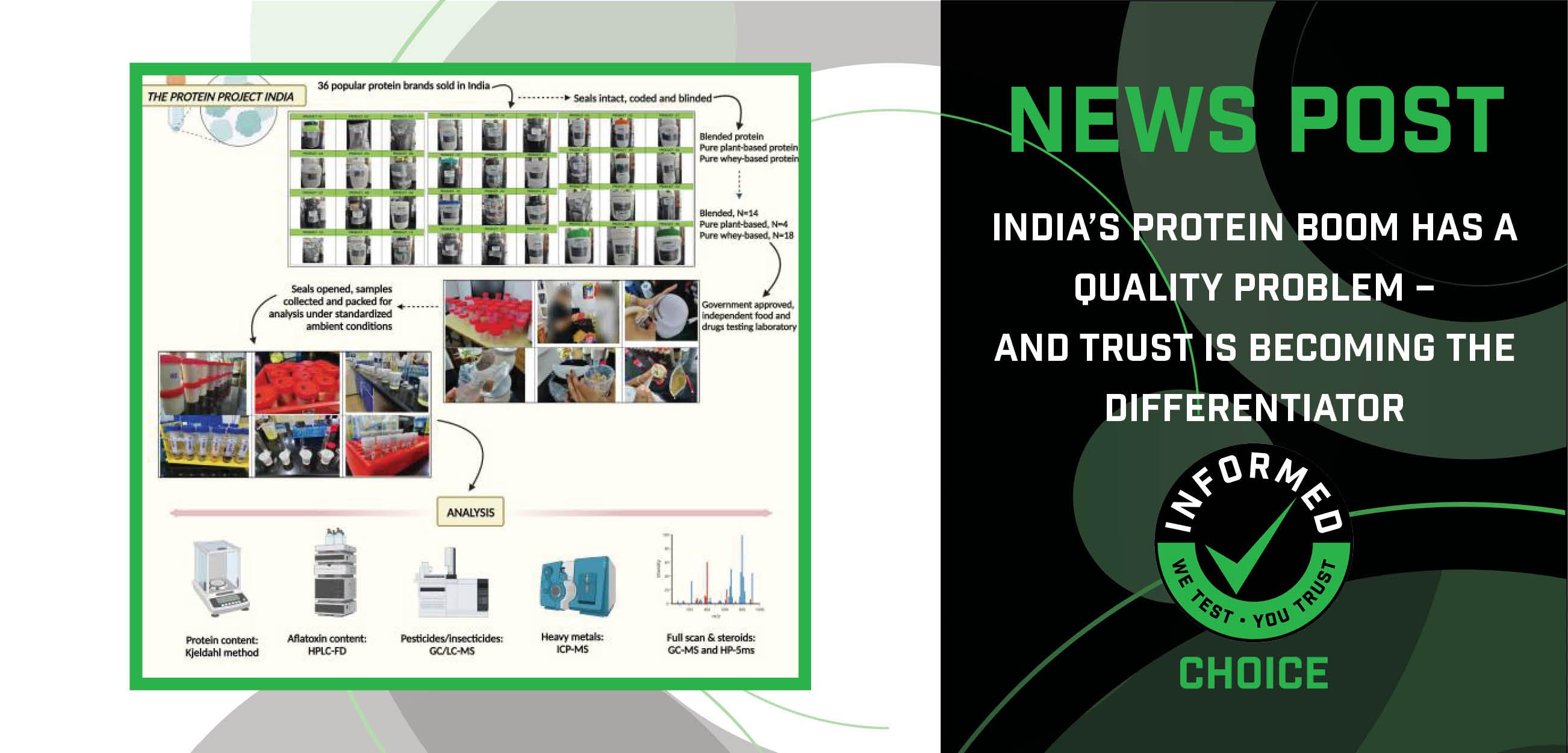
Independent testing reported in 2023 found that 70% of protein products tested were mislabelled, 14% of supplement samples contained harmful aflatoxins, while 8% showed traces of pesticide residue. Regulatory enforcement activity has also identified hundreds of products as non-compliant with food safety legislation, underscoring inconsistencies in quality assurance across the market.
These findings do not suggest that all products are unsafe. However, they do highlight variability in manufacturing controls, raw material quality and verification practices – particularly in fast-growing categories.
Why regulation alone is not always enough
Regulation plays a critical role in setting baseline standards. In India, food safety legislation establishes essential requirements for manufacturers and brands. However, as markets scale and supply chains become more complex, compliance alone does not always provide sufficient assurance.
Supplement products can be vulnerable to:
- raw material contamination
- inconsistent manufacturing controls
- misalignment between label claims and finished product content
Without ongoing, independent verification, these risks can be difficult to identify – particularly at scale.
Trust is becoming a commercial differentiator
As India's nutrition market matures, trust is increasingly influencing purchasing decisions and commercial relationships.
Research shows that 40% of Indian consumers are willing to pay a premium for products that promote health and wellness, while 64% want access to more detailed product information and 61% prioritise transparency and clearer labelling.
At the same time, 30% of Indian brands report challenges meeting updated compliance standards, contributing to recalls, reformulation and supply chain disruption.
In this environment, independent verification is no longer just a risk-management tool. It is becoming a signal of credibility, transparency and long-term brand value.
Companies mentioned


Get more of our news on Google
Set Ingredients Network as a 'Preferred Source' to get quicker access to the news you value.
Related news

Skimpflation: An ‘unfair’ and risky approach to keeping prices low
2 Sep 2026
Consumers see skimpflation – reducing the quality of ingredients due to rising costs – as more unfair than shrinkflation, making it a risky strategy according to recent research.
Read more
‘Urgent gaps’ in achieving 2030 food system goals
27 Aug 2026
Global food systems are failing to meet 2030 targets across indicators including health, environment, and resilience, according to a report co-authored by the Food and Agriculture Organisation (FAO).
Read more
Seven-Eleven uses microbial testing tech to extend katsudon shelf life
26 Aug 2026
Japanese retail company Seven-Eleven has improved its factory’s microbial environment to keep comfort-food staple, katsudon, fresher for longer.
Read more
Chimac’s fusion sauces bring Korean flavours to Europe
25 Aug 2026
Irish sauce brand Chimac is tapping into Korea’s culinary traditions, bringing its flavours and products to European consumers who want a taste of K-food.
Read more
Global demand for instant noodles continues to rise
24 Aug 2026
Global demand for instant noodles reached 124.21 billion servings last year, representing a 0.7% year-on-year increase – or 900 million extra servings.
Read more
China beverages: Is herbal innovation the future?
20 Aug 2026
Herbal and botanical innovation in China's drinks market continues to grow, with ingredients like astragalus root, ginger, and ginseng in the spotlight – and focus shifting far beyond refreshment.
Read more
Popular barbecue staples experience sharp price increases
19 Aug 2026
The typical cost of US shoppers’ barbecue baskets has risen by 12% over the past year – the fastest annual rise in a decade, figures from The Economist show.
Read more
Hot NPD: Nissin launches first cold-water Cup Noodles
18 Aug 2026
Nissin is taking one of Japan’s most iconic instant meals in a completely new direction with the launch of the first cold water-only Cup Noodles in the brand’s 55-year history.
Read more
Manam Chocolate aims to bring premium Indian cacao to 'the world stage'
11 Aug 2026
Craft chocolate brand Manam Chocolate is investing in local expansion and supply chain innovation throughout India as it works to build out the premium reputation of its locally produced cacao products.
Read more
Savoury protein snacks shake up the on-the-go market
10 Aug 2026
Sweet flavours have dominated the high-protein snack category but savoury snacks, such as cheese bars and meat sticks, can appeal to health-conscious consumers.
Read more