
Ingredients Categories
Finished Products
Finished Food Categories
- Bakery
- Beverages / Juices
- Cereal and grain products
- Confectionery
- Cooking Fats & Oils
- Dairy
- Egg products
- Fruits & Vegetables
- Infant & Baby food
- Meat, Poultry & Fish
- Nuts & Seeds products
- Other Finished Food Categories
- Pet Food
- Plant-based foods
- Prepared foods
- Sauces & Seasonings
- Sweet & Savoury Spreads
Specialised Finished Products
- Bee products
- Biotic products
- Dietary supplements
- Energy drinks
- Functional beverages
- Functional confectionery
- Functional food
- Functional powders
- Meal replacement products
- Nutricosmetics
- Other Specialised Finished Products
- Pet Dietary Supplements
- Pharma and OTC products
- Protein products
- Sugar replacers / Sweeteners
Health & Wellness Areas
Delivery Formats
Operations & Services
- 3D printing
- Analysis/ Testing
- Auditing & certifications
- Blending & mixing
- Bottling
- Certification
- Clinical trials
- Co-packing
- Coating
- Consulting
- Contract manufacturing
- Drying
- Electrospinning
- Encapsulating
- Enzymatic processing
- Extracting
- Extrusion
- Fat structuring
- Fermentation
- Filling
- Flavour development
- Freeze drying
- Granulating/ grinding/ milling / mixing
- High-pressure processing
- Labelling
- Other Operations & Services
- Packaging
- Packet filling
- Pasturising
- Quality assurance
- Saccharification
- Shear cell processing
- Spray drying
- Sterilisation
- Storage & Logistics
- Tabletting
- Toasting / roasting
- Ultra-high temperature processing
News
Make prices clearer for consumers, UK competition watchdog tells supermarkets
Will Chu, Freelance Journalist 10 Aug 2023
The UK’s Competition and Markets Authority (CMA) has told UK supermarkets to make their prices more transparent to aid shoppers during the cost-of-living crisis.
In a newly published preliminary report, the UK’s competition watchdog concluded that food prices are not being clearly and fairly displayed in supermarkets leading to shoppers losing out on deals.
According to the CMA, parts of the issue stem from the unit pricing rules themselves, which allow unhelpful inconsistencies in retailers’ practices and leave too much scope for interpretation.

“With so many people struggling to feed their families, it’s vital that we do everything we can to make sure people find the best prices easily,” said Sarah Cardell, CEO of the CMA.
“We’re writing to these retailers and warning them to make the necessary changes or risk facing enforcement action. The law itself needs to be tightened here, so we are also calling on the government to bring in reforms.”
Pricing practices of most concern to the CMA
The CMA’s concerns specifically relate to the consistency of supermarkets in the measurements used for similar types of products.
The report said that this made it difficult for consumers to compare deals on a like-for-like basis. For example, tea bags being priced per 100 grams for some products and others being unit priced per each tea bag.
Also under scrutiny was the degree of transparency supermarkets were working to with cases of missing or incorrectly calculated unit pricing information highlighted both in store and online.
The report gave an example of a 250ml handwash costing €1.80 (£1.19) but unit priced at €552.00 (£476.00) per 100ml. Here, unit pricing information was unavailable online until items were selected.
Other points of concern was legibility, where unit pricing information was difficult to read, for example text on labels being too small or shelf edge labels being obscured by promotional information or by shop fittings.
The CMA also highlighted supermarkets’ approach to promotions, where some retailers were not displaying unit prices for any products on promotion.
Varying interpretation of the Price Marking Order 2004 (PMO)
In setting out the issues, the CMA also set out recommendations on the unit pricing rules whilst also calling on the government to reform current legislation. The CMA will publish its findings in Autumn 2023.
One possible explanation for the confusion facing consumers are the stipulations relating to unit prices that are outlined in the Price Marking Order 2004 (PMO).
While this rule requires the unit price must be given to consumers in writing (this includes in catalogues, in shops and via the internet), for goods offered for retail sale, it also allows for “unhelpful inconsistencies in retailers practices and leave too much scope for interpretation,” the CMA said.
UK consumer watchdog Which? agreed with this in a new policy paper describing the PMO as “outdated and in need of reform.”
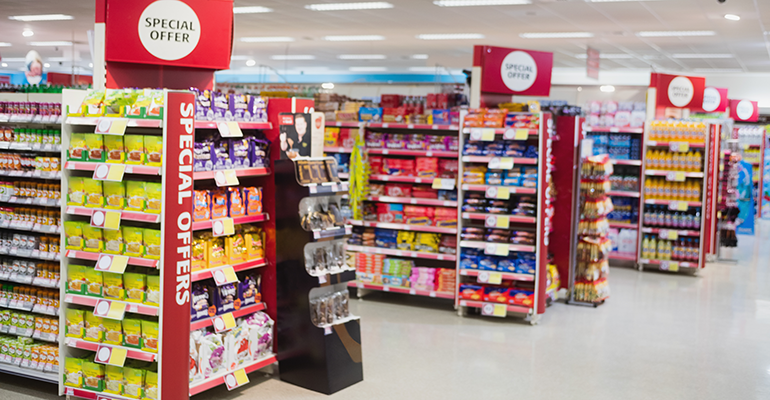 © AdobeStock/WavebreakMediaMicro
“But it is also because different retailers interpret the current law and guidance differently, with some making it easier to compare prices than others,” in an echo to the CMA’s comments.
Which? recommended two immediate improvements
Some of the immediate improvements recommended by Which? include making it easier to assess if promotions offer best value, a particular issue for some supermarket loyalty card pricing.
“We recently highlighted how we thought Tesco could potentially be in breach of the Consumer Protection from Unfair Trading Regulations 2008 (CPRs) because it does not include unit pricing on Clubcard prices, in contrast to Sainsbury’s who do this for Nectar prices,” they said.
Another short-term improvement was improving legibility of unit pricing, where Which? investigations found large variation in terms of prominence, size relative to the selling price and use of colours or contrast within, as well as across supermarkets.
“Current legislation and guidance is not very clear about what is appropriate,” the watchdog group said. “Clearer guidance should therefore be provided, setting out what is best practice.
“There is an International Standards Organisation (ISO 21041: 2018) standard on unit pricing, which should be used by supermarkets – but greater clarity from government is also needed.”
BRC: ‘Supermarkets working hard to support customers’
Responding to the CMA report, Helen Dickinson, Chief Executive of the British Retail Consortium (BRC), said, “Supermarkets have been working hard to support their customers through the cost of living crisis and will be reflecting on the CMA’s recommendations on unit pricing.
The CMA itself notes that “many of these problems stem from the rules themselves,” and retailers stand ready to support proposed changes to the unit pricing rules.
“As noted in the report, supermarket margins have remained extremely tight as they try to support their customers and absorb the worst of the rising costs in the supply chain.
“In the last few months, some of these pressures have begun to ease, such as with global commodity prices and the weakness of the pound."

Get more of our news on Google
Set Ingredients Network as a 'Preferred Source' to get quicker access to the news you value.
Related news

M&S launches own-brand pet food range
11 Sep 2026
UK retailer Marks & Spencer has launched its own-brand pet food line Paws & Pals – a well-timed and strategic move that will appeal to loyal shoppers, says a marketing expert.
Read more
Do the US dietary guidelines put UPFs under pressure?
10 Sep 2026
Will the US dietary guidelines change the way Americans eat, swapping ultra-processed foods for whole foods? We asked Dr Barry Popkin, renowned nutrition and obesity researcher.
Read more
Food fraud costs UK economy £2bn each year
9 Sep 2026
Food fraud is costing the UK economy up to £2 billion (€2.3 billion) every year although the food sector is more “resilient” than others, according to a recent study.
Read more
Kellogg accelerates work to remove artificial colours from all US cereals
3 Sep 2026
WK Kellogg has announced an accelerated timeline to eliminate all artificial colours and the chemical preservative, BHT, across its full US portfolio of cereals and cereal packaging.
Read more
Skimpflation: An ‘unfair’ and risky approach to keeping prices low
2 Sep 2026
Consumers see skimpflation – reducing the quality of ingredients due to rising costs – as more unfair than shrinkflation, making it a risky strategy according to recent research.
Read more
NielsenIQ’s EU barometer shows Britain leading in grocery inflation
31 Aug 2026
Britain was the only country to record grocery inflation above 2%, according to NielsenIQ data that compared Europe’s five biggest grocery markets from February to May 2026.
Read more
‘Urgent gaps’ in achieving 2030 food system goals
27 Aug 2026
Global food systems are failing to meet 2030 targets across indicators including health, environment, and resilience, according to a report co-authored by the Food and Agriculture Organisation (FAO).
Read more
Seven-Eleven uses microbial testing tech to extend katsudon shelf life
26 Aug 2026
Japanese retail company Seven-Eleven has improved its factory’s microbial environment to keep comfort-food staple, katsudon, fresher for longer.
Read more
Chimac’s fusion sauces bring Korean flavours to Europe
25 Aug 2026
Irish sauce brand Chimac is tapping into Korea’s culinary traditions, bringing its flavours and products to European consumers who want a taste of K-food.
Read more
Global demand for instant noodles continues to rise
24 Aug 2026
Global demand for instant noodles reached 124.21 billion servings last year, representing a 0.7% year-on-year increase – or 900 million extra servings.
Read more