
Ingredients Categories
Finished Products
Finished Food Categories
- Bakery
- Beverages / Juices
- Cereal and grain products
- Confectionery
- Cooking Fats & Oils
- Dairy
- Egg products
- Fruits & Vegetables
- Infant & Baby food
- Meat, Poultry & Fish
- Nuts & Seeds products
- Other Finished Food Categories
- Pet Food
- Plant-based foods
- Prepared foods
- Sauces & Seasonings
- Sweet & Savoury Spreads
Specialised Finished Products
- Bee products
- Biotic products
- Dietary supplements
- Energy drinks
- Functional beverages
- Functional confectionery
- Functional food
- Functional powders
- Meal replacement products
- Nutricosmetics
- Other Specialised Finished Products
- Pet Dietary Supplements
- Pharma and OTC products
- Protein products
- Sugar replacers / Sweeteners
Health & Wellness Areas
Delivery Formats
Operations & Services
- 3D printing
- Analysis/ Testing
- Auditing & certifications
- Blending & mixing
- Bottling
- Certification
- Clinical trials
- Co-packing
- Coating
- Consulting
- Contract manufacturing
- Drying
- Electrospinning
- Encapsulating
- Enzymatic processing
- Extracting
- Extrusion
- Fat structuring
- Fermentation
- Filling
- Flavour development
- Freeze drying
- Granulating/ grinding/ milling / mixing
- High-pressure processing
- Labelling
- Other Operations & Services
- Packaging
- Packet filling
- Pasturising
- Quality assurance
- Saccharification
- Shear cell processing
- Spray drying
- Sterilisation
- Storage & Logistics
- Tabletting
- Toasting / roasting
- Ultra-high temperature processing
News
Mondelez introduces a vegan version of its Cadbury bar
Katja Knox, Editorial Account Manager 18 Oct 2021Cadbury will soon have a new vegan chocolate bar in the U.K., called the Cadbury Plant Bar, Mondelez International announced. The new plant-based offering is inspired by Cadbury’s Dairy Milk, one of the most well-known chocolate bar options in the region.
Beginning in November, the bars will be available at Sainbury’s throughout the U.K. with plans to expand to other retailers in January next year. Each 90g bar will retail for £2.50.
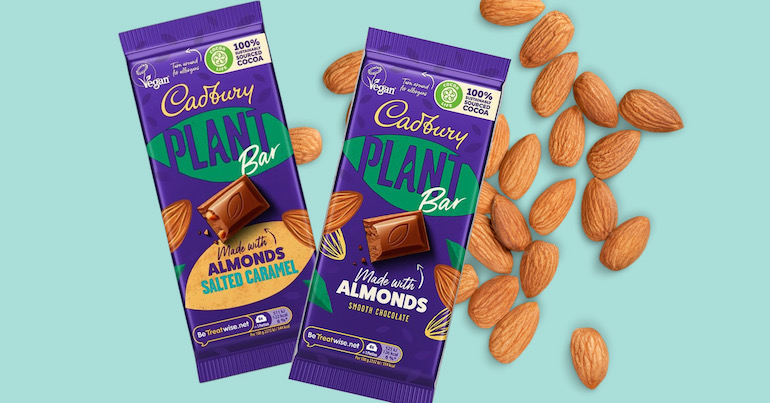
In order to achieve a silky smooth texture, this vegan alternative uses almond paste instead of milk in its formulation which “provides a similar taste and texture to milk ingredients while offering a hint of nuttiness,” the company said in a statement. Texture and taste are two considerations that consumers weigh heavily when switching to a vegan version of classic brands. In fact, taste has continued to be a hurdle for manufacturers developing alternative products, so if Cadbury is able to replicate both the tast and texture of its classic Dairy Milk bar, the reward for its effort is likely to be immense.
Cadbury is launching this new bar into a market that is hungry for vegan options in confectionery. Today, U.S., U.K. and Australian fudge and chocolate products with vegan label claims only account for 5.6% of products sold. Considering the popularity of plant-based products, this leaves a long runway for growth for companies looking to get into the vegan confectionery market that is currently worth $1 billion, according to Abillion.
It is clear that Mondelez International has seen this growing demand and is looking to tap into this market with this product launch. “With 500,000 participants in this year’s Veganuary – double the number of participants from the year before, the increasing public appetite for varied snacking options and plant-based alternatives has never been more apparent,” U.K. managing director at Mondelēz International Louise Stigant said in the release.
Nor does the company intend for the debut of this vegan Cadbury line to be the culmination of its efforts to appeal to shoppers seeking vegan alternatives. The company said that it may decide to eventually introduce these bars in the U.S., but that may present a unique set of challenges as Hershey owns Cadbury manufacturing in the U.S.
With over two years of development behind this launch, Cadbury did not just stop at overhauling its formulation to focus on plant-based. This new plant bar is sealed in 100% plant-based packaging made from biosourced plastics from renewable sources. Sustainability is another priority that many people are keen on incorporating into their purchases. In fact, the consulting firm Kearney found that nearly half of consumers are more concerned about the effect of their purchases on the environment after the pandemic.

Get more of our news on Google
Set Ingredients Network as a 'Preferred Source' to get quicker access to the news you value.
Related news

Do the US dietary guidelines put UPFs under pressure?
10 Sep 2026
Will the US dietary guidelines change the way Americans eat, swapping ultra-processed foods for whole foods? We asked Dr Barry Popkin, renowned nutrition and obesity researcher.
Read more
Food fraud costs UK economy £2bn each year
9 Sep 2026
Food fraud is costing the UK economy up to £2 billion (€2.3 billion) every year although the food sector is more “resilient” than others, according to a recent study.
Read more
Kellogg accelerates work to remove artificial colours from all US cereals
3 Sep 2026
WK Kellogg has announced an accelerated timeline to eliminate all artificial colours and the chemical preservative, BHT, across its full US portfolio of cereals and cereal packaging.
Read more
Skimpflation: An ‘unfair’ and risky approach to keeping prices low
2 Sep 2026
Consumers see skimpflation – reducing the quality of ingredients due to rising costs – as more unfair than shrinkflation, making it a risky strategy according to recent research.
Read more
‘Urgent gaps’ in achieving 2030 food system goals
27 Aug 2026
Global food systems are failing to meet 2030 targets across indicators including health, environment, and resilience, according to a report co-authored by the Food and Agriculture Organisation (FAO).
Read more
Popular barbecue staples experience sharp price increases
19 Aug 2026
The typical cost of US shoppers’ barbecue baskets has risen by 12% over the past year – the fastest annual rise in a decade, figures from The Economist show.
Read more
Savoury protein snacks shake up the on-the-go market
10 Aug 2026
Sweet flavours have dominated the high-protein snack category but savoury snacks, such as cheese bars and meat sticks, can appeal to health-conscious consumers.
Read more
Digital twin technology gains ground in food manufacturing
6 Aug 2026
Food and beverage companies are increasingly turning to digital twins to optimise and automate manufacturing processes, but opportunities stretch far beyond this, say experts.
Read more
Nestlé invests in regeneratively farmed wheat for KitKat
5 Aug 2026
Nestlé will pay a premium for Wildfarmed’s regeneratively farmed wheat but the CPG remains reticent to promote the move on packs of its KitKat bars.
Read more
Codex sets global thresholds for ‘may contain’ labels
3 Aug 2026
Codex Alimentarius has adopted its first global guidance on when to use “may contain” allergen warnings, setting thresholds intended to stop the label being used as blanket legal cover.
Read more