
Ingredients Categories
Finished Products
Finished Food Categories
- Bakery
- Beverages / Juices
- Cereal and grain products
- Confectionery
- Cooking Fats & Oils
- Dairy
- Egg products
- Fruits & Vegetables
- Infant & Baby food
- Meat, Poultry & Fish
- Nuts & Seeds products
- Other Finished Food Categories
- Pet Food
- Plant-based foods
- Prepared foods
- Sauces & Seasonings
- Sweet & Savoury Spreads
Specialised Finished Products
- Bee products
- Biotic products
- Dietary supplements
- Energy drinks
- Functional beverages
- Functional confectionery
- Functional food
- Functional powders
- Meal replacement products
- Nutricosmetics
- Other Specialised Finished Products
- Pet Dietary Supplements
- Pharma and OTC products
- Protein products
- Sugar replacers / Sweeteners
Health & Wellness Areas
Delivery Formats
Operations & Services
- 3D printing
- Analysis/ Testing
- Auditing & certifications
- Blending & mixing
- Bottling
- Certification
- Clinical trials
- Co-packing
- Coating
- Consulting
- Contract manufacturing
- Drying
- Electrospinning
- Encapsulating
- Enzymatic processing
- Extracting
- Extrusion
- Fat structuring
- Fermentation
- Filling
- Flavour development
- Freeze drying
- Granulating/ grinding/ milling / mixing
- High-pressure processing
- Labelling
- Other Operations & Services
- Packaging
- Packet filling
- Pasturising
- Quality assurance
- Saccharification
- Shear cell processing
- Spray drying
- Sterilisation
- Storage & Logistics
- Tabletting
- Toasting / roasting
- Ultra-high temperature processing
News
Over 25% of whole grain products examined in the Netherlands found to have inaccurate labels
Tessa Wiles, Content Editor - Food 6 Aug 2024In an examination of 190 whole grain products, the Netherlands Food and Consumer Product Safety Authority (NVWA) uncovered that more than a quarter of the products were inaccurately labelled, constituting deception.
While the NVWA confirmed there was no danger to public health from the mislabelled products, the authority has taken measures including issuing warnings, imposing fines, and requiring manufacturers to update their packaging.
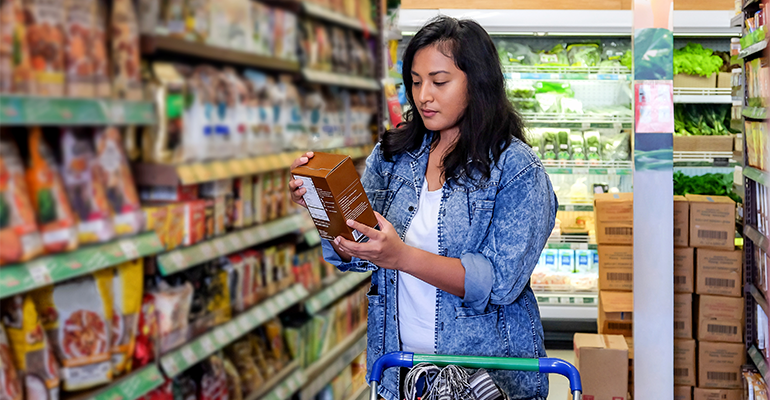
Between December 2021 and February 2024, 190 whole grain products – including rusks, crackers, biscuits, and pasta – sold in seven supermarket chains were examined by the NVWA. Fifty-one of these products were found to be incorrectly labelled as whole grain.
For a product to use whole grain labelling in the Netherlands, all the flour used in the formulation must be made from whole grains. According to the NVWA Food Labelling Handbook, this means that the naturally occurring starchy core, germ, and bran of the cereal in question must be present in their natural proportions, regardless of whether or not the product has undergone processing.
In the handbook, the NVWA uses the example of a cracker containing 50% whole wheat flour and 50% flour. The name “whole wheat cracker” would be incorrect in this case. The correct name could be “cracker” or “cracker with 50% whole wheat flour and 50% flour”.
Supermarket chains including Albert Heijn, Jumbo, Plus, and Dirk’s store brand products, alongside companies such as Conimex, G'woon, Go-Tan, and Honig were accused of deception.
As of July 2024, manufacturers have updated most incorrect packaging, and some products are no longer sold. The research results are available on the NVWA inspection results website.
Consumer confusion on what constitutes a whole grain product is not new
A study published in 2020 in Public Health Nutrition investigated consumer understanding of whole grain content and healthfulness based on food labels. Researchers conducted two online experiments with over 1,000 US adults. In the first experiment, participants compared pairs of products with different whole grain, salt, and sugar content. The team found that 29-47% of participants incorrectly identified the less healthy product as the better option based on front-of-package labels, which included terms like “wheat” or “multigrain”. The second experiment had participants assess actual product labels, and identify the products that contained 100% whole grain, mostly whole grain, and little to no whole grain. 43-51% of participants overstated the whole grain content in products mostly made of refined grains, and 17% understated the content in products primarily composed of whole grains.
The researchers concluded that due to misleading front-of-package labels, consumers often misunderstand whole grain content and the healthfulness of products. Many participants relied on the food labels – over the detailed information from Nutrition Facts and ingredient lists – which led to misidentification of healthier options. The researchers suggested the need for clearer labelling standards to reduce this confusion.
Another study published in the Journal of Nutrition Education and Behavior in 2022 found that global whole grain food consumption remains low due to consumer scepticism and the lack of standardised labelling. Researchers conducted focus groups with consumers and interviews with food industry representatives to explore understanding and perceptions of whole grain labels. Consumers expressed confusion and distrust of whole grain content claims and preferred clear labelling, such as specifying the percentage of whole grains directly on the packaging. Both consumers and industry representatives highlighted the need for consistent labelling standards to help consumers make informed choices, suggesting that standardised definitions and better consumer education could improve whole grain intake.
The Whole Grain Initiative calls for labelling consensus
The Whole Grain Initiative, established during the 6th International Whole Grain Summit in 2017, advocates for a universally accepted definition of whole grain. The Initiative’s proposed definition specifies that whole grain foods must contain at least 50% whole grain ingredients by dry weight to be labelled as such.
Considering that there is no universally accepted definition of what constitutes a whole grain product, countries are free to establish their own definitions and standards, which inevitably leads to variations in labelling requirements and consumer understanding.
The Whole Grain Initiative created a list of the varying standards across the world. In Brazil, for example, to be labelled whole grain, a food must contain at least 30% whole grain by weight and more whole grain than refined grain ingredients. Sweden, Denmark, and Norway require crispbread, porridge, and pasta products to contain 50% of the total grain in the product to be whole grain. While in the UK, Australia, and New Zealand, a minimum of 8 grams of whole grain per serving is required, and in the US the product must contain at least 8 grams of whole grain per 30 grams of product.
Front-of-pack labelling could improve dietary quality
The Whole Grain Initiative also advocates for modifications to the Nutri-Score algorithm to better reflect the whole grain content of food products. Under its proposed scheme, foods are scored based on whole grain content, with higher scores for higher percentages of whole grains. This proposal aligns with a 2022 study that explored whether including whole grains in the Nutri-Score algorithm would improve diet quality. The researchers found that such adjustments could improve overall dietary quality and better align with dietary guidelines.

Get more of our news on Google
Set Ingredients Network as a 'Preferred Source' to get quicker access to the news you value.
Related news

M&S launches own-brand pet food range
11 Sep 2026
UK retailer Marks & Spencer has launched its own-brand pet food line Paws & Pals – a well-timed and strategic move that will appeal to loyal shoppers, says a marketing expert.
Read more
Do the US dietary guidelines put UPFs under pressure?
10 Sep 2026
Will the US dietary guidelines change the way Americans eat, swapping ultra-processed foods for whole foods? We asked Dr Barry Popkin, renowned nutrition and obesity researcher.
Read more
Food fraud costs UK economy £2bn each year
9 Sep 2026
Food fraud is costing the UK economy up to £2 billion (€2.3 billion) every year although the food sector is more “resilient” than others, according to a recent study.
Read more
Kellogg accelerates work to remove artificial colours from all US cereals
3 Sep 2026
WK Kellogg has announced an accelerated timeline to eliminate all artificial colours and the chemical preservative, BHT, across its full US portfolio of cereals and cereal packaging.
Read more
‘Urgent gaps’ in achieving 2030 food system goals
27 Aug 2026
Global food systems are failing to meet 2030 targets across indicators including health, environment, and resilience, according to a report co-authored by the Food and Agriculture Organisation (FAO).
Read more
Chimac’s fusion sauces bring Korean flavours to Europe
25 Aug 2026
Irish sauce brand Chimac is tapping into Korea’s culinary traditions, bringing its flavours and products to European consumers who want a taste of K-food.
Read more
Savoury protein snacks shake up the on-the-go market
10 Aug 2026
Sweet flavours have dominated the high-protein snack category but savoury snacks, such as cheese bars and meat sticks, can appeal to health-conscious consumers.
Read more
Nestlé invests in regeneratively farmed wheat for KitKat
5 Aug 2026
Nestlé will pay a premium for Wildfarmed’s regeneratively farmed wheat but the CPG remains reticent to promote the move on packs of its KitKat bars.
Read more
How Secon Taste is putting upcycled snacks on shelves
4 Aug 2026
Hungarian zero-waste startup Secon Taste is turning surplus food into upcycled snacks such as fibre-packed granola, instant porridge, and a circular coffee-tasting box.
Read more
Codex sets global thresholds for ‘may contain’ labels
3 Aug 2026
Codex Alimentarius has adopted its first global guidance on when to use “may contain” allergen warnings, setting thresholds intended to stop the label being used as blanket legal cover.
Read more