
Ingredients Categories
Finished Products
Finished Food Categories
- Bakery
- Beverages / Juices
- Cereal and grain products
- Confectionery
- Cooking Fats & Oils
- Dairy
- Egg products
- Fruits & Vegetables
- Infant & Baby food
- Meat, Poultry & Fish
- Nuts & Seeds products
- Other Finished Food Categories
- Pet Food
- Plant-based foods
- Prepared foods
- Sauces & Seasonings
- Sweet & Savoury Spreads
Specialised Finished Products
- Bee products
- Biotic products
- Dietary supplements
- Energy drinks
- Functional beverages
- Functional confectionery
- Functional food
- Functional powders
- Meal replacement products
- Nutricosmetics
- Other Specialised Finished Products
- Pet Dietary Supplements
- Pharma and OTC products
- Protein products
- Sugar replacers / Sweeteners
Health & Wellness Areas
Delivery Formats
Operations & Services
- 3D printing
- Analysis/ Testing
- Auditing & certifications
- Blending & mixing
- Bottling
- Certification
- Clinical trials
- Co-packing
- Coating
- Consulting
- Contract manufacturing
- Drying
- Electrospinning
- Encapsulating
- Enzymatic processing
- Extracting
- Extrusion
- Fat structuring
- Fermentation
- Filling
- Flavour development
- Freeze drying
- Granulating/ grinding/ milling / mixing
- High-pressure processing
- Labelling
- Other Operations & Services
- Packaging
- Packet filling
- Pasturising
- Quality assurance
- Saccharification
- Shear cell processing
- Spray drying
- Sterilisation
- Storage & Logistics
- Tabletting
- Toasting / roasting
- Ultra-high temperature processing
News
PepsiCo creates potato chip vodka, sells out in hours
Katja Knox, Editorial Account Manager 17 Jan 2022PepsiCo took another step into the alcohol category when it launched Lay’s Potato Vodka in December. However, this foray into alcohol did not last long as the trial product sold out in a matter of hours, according to a post by the company on Twitter.
The potato-based vodka was made using the same potatoes that are used in Lay’s chips, and the spirit was manufactured as part of a partnership between PepsiCo’s Frito-Lay division and Eastside Distilling from Portland, Oregon. When it was available, the branded vodka retailed for $40 a bottle.
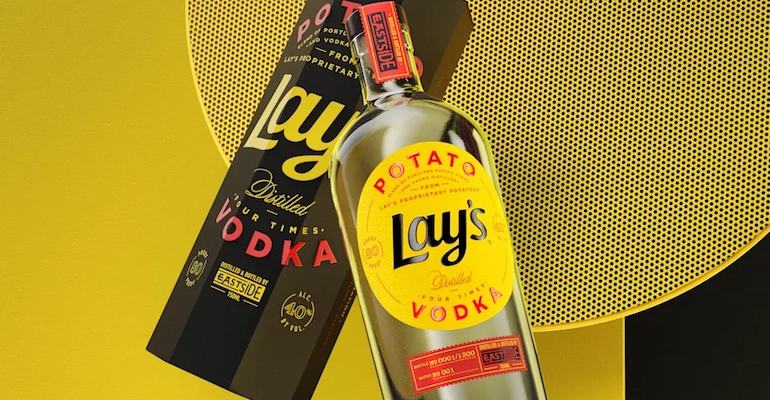
PepsiCo has been slowly blurring the lines between imbibing and teetotaling by moving into the alcohol category as it seeks to reach the growing number of consumers that are interested in libations. With U.S. alcohol consumption increasing by 45 million cases in 2020, According to the Beverage Information Group data cited by Forbes, it is no surprise that PepsiCo is looking to expand its market to grab the attention of some of these shoppers.
Already, the company has experimented with booze through its partnership with Boston Beer where the duo created a Mtn Dew Hard Seltzer that is expected to launch early this year. Bloomberg also previously reported that the multinational filed a trademark application to register its Rockstar energy as a name to be used for alcoholic beverages.
As this soda giant decides how far it would like to go into the alcohol category, it will likely continue to test the waters through branded pairings where the PepsiCo name recognition is evident even on cross-category products. Crossovers like this Lay's potato vodka are proving to resonate with consumers.
“And you never know what future plans we have up our sleeves! We love to keep our fans guessing as to what is coming next,” Frito-Lay North America Senior Director of Marketing Melissa Miranda said in a statement.
Nor is PepsiCo alone in its efforts to transition a portion of its product portfolio into the alcohol category. The company’s rival Coca-Cola has also made the leap, announcing in 2020 that it would partner with Molson Coors to produce Topo Chico Hard Seltzer. Similarly, the fast-food chain Arby’s released two vodkas that were flavored like their Curly Fries and crinkle fries. Kraft Heinz also used its Grey Poupon mustard brand to launch a flavored wine from the south of France this past fall.
As the $250 billion American alcohol market continues to entice brands to step into the category and shave off a piece of market share to supplement their bottom lines, it will not be surprising to see this trend continue in the future.

Get more of our news on Google
Set Ingredients Network as a 'Preferred Source' to get quicker access to the news you value.
Related news

Do the US dietary guidelines put UPFs under pressure?
10 Sep 2026
Will the US dietary guidelines change the way Americans eat, swapping ultra-processed foods for whole foods? We asked Dr Barry Popkin, renowned nutrition and obesity researcher.
Read more
Food fraud costs UK economy £2bn each year
9 Sep 2026
Food fraud is costing the UK economy up to £2 billion (€2.3 billion) every year although the food sector is more “resilient” than others, according to a recent study.
Read more
Skimpflation: An ‘unfair’ and risky approach to keeping prices low
2 Sep 2026
Consumers see skimpflation – reducing the quality of ingredients due to rising costs – as more unfair than shrinkflation, making it a risky strategy according to recent research.
Read more
NielsenIQ’s EU barometer shows Britain leading in grocery inflation
31 Aug 2026
Britain was the only country to record grocery inflation above 2%, according to NielsenIQ data that compared Europe’s five biggest grocery markets from February to May 2026.
Read more
‘Urgent gaps’ in achieving 2030 food system goals
27 Aug 2026
Global food systems are failing to meet 2030 targets across indicators including health, environment, and resilience, according to a report co-authored by the Food and Agriculture Organisation (FAO).
Read more
China beverages: Is herbal innovation the future?
20 Aug 2026
Herbal and botanical innovation in China's drinks market continues to grow, with ingredients like astragalus root, ginger, and ginseng in the spotlight – and focus shifting far beyond refreshment.
Read more
Popular barbecue staples experience sharp price increases
19 Aug 2026
The typical cost of US shoppers’ barbecue baskets has risen by 12% over the past year – the fastest annual rise in a decade, figures from The Economist show.
Read more
Beyond 'nice to have': A spotlight on US functional beverages
12 Aug 2026
Functional beverage interest in the US is gaining important ground as consumers now expect function rather than see it as "nice to have", and there are clear market gaps for growth, according to Spate.
Read more
Manam Chocolate aims to bring premium Indian cacao to 'the world stage'
11 Aug 2026
Craft chocolate brand Manam Chocolate is investing in local expansion and supply chain innovation throughout India as it works to build out the premium reputation of its locally produced cacao products.
Read more
Digital twin technology gains ground in food manufacturing
6 Aug 2026
Food and beverage companies are increasingly turning to digital twins to optimise and automate manufacturing processes, but opportunities stretch far beyond this, say experts.
Read more