
Ingredients Categories
Finished Products
Finished Food Categories
- Bakery
- Beverages / Juices
- Cereal and grain products
- Confectionery
- Cooking Fats & Oils
- Dairy
- Egg products
- Fruits & Vegetables
- Infant & Baby food
- Meat, Poultry & Fish
- Nuts & Seeds products
- Other Finished Food Categories
- Pet Food
- Plant-based foods
- Prepared foods
- Sauces & Seasonings
- Sweet & Savoury Spreads
Specialised Finished Products
- Bee products
- Biotic products
- Dietary supplements
- Energy drinks
- Functional beverages
- Functional confectionery
- Functional food
- Functional powders
- Meal replacement products
- Nutricosmetics
- Other Specialised Finished Products
- Pet Dietary Supplements
- Pharma and OTC products
- Protein products
- Sugar replacers / Sweeteners
Health & Wellness Areas
Delivery Formats
Operations & Services
- 3D printing
- Analysis/ Testing
- Auditing & certifications
- Blending & mixing
- Bottling
- Certification
- Clinical trials
- Co-packing
- Coating
- Consulting
- Contract manufacturing
- Drying
- Electrospinning
- Encapsulating
- Enzymatic processing
- Extracting
- Extrusion
- Fat structuring
- Fermentation
- Filling
- Flavour development
- Freeze drying
- Granulating/ grinding/ milling / mixing
- High-pressure processing
- Labelling
- Other Operations & Services
- Packaging
- Packet filling
- Pasturising
- Quality assurance
- Saccharification
- Shear cell processing
- Spray drying
- Sterilisation
- Storage & Logistics
- Tabletting
- Toasting / roasting
- Ultra-high temperature processing
News
Powerade enters hydration space with launch of Power Water
Tessa Wiles, Content Editor - Food 21 Oct 2025Coca-Cola’s Powerade brand has launched a zero-sugar, electrolyte-enhanced functional water, marking the brand's entry into the hydration space.
Following five years without any product innovations, Powerade has expanded its product portfolio with the launch of Power Water. The product is positioned as a functional flavoured water designed for hydration, claiming to deliver 50% more electrolytes than competing brands.
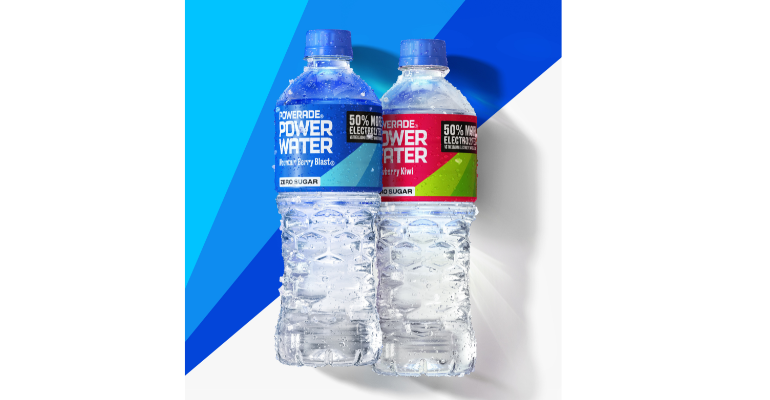
The initial flavour lineup includes strawberry kiwi, mountain berry blast, watermelon, and tropical pineapple.
The range will be rolled out across the US from October, with an expected launch on Amazon in 2026.
Electrolytes for everyone, not just ultra-marathon runners
The hydration market is evolving, as brands expand their product offerings beyond endurance athletes to a broader range of consumers.
UK startup SULT, for example, targets its electrolyte sachets at “the middle consumer” – people who care about their health but also enjoy a beer on a Friday night.
Major brands and established players are also embracing this growing and inclusive view of hydration.
While Propel Fitness Water was introduced by Gatorade in the early 2000s, the brand undertook a visual identity refresh in 2023, partnering with actor Michael B Jordan to promote accessibility to fitness to a broader audience.
How much is too much? The science behind electrolyte consumption
Electrolytes are minerals that, when dissolved in water, are positively or negatively charged. They play a key role in helping the body regulate chemical reactions and maintain the balance of fluids inside and outside the cells, and in the bloodstream.
When individuals exercise intensely, drinking electrolyte-infused drinks may be a good way to replenish lost fluids; however, this comes with caveats.
The Cleveland Clinic advises that electrolyte sports drinks are beneficial for rehydration after intense physical exercise lasting over an hour, especially in hot conditions. However, sports health dietitian Kate Patton warned: “Not every workout needs to end with a raised sports drink.”
Dr Sara Rosenkranz, associate professor in the department of kinesiology and nutrition sciences at the University of Nevada, told American Heart Association News that most people maintaining balanced, healthy diets and not performing intense exercise probably already consume sufficient electrolytes through their normal food intake.
Who is the target audience for Power Water?
While Powerade does not make it explicitly clear whether its Power Water is aimed at casual hydration or those performing intense exercise, the brand does position the product toward “active lifestyles” and as “go-to fitness hydration”.
Each 20 fluid ounce (591ml) bottle contains 520mg of sodium and 150 to 170mg of potassium.
For comparison, Propel contains 270mg of sodium and 70mg of potassium per serving.
Functional hydration: A growing market
The market for functional or enhanced water, valued at $15.9 billion in 2023, is expected to reach $30.1 billion by 2032.
Electrolytes are just one ingredient brands are using to enhance their offerings. Functional beverage brand Wet Hydration debuted a protein water in October.
The strawberry and kiwi-flavoured water, packaged in a 355ml can, contains 10g of protein from whey protein isolate, 100mg of potassium, 9mg of magnesium, and branched-chain amino acids (BCAAs) L-leucine, L-valine, and L-isoleucine.
Other brands are incorporating fibre into their water offerings to support digestive health.
US-based brand Hellowater has a line of prebiotic fibre-infused waters in four flavours – cucumber lime, orange mango, mixed berry, and pineapple coconut. These beverages contain filtered water, chicory root fibre, citric acid, and natural flavours, and are sweetened with stevia.
And in the UK, ió fibrewater offers its fibre-infused water in two flavours – lemon and lime and strawberry. The brand claims that each 500ml bottle delivers 20% of the recommended daily fibre intake and 100% of daily prebiotic intake, with ingredients including filtered water, chicory root, and corn fibre.

Get more of our news on Google
Set Ingredients Network as a 'Preferred Source' to get quicker access to the news you value.
Related news

Do the US dietary guidelines put UPFs under pressure?
10 Sep 2026
Will the US dietary guidelines change the way Americans eat, swapping ultra-processed foods for whole foods? We asked Dr Barry Popkin, renowned nutrition and obesity researcher.
Read more
Food fraud costs UK economy £2bn each year
9 Sep 2026
Food fraud is costing the UK economy up to £2 billion (€2.3 billion) every year although the food sector is more “resilient” than others, according to a recent study.
Read more
Skimpflation: An ‘unfair’ and risky approach to keeping prices low
2 Sep 2026
Consumers see skimpflation – reducing the quality of ingredients due to rising costs – as more unfair than shrinkflation, making it a risky strategy according to recent research.
Read more
NielsenIQ’s EU barometer shows Britain leading in grocery inflation
31 Aug 2026
Britain was the only country to record grocery inflation above 2%, according to NielsenIQ data that compared Europe’s five biggest grocery markets from February to May 2026.
Read more
‘Urgent gaps’ in achieving 2030 food system goals
27 Aug 2026
Global food systems are failing to meet 2030 targets across indicators including health, environment, and resilience, according to a report co-authored by the Food and Agriculture Organisation (FAO).
Read more
China beverages: Is herbal innovation the future?
20 Aug 2026
Herbal and botanical innovation in China's drinks market continues to grow, with ingredients like astragalus root, ginger, and ginseng in the spotlight – and focus shifting far beyond refreshment.
Read more
Popular barbecue staples experience sharp price increases
19 Aug 2026
The typical cost of US shoppers’ barbecue baskets has risen by 12% over the past year – the fastest annual rise in a decade, figures from The Economist show.
Read more
Beyond 'nice to have': A spotlight on US functional beverages
12 Aug 2026
Functional beverage interest in the US is gaining important ground as consumers now expect function rather than see it as "nice to have", and there are clear market gaps for growth, according to Spate.
Read more
Manam Chocolate aims to bring premium Indian cacao to 'the world stage'
11 Aug 2026
Craft chocolate brand Manam Chocolate is investing in local expansion and supply chain innovation throughout India as it works to build out the premium reputation of its locally produced cacao products.
Read more
Digital twin technology gains ground in food manufacturing
6 Aug 2026
Food and beverage companies are increasingly turning to digital twins to optimise and automate manufacturing processes, but opportunities stretch far beyond this, say experts.
Read more